

September 30, 2026

Tooth extraction-is the process of removing a permanent tooth from its socket in the jawbone. It is one of the most common dental procedures performed worldwide, and people search for it because they’re dealing with acute pain, a broken tooth, deep infection, overcrowding, or because their dentist has told them an extraction is the next step. Whether you need a single tooth pulled or are preparing for a full-mouth restoration, understanding what happens before, during, and after the procedure helps you make confident decisions and heal faster.
At Lasting Smiles Dental Implant Center, with offices in Las Vegas, West Covina, Pasadena, and Irvine, we offer the full spectrum of tooth removal services alongside modern replacement options-from single dental implants to full-arch All-on-X systems and bridges-supported by sedation dentistry, 3D imaging, and an in-house lab for faster, more precise results.
Here’s the direct answer to the question most patients ask first: tooth removal is a routine, numbed procedure.
A simple extraction typically takes about 20–45 minutes including preparation and anesthesia, and recovery is usually just a few days. Surgical extractions for impacted or complex cases may take 45–60 minutes or longer, with early healing spanning one to two weeks.
This article covers the reasons a tooth may need to be removed, the step-by-step extraction process, pain management and recovery expectations, potential complications and how to prevent them, and your options for replacing a missing tooth. It does not replace an in-person diagnosis. The target audience is adults experiencing tooth pain or damage, patients who’ve been told they need an extraction, and anxious patients considering sedation.
By the end, you will:
- Understand when a tooth really needs to be removed vs. saved.
- Know exactly what happens before, during, and after extraction.
- Learn how to avoid dry socket and other complications.
- See your options for replacing a missing tooth, including dental implants and All-on-4 / All-on-X.
- Know when and how to contact Lasting Smiles Dental Implant Center for help.
Understanding Tooth Removal (Tooth Extraction Basics)
Tooth removal is the extraction of a tooth from its socket in the alveolar bone and gum tissue. It is performed under local anesthesia-and sometimes with sedation or general anesthesia-by general dentists, dental specialists, or oral and maxillofacial surgeons. Tooth extraction is a common dental procedure that resolves problems ranging from severe decay to impacted wisdom teeth.
Dental extractions fall into two broad categories: simple extractions for teeth that are fully visible above the gum line, and surgical extractions for teeth that are broken, impacted, trapped beneath the gum tissue, or anchored by complex root systems. The type of extraction your dentist will recommend depends on the tooth’s condition, position, and the surrounding bone.
Understanding these categories connects directly to your needs-whether you’re seeking relief from severe pain, stopping the spread of infection, preparing for orthodontic treatment, or planning for implants and full-mouth restoration.
Types of Tooth Removal: Simple vs. Surgical
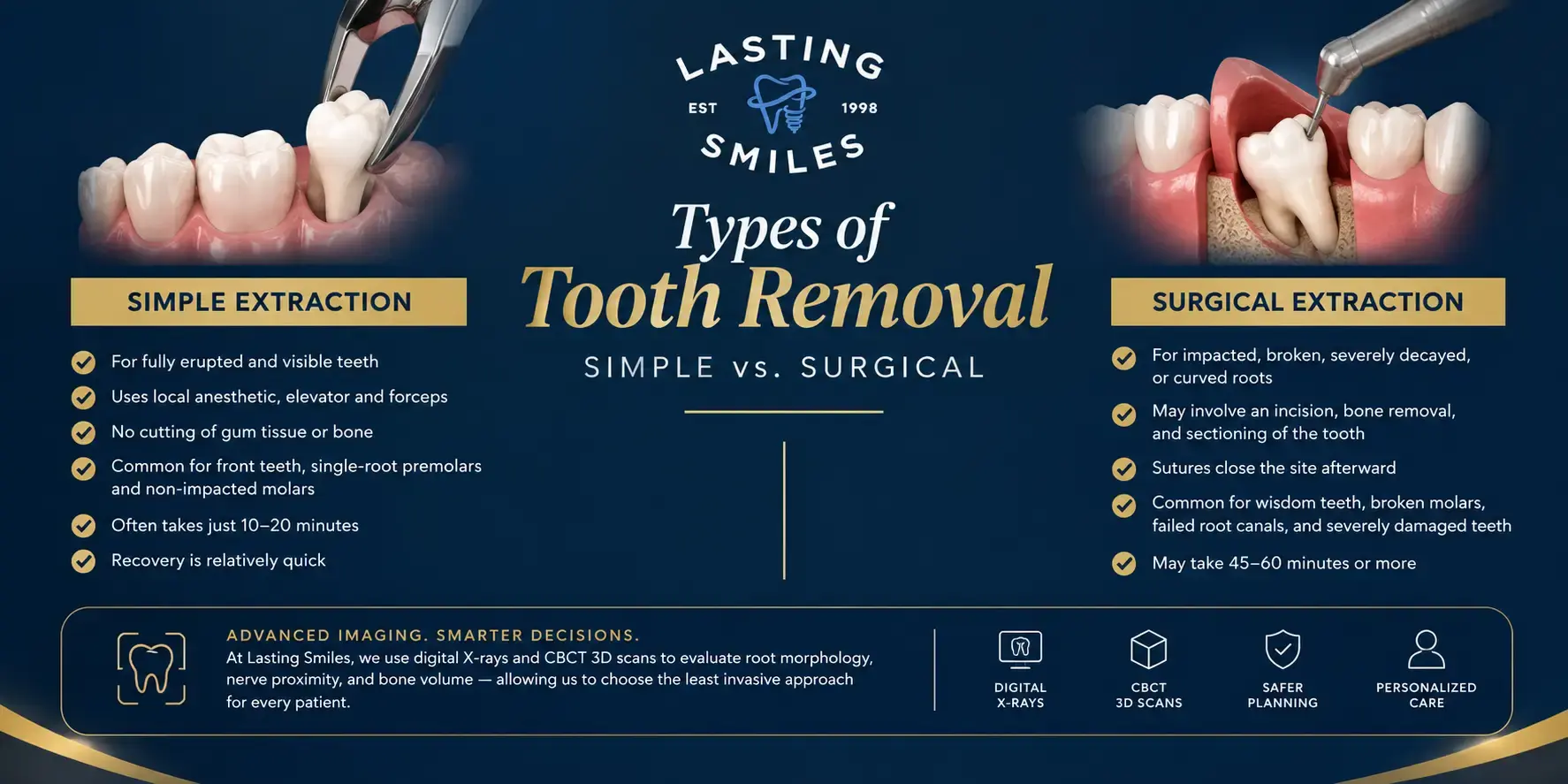
At Lasting Smiles, we use digital X-rays and CBCT 3D scans to evaluate root morphology, nerve proximity, and bone volume-allowing us to choose the least invasive approach for every patient. Extraction procedures may vary based on the tooth’s condition, and advanced imaging ensures we plan the safest path forward.
With that understanding of extraction types, the next question is: when does a tooth truly need to come out?
When Does a Tooth Really Need to Be Removed?
Extraction may be necessary due to severe decay or damage that reaches the root, a vertical root fracture, advanced gum disease that has weakened the bone supporting teeth, a failed root canal, or a non-restorable break below the gum line. Impacted teeth often require extraction to prevent pain, infection, or damage to other teeth. Dentists may also extract teeth to create space for orthodontic treatment, or to prepare for All-on-4 / All-on-X full-arch restorations. Wisdom teeth are often removed to prevent future complications, especially when they emerge in the late teens and early twenties-wisdom teeth usually erupt between ages 17 and 25.
Dental professionals explore alternatives to extraction such as root canal therapy, crowns, fillings, and periodontal treatments whenever possible. At Lasting Smiles, we always try to save a natural tooth first. Extraction is chosen when restoring the tooth is no longer feasible or when keeping it carries greater long-term risk and cost.
The decision is guided by a thorough clinical exam-probing, assessing mobility, evaluating pain history-and detailed imaging. Digital X-rays and CBCT scans reveal cracks, bone loss, infection spread, and root anatomy that may not be visible to the eye alone. These tools help determine whether to recommend extraction or pursue a restorative approach.
Once removal is the agreed-upon plan, understanding the step-by-step process from consultation through procedure day helps reduce anxiety and sets realistic expectations.
From Diagnosis to Tooth Removal Day
You’ve been told you need a tooth removed. Now what? This section walks through the journey from your first consultation through the day of extraction, including how replacement planning fits in.
Your First Visit: Exam, X‑rays, and Treatment Planning
Your first appointment starts with a comprehensive intake: full medical history, current medications (especially blood thinners or diabetes medications), allergies, and an anxiety screening to determine whether sedation dentistry would benefit you.
Next comes imaging. Digital x rays or CBCT 3D scans provide a detailed view of root length, root shape, and proximity to critical structures like the inferior alveolar nerve and maxillary sinus. This is especially important for molars and wisdom teeth, where roots can be curved or positioned close to nerves.
Your dentist then explains your options: whether the tooth can be saved, timing of the extraction, whether bone grafting will be needed for future implants, and what replacement strategy makes the most sense. You’ll also discuss costs, insurance coverage, and financing options-Lasting Smiles offers monthly payment plans for implants and full-arch solutions and provides transparent, itemized treatment plans before any procedure begins.
Choosing Your Anesthesia and Sedation Option
Tooth extraction can involve local anesthesia, sedation, or general anesthesia, and the right choice depends on several factors: extraction complexity, your health conditions, and your comfort level.
- Local anesthesia numbs the tooth and gum area and is the baseline for all extractions.
- Oral sedation (such as a prescribed benzodiazepine) or nitrous oxide helps you feel calm and relaxed during extractions.
- IV sedation provides deeper relaxation through an iv line, ideal for complex cases or highly anxious patients.
- General anesthesia makes you completely unconscious during the procedure-reserved for very complex, multi-tooth, or medically compromised situations.
Anesthesia type depends on extraction complexity and patient comfort. Lasting Smiles specializes in conscious sedation and can treat severely anxious patients who have avoided dental care for years. Sedation or general anesthesia is available for anxious patients at every office.
The key expectation: you will be numb and should feel pressure but not sharp pain during a standard extraction. Your dentist confirms full numbness before proceeding.
Preparing at Home Before Tooth Removal
Practical preparation makes the day smoother:
- Fasting: If IV sedation or general anesthesia is planned, you’ll typically need to avoid food and drink for 6–8 hours before your appointment.
- Medications: If you take blood thinners, diabetes medications, or blood pressure medications, coordinate with your dentist and physician about adjustments-only change medications as directed.
- Transportation: Sedation often impairs driving for several hours. Arrange for someone to drive you home and plan for 24 hours of rest.
- Home supplies: Stock up on soft foods (yogurt, scrambled eggs, mashed potatoes, smoothies), ice packs, over-the-counter pain medication if recommended, and extra pillows for elevated resting.
Patients receive written pre-op instructions and can call Lasting Smiles with any questions before the appointment.
What Actually Happens During Tooth Removal
Walking into an extraction appointment can feel daunting, but the process is methodical and designed for your comfort. You’ll be numb before anything begins, and the team monitors your comfort throughout. Here’s exactly what happens, step by step.
Step‑by‑Step Tooth Removal Procedure
- Numbing the area: The dentist administers local anesthetic and confirms that the tooth, gums, and surrounding bone are fully numb. You should not feel pain-only pressure.
- Loosening the tooth: Specialized elevator instruments gently rock the tooth, breaking the periodontal ligament fibers and widening the tooth socket.
- Removing the tooth: Forceps grip the tooth and ease it out. If roots are curved or the tooth is impacted, the dentist may section the tooth into sections for safer, less traumatic removal.
- Cleaning the socket: The extraction site is thoroughly debrided-infected tissue, debris, and small bone fragments are removed. The socket is irrigated with sterile saline.
- Placing bone graft material: When future implants or All-on-X are planned, graft material is packed into the socket to preserve bone volume (more on this below).
- Closing the site: If a gum flap was elevated, the tissue is repositioned and secured with dissolvable stitches. Gauze is placed for a firm bite to control bleeding.
- Aftercare instructions: You receive detailed written instructions on gauze management, pain control, diet, and hygiene before leaving.
Throughout the procedure, you may feel pressure or movement, but you should alert the dentist immediately if you feel pain at any point. The goal is a painless procedure from start to finish.
Simple vs. Complex Tooth Remove: What’s Different?
A straightforward single-root front tooth extraction is vastly different from removing an impacted wisdom tooth or a multi-root molar with curved roots. Simple extractions are typically completed in 10–20 minutes of active removal time, involve no gum flap or bone removal, produce less swelling, and require minimal or no stitches.
Surgical extractions, by contrast, often take 45–60 minutes or longer. They may require small gum flaps, removal of surrounding bone, and sectioning of the tooth. Recovery is proportionally longer-initial healing may take 7–14 days, with complete bone healing spanning several weeks to months. Patients can expect more swelling and bruising with surgical cases.
At Lasting Smiles, complex extractions are often combined with immediate implant placement or full-arch “teeth-in-a-day” protocols when clinically appropriate, reducing total treatment visits and time without teeth. Most wisdom tooth removals are outpatient procedures performed in our offices.
Bone Grafting at the Time of Tooth Removal
Socket preservation is the placement of bone graft material into a fresh extraction site immediately after the tooth is removed. Its purpose: maintain the volume and contour of the jawbone, prevent ridge collapse, and create a solid foundation for future dental implants-especially critical in the front smile zone where bone loss can be visible.
After the socket is cleaned, graft material (xenograft, allograft, or synthetic) is packed in and may be covered with a barrier membrane or collagen plug, then sutured closed. Soft tissue typically heals within one to two weeks; full bone maturation takes three to six months before the site is ready for implant loading.
In favorable cases-when the socket walls are intact, no active infection is present, and soft tissue is healthy-an implant can be placed at the same time as the extraction. Lasting Smiles’ in-house lab and digital planning help coordinate grafts with implant or All-on-X timelines, so you move through the healing process as efficiently as possible.
With the procedure behind you, the next priority is recovery.
Tooth Remove Recovery and Aftercare
Most extractions heal predictably when you follow your tooth extraction aftercare instructions. Here’s the typical timeline: the first 24 hours focus on bleeding control and blood clot formation; swelling peaks at days 2–3; early healing occurs by day 7; and underlying bone healing continues over several weeks to months. Most people recover within 1 to 2 weeks after extraction. Following instructions closely dramatically reduces the risk of complications like dry socket.
First 24 Hours: Protecting the Blood Clot
A blood clot forms in the socket after tooth extraction to aid healing. It acts as a biological bandage, protecting exposed bone and providing a scaffold for new tissue growth. Losing this clot is the primary cause of dry socket. Post-extraction care includes managing pain and avoiding dislodging blood clots.
Do:
- Bite on gauze for 30–60 minutes, changing as instructed until bleeding slows to minimal oozing.
- Keep your head elevated when resting-use extra pillows.
- Apply gentle, consistent pressure by keeping teeth together on the gauze.
Don’t:
- Do not rinse vigorously, spit forcefully, smoke, or use a straw on day one.
- Avoid heavy lifting, strenuous exercise, and excessive talking or chewing on the extraction side.
Mild oozing tinged with blood is normal. If bleeding is heavy-soaking through several gauze pads over multiple hours-contact your dentist immediately.
Managing Pain, Swelling, and Daily Comfort
Pain control options include over-the-counter NSAIDs (ibuprofen) and acetaminophen, which can be alternated as directed. For complex cases, your dentist may prescribe stronger pain medication. Take medications as directed and report any reactions.
Use ice packs for 15–20 minutes on, 15–20 minutes off during the first 24–48 hours to reduce swelling. An ice pack applied consistently in this pattern makes a meaningful difference.
You can typically resume normal activities within 48 to 72 hours after a simple extraction.. Surgical cases or those involving IV sedation may require additional rest-most people return to light work within 1–3 days depending on extraction complexity. Lasting Smiles provides written pain-management plans and follow-up calls when needed.
Eating, Drinking, and Oral Hygiene After Tooth Remove
Soft foods are recommended during the initial recovery period after extraction. Start with cool liquids and then eat soft foods: mashed potatoes, soups (not hot), smoothies (no straw), yogurt, and scrambled eggs. Avoid extremely hot, spicy, crunchy, or hard foods for several days to protect the extraction area.
Rinse with warm salt water starting the day after surgery-about half a teaspoon of salt in a cup of warm water, several times per day. Gently rinse; never rinse vigorously. Do not brush directly over the socket for the first 24 hours; after that, use gentle technique around the surgical site.
Stay hydrated, and avoid alcohol and smoking for at least 72 hours-longer if possible. Avoid using straws for the first week to prevent dry socket.
Common Problems After Tooth Remove and How to Avoid Them
Most dental extractions heal smoothly without incident. However, complications can arise-particularly with surgical extractions, smoking, poor oral hygiene, or underlying medical conditions. Tooth extraction can introduce bacteria into the bloodstream, so following aftercare instructions carefully is essential. Here are the most common issues and how to handle them.
Dry Socket (Alveolar Osteitis)
Dry socket can occur if the blood clot is dislodged, leading to pain-often severe, throbbing pain that begins 2–5 days after extraction and may radiate to the ear or temple. You may also notice a bad odor or taste in your mouth, and you can sometimes see exposed bone in the empty socket. Dry socket occurs in 3–5% of extractions overall, but rates climb to approximately 25–30% for impacted lower wisdom teeth.
Prevention is straightforward: no smoking, no straws, no vigorous rinsing or spitting in the early days, and careful adherence to your dentist’s instructions. Lasting Smiles treats dry socket with medicated dressings (such as eugenol-based packing), pain control, and close follow-up visits until comfort returns.
Infection and Excessive Swelling
Normal post-operative swelling peaks at 48–72 hours and then gradually improves. Infection is suspected when swelling worsens after that window, especially if accompanied by fever, pus discharge from the extraction site, foul smell, or spreading redness. Infections are a common risk after tooth extractions, particularly in immunocompromised patients or those with uncontrolled diabetes. Tooth extractions may prevent systemic infection in immunocompromised patients by removing the source of bacteria before it can spread.
Certain patients may receive preventive antibiotics depending on the surgical procedure and individual risk factors. Contact the office immediately for fever, spreading redness, difficulty swallowing, or a persistent bad taste.
Bleeding, Numbness, and Other Concerns
Minor oozing is expected and normal. Concerning bleeding-saturating multiple gauze pads over several hours-requires a call to your dentist, especially if you take blood thinners or have blood pressure conditions.
Temporary numbness or tingling in the lips, tongue, or chin can occur after lower molar or wisdom tooth extraction due to proximity of the inferior alveolar nerve (IAN) or lingual nerve. Research shows transient neurosensory deficits in approximately 5–6% of impacted lower third molar extractions, with permanent nerve injury much rarer at roughly 0.5–1.3%. Nerve damage is a rare complication of tooth extractions, but report any persistent numbness to your dentist. Delayed healing can occur after a tooth extraction, especially in smokers or medically compromised patients.
Other warning signs-difficulty breathing, rash, or medication reactions-require urgent medical attention. Lasting Smiles offers easy access for questions and emergency checks after every extraction.
Should You Replace a Removed Tooth?
Except for wisdom teeth or teeth extracted for orthodontic spacing, most extracted teeth should be replaced. Immediate tooth replacement is recommended unless it’s a wisdom tooth. Without replacement, the jawbone begins to resorb at the extraction site, neighboring teeth shift into the gap, your bite changes, chewing efficiency drops, and facial structure can sag over time. Replacing extracted teeth prevents bone loss and misalignment.
Dental Implants: The Gold Standard After Tooth Extraction
A single dental implant consists of a titanium post surgically placed into the jawbone, an abutment connector, and a custom crown that looks and functions like a natural tooth. Dental implants are a durable tooth replacement option-they preserve bone through direct stimulation, don’t require cutting down neighboring teeth (unlike a bridge), and deliver excellent long-term chewing function and aesthetics.
Lasting Smiles’ specific strengths include an in-house lab for custom crowns and bridges, digital implant planning, and lifetime warranties on many implant restorations. Implant success rates typically exceed 95% with proper case selection, adequate bone, and good oral health.
Timeline varies: in favorable conditions-healthy socket walls, no active infection, sufficient bone-an immediate implant can be placed on the same day as extraction. Otherwise, delayed placement after 3–6 months of bone healing and graft incorporation is the safer approach. 3D imaging at Lasting Smiles guides this decision for each individual.
Full‑Arch Options: All‑on‑4 / All‑on‑X After Multiple Tooth Removes
When many or all teeth in an arch are failing, tooth removal becomes the first step toward a fixed, full-arch restoration. All-on-4 / All-on-X uses four to six implants per arch to support a complete set of fixed teeth. The posterior implants are often angled to maximize available bone and frequently eliminate the need for extensive grafting.
“Teeth-in-a-day” protocols allow extractions, implant placement, and attachment of a provisional fixed prosthesis all in the same visit. The permanent prosthesis is fabricated after healing, typically 3–6 months later. Good candidates are in reasonable general health, have adequate bone, are non-smokers (or willing to quit), and want the stability and confidence of fixed teeth rather than removable dentures.
Per-arch cost of All-on-4 in the U.S. typically ranges from $12,000 to $25,000 for acrylic hybrid prostheses, and $25,000 to $38,000+ for zirconia or premium materials. Full-mouth (both arches) costs often range from $24,000 to $50,000+, depending on region and materials. See Lasting Smiles’ cost comparison for more details.
Other Replacement Choices: Bridges and Partial Dentures
Bridges can effectively replace missing teeth using adjacent teeth as supports. A traditional fixed bridge is faster and less invasive than an implant, but requires grinding down healthy neighboring teeth and doesn’t stimulate bone the way an implant does. Bridges may need replacement over time.
Partial dentures are another option for tooth replacement-they’re budget-friendly and can replace multiple teeth without surgery. However, they’re less stable, can affect comfort and speech, and require ongoing maintenance. Tooth extraction resolves overcrowding issues, but the replacement method matters for long-term oral health.
Lasting Smiles positions implants and All-on-X as primary solutions due to their superior durability and bone preservation, but the team discusses all options based on each patient’s budget and health status.
Tooth Extraction Costs, Insurance, and Financing
Costs for tooth removal vary based on several factors: tooth location (front vs. molar vs. wisdom tooth), complexity (simple vs. surgical extraction), type of anesthesia or sedation used, whether bone grafts are placed, and whether the extraction is combined with immediate implant placement or full-arch work. The ranges below provide general guidance-not exact quotes.
What Affects the Price of Tooth Removal?
Key cost drivers include:
- Number of teeth being extracted
- Complexity: impacted tooth, broken roots below the gum line, or proximity to nerves
- Anesthesia type: local anesthesia vs. oral sedation vs. IV sedation vs. general anesthesia
- Location in the mouth: wisdom teeth and molars are typically more costly than front teeth
- Provider type: whether an oral surgeon is required for complex cases
A simple extraction in the U.S. averages roughly $180 per tooth. Surgical extractions range higher, from approximately $180 to $650+ depending on the area and provider. Adding bone grafting, immediate implants, or All-on-4/All-on-X transforms the total treatment cost significantly-a single implant with crown typically costs $3,000–$6,000 all-in.
Lasting Smiles provides a transparent, itemized treatment plan before any procedure so there are no surprises.
Insurance Coverage and Payment Options at Lasting Smiles
Most dental insurance plans cover part of medically necessary extractions and some portion of basic grafting. Coverage for implants-especially premium materials or fixed full-arch restorations-is often limited or excluded; cosmetic portions are typically paid out of pocket. The office pre-checks benefits for patients so you know your coverage before surgery day. Learn more about dental implant insurance strategies.
Financing options at Lasting Smiles include third-party financing and monthly payment plans that spread the cost of implants or full-arch cases into manageable installments. The in-house lab also reduces lab fees compared to clinics that outsource.
Rather than delaying needed care over cost concerns, schedule a consultation to receive an accurate, personalized estimate.
FAQs About Tooth Remove
These are the most common questions patients ask before scheduling an extraction.
Is tooth removal painful?
With modern local anesthesia and sedation options, patients typically feel pressure but not sharp pain during the procedure. After the numbing wears off, mild to moderate discomfort is managed with over-the-counter or prescription pain medication. Most patients report that the anticipation was worse than the actual experience. Discomfort from a simple extraction usually eases significantly within two to three days.
How long does it take to recover from a tooth extraction?
You can resume normal activities within 48 to 72 hours after a simple extraction. Surgical cases-including wisdom teeth removed-may need up to a week for initial recovery. Complete bone healing takes several weeks to a few months, which matters if you’re planning implant placement. Following aftercare instructions closely accelerates the healing process.
Can I go back to work after tooth remove?
Many people return to desk work the next day after a simple extraction. For wisdom teeth, multiple extractions, or cases involving IV sedation, plan for one to two days off. If you have a physically demanding job, ask your doctor about specific timing to avoid complications at the surgical site.
What if I’m terrified of dental treatment?
Dental anxiety is extremely common-and it’s nothing to be ashamed of. Lasting Smiles offers multiple sedation levels tailored to your comfort, from mild oral sedation that helps you feel calm and relaxed to IV sedation for deeper relaxation. You can request a consultation focused entirely on your anxiety and sedation options before scheduling the actual tooth removal.
How soon can I get a dental implant after tooth remove?
It depends on the condition of your extraction site. Healthy sockets with intact bone walls and no infection sometimes receive same-day implants-the implant is placed immediately after the extracted tooth is removed. If the site is infected, bone is very thin, or grafting is required, you may need 3–6 months of healing before implant placement. CBCT 3D imaging at Lasting Smiles guides this decision precisely for each individual patient.
How long do i have to wait to smoke after tooth extraction?
It’s best to avoid smoking for at least 3–5 days after a tooth extraction. Smoking too soon can delay healing and increase the risk of dry socket and infection. Using tobacco products after oral surgery can delay healing and raise the risk of complications.
How long does it take for your gums to heal after a tooth extraction?
Most gums heal significantly within 1–2 weeks, but complete healing of the extraction site can take several weeks or longer, depending on the tooth and your overall health.
Conclusion and Next Steps
Tooth removal/ Tooth Extraction is common, usually quick, and low-risk when performed by an experienced team. Whether you need a single tooth pulled or multiple extractions to prepare for full-arch restoration, careful aftercare protects your healing process. Modern replacement options-especially dental implants and All-on-X-allow patients to regain full chewing function, preserve jawbone health, and restore confidence in their smile.
Here are your next steps:
- If you have tooth pain or have been told you need an extraction, schedule a comprehensive exam and x rays.
- Discuss whether the tooth can be saved. If not, plan your extraction and replacement strategy together with your dentist.
- Prepare for your procedure using the pre-op checklist above, and arrange recovery time at home.
- Consider long-term solutions like implants or All-on-4/All-on-X to avoid the problems that come with leaving gaps-bone loss, shifting teeth, and bite imbalance.
If you’re in Las Vegas, West Covina, Pasadena, or Irvine, Lasting Smiles Dental Implant Center is ready to help. Book a consultation by phone or online for a personalized tooth removal and replacement plan tailored to your mouth, your health, and your goals.
For other related articles, check below! ⬇️
- The Ultimate Teeth Payment Plan Guide: Can Full-Mouth Implants Fit Under $300/Month?
- Dental Clips vs Dental Implant vs Dental Bridges: Which Solution for Missing Teeth Fits Your Budget?
- Tooth Extraction: A Complete Guide to Safe, Comfortable Tooth Extraction and Replacement
- Dental Implants Near Me: How to Find the Right Specialist in Irvine, CA
- Top Dental Implant Center: Why Choose Lasting Smiles?
Share
Recent Articles

The Ultimate Teeth Payment Plan Guide: Can Full-Mouth Implants Fit Under $300/Month?
October 14, 2026
Discover how flexible teeth payment plans, 0% APR financing, and low monthly payment options can make full-mouth dental implants fit comfortably into your...
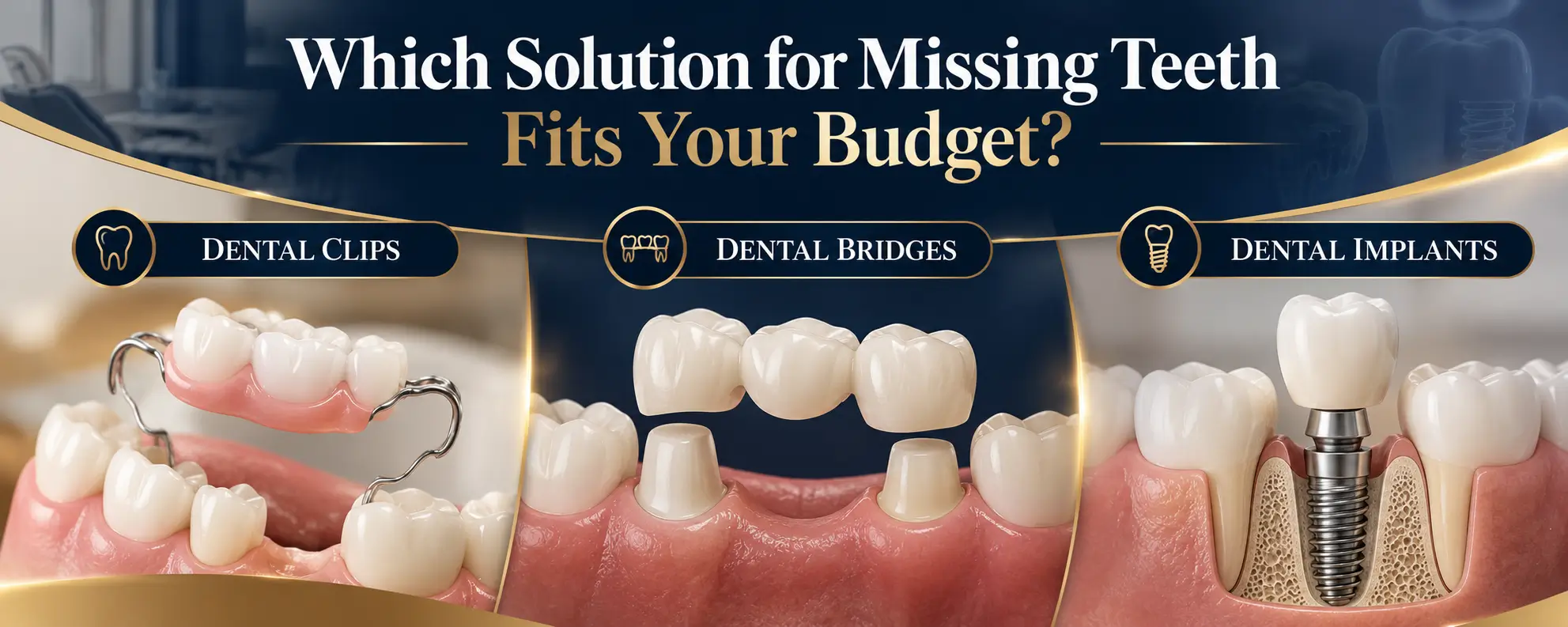
Dental Clips vs Dental Implant vs Dental Bridges: Which Solution for Missing Teeth Fits Your Budget?
October 6, 2026
Deciding between a dental clip, a bridge, or a dental implant? Discover how each option compares in upfront cost, lifespan, maintenance, and long-term...
Tooth Extraction: A Complete Guide to Safe, Comfortable Tooth Extraction and Replacement
September 30, 2026
What happens after a tooth extraction? Learn how simple and surgical extractions differ, how long recovery takes, and the essential aftercare steps that...