

November 12, 2026
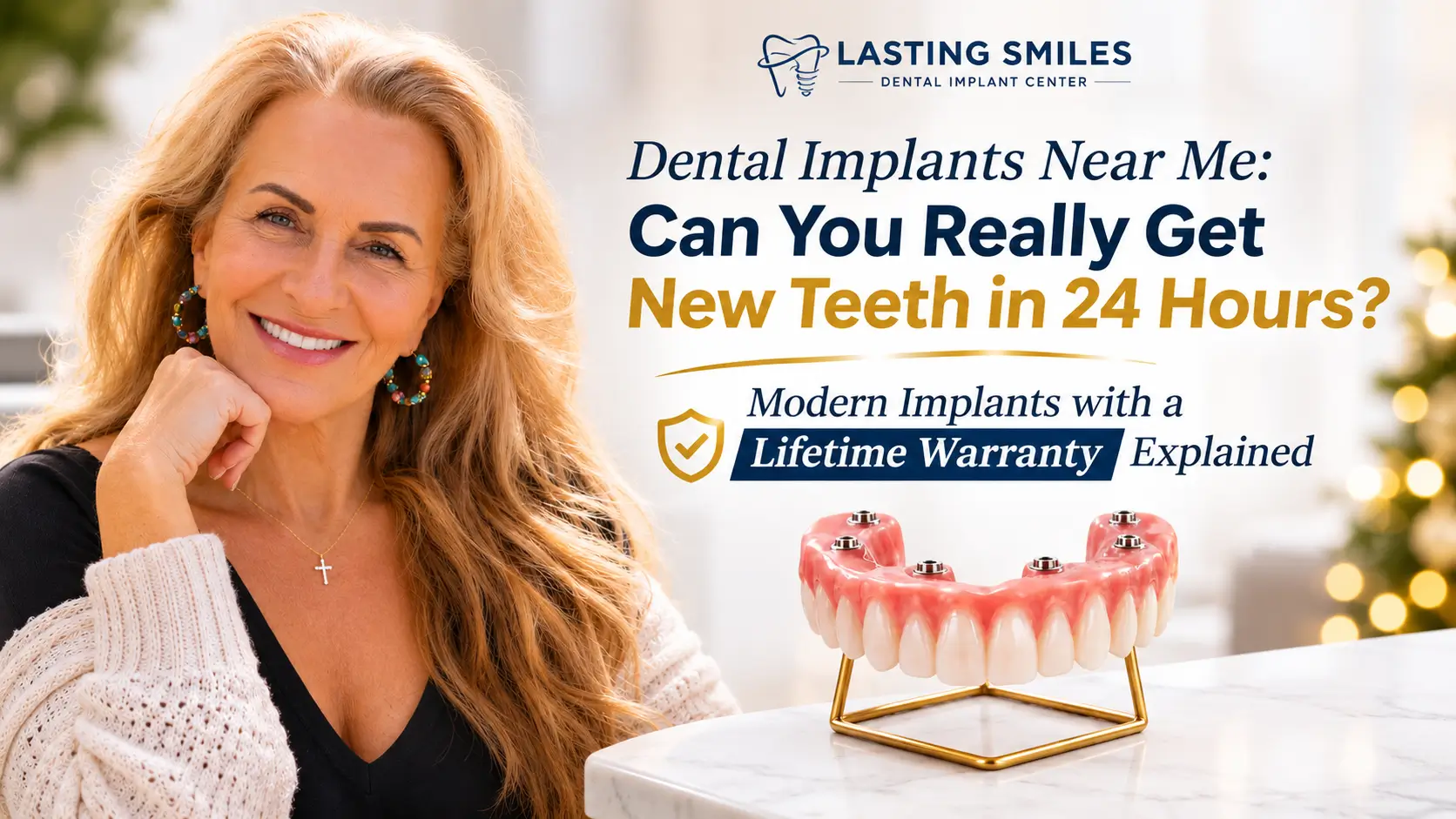
If you have been searching for dental implants near me, imagine walking into a dental implant center with missing teeth, loose dentures, or a smile you’ve been hiding for years—and leaving with a new set of fixed teeth on the same day.
Imagine walking into a dental implant center with missing teeth, loose dentures, or a smile you’ve been hiding for years. Now imagine leaving with a new set of fixed teeth on the same day.
It might sound too good to be true, but modern dental implant technology has made this possible for many qualified patients.
With same-day dental implants, also known as immediate-load dental implants, patients may receive a temporary fixed set of replacement teeth within 24 hours of their implant procedure.
This approach has changed how people think about full-mouth restoration. Instead of waiting months without a fixed smile, eligible patients can begin their smile transformation much sooner.
But how does it actually work? Are the teeth permanent? How much do dental implants cost? And what does a lifetime warranty really cover?
At Lasting Smiles Dental Implant Center, we believe patients deserve clear answers before making an important decision about their oral health.
Let’s explore how modern dental implants work and what you should know before considering treatment.
Can You Really Replace Missing Teeth in 24 Hours?
Yes, some patients can receive a fixed temporary set of teeth within 24 hours of dental implant surgery. However, not everyone qualifies, and the treatment plan depends on the patient’s bone structure, oral health, and implant stability.
This treatment is commonly called immediate loading or same-day full-arch dental implants.
Here’s what makes it possible:
- Advanced 3D imaging: A 3D CT scan helps the dental team evaluate bone density, jaw structure, and implant placement.
- Digital treatment planning: Modern planning tools help determine the ideal position and angle of each implant.
- Strategic implant placement: Techniques such as All-on-4 use strategically positioned implants to support a full arch of replacement teeth.
- Immediate temporary teeth: When clinical conditions allow, a fixed temporary restoration can be attached shortly after implant placement.
The result? Qualified patients may leave the clinic with a new fixed smile much sooner than with traditional treatment approaches.
Are Same-Day Dental Implants Actually Permanent?
This is an important distinction.
When people hear “new teeth in 24 hours,” they often assume they will receive their final permanent teeth immediately.
In many full-arch cases, the teeth delivered on the day of surgery are actually temporary fixed teeth.
These teeth allow patients to maintain their appearance and begin adapting to their new smile while the dental implants heal and bond with the jawbone.
After the healing period, the temporary restoration can be replaced with a custom-designed final prosthesis, depending on the treatment plan.
The final restoration may use materials such as zirconia, which is valued for its strength, durability, and natural-looking appearance.
Same-day teeth do not mean the healing process is complete in one day. The implants still need time to integrate with the jawbone before the final restoration is placed.
How Do Same-Day Dental Implants Work?
Modern full-arch dental implant procedures combine advanced imaging, careful surgical planning, and custom-made restorations.
Here’s what patients can generally expect.
Step 1: Comprehensive Dental Consultation and 3D CT Scan
Your journey starts with an initial consultation appointment where your implant dentist reviews your medical and dental history.
Your implant dentist will evaluate your teeth, gums, jawbone, and overall oral health.
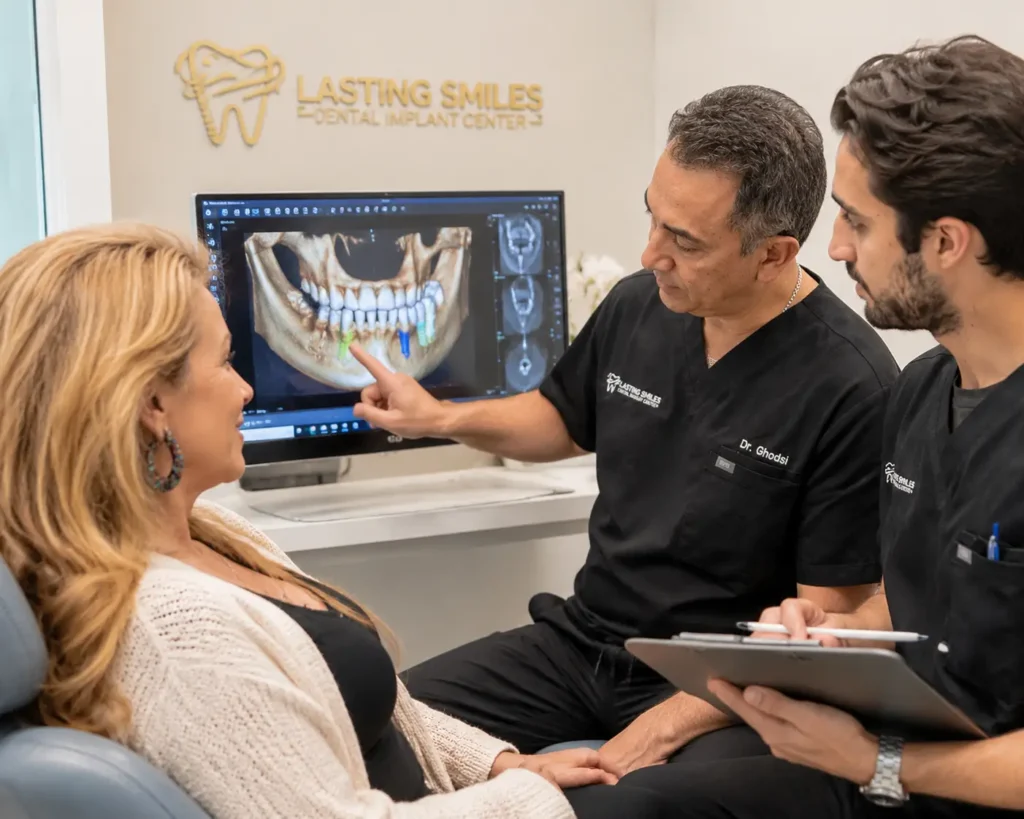
A 3D CT scan provides detailed images of your jaw, helping the dental team assess:
- Available bone density and volume.
- Jawbone structure and anatomy.
- Position of important nerves and surrounding structures.
- Potential areas requiring bone grafting.
- Suitable locations for dental implants.
This appointment helps determine whether implants can replace missing teeth and whether care can be coordinated in one location.
This information helps determine whether immediate implant placement and same-day teeth are appropriate.
Step 2: Personalized Treatment Planning
Once your examination is complete, your dentist will create a treatment plan based on your individual needs.
Depending on your condition, your treatment may involve:
- Removing damaged or failing teeth.
- Preparing the jawbone for implant placement.
- Placing four, six, or another appropriate number of implants.
- Evaluating whether bone grafting is necessary.
- Designing a temporary fixed restoration.
Two commonly discussed approaches are All-on-4 and All-on-6.
All-on-4 Dental Implants
All-on-4 uses four strategically positioned dental implants to supAll-on-4 uses four strategically placed dental implants to support a full arch of replacement teeth.port a full arch of replacement teeth.
This approach may help certain patients with reduced bone availability avoid more extensive bone grafting procedures. However, suitability depends on individual anatomy and treatment requirements.
All-on-6 Dental Implants
All-on-6 uses six dental implants to support a full arch of replacement teeth.
Additional implants may provide more support and help distribute biting forces, depending on the patient’s bone structure and clinical needs.
The best option isn’t necessarily the one with the most implants. It is the one that provides an appropriate and stable foundation for your specific situation.
[IMAGE: Side-by-side educational illustration of All-on-4 and All-on-6 dental implants | Alt Text: Comparison of All-on-4 and All-on-6 full-arch dental implant placement]
Step 3: Dental Implant Placement
During surgery, your dental implant specialist or, in complex cases, an oral surgeon places the titanium implant posts into carefully selected areas of the jaw bone in a comfortable environment at our office.
These implants act as artificial tooth roots.
If the patient has sufficient bone support and the implants achieve adequate primary stability, the dentist may proceed with an immediate-loading approach with support from our skilled team and a focus on compassionate care.
Sedation and anesthesia options may also be available to help patients remain comfortable during treatment. Oral and maxillofacial surgeons specialize in complex surgical procedures. Deeper sedation is commonly used in hospital settings for complex cases.
Step 4: Receive Your New Teeth Within 24 Hours
For patients who qualify, a temporary fixed full-arch restoration can be attached to the implants on the same day or within the planned 24-hour treatment period.
This is one of the most exciting benefits of modern full-arch dental implant technology.
Instead of relying on loose removable dentures, eligible patients can have a fixed set of temporary teeth while their implants heal.
However, these teeth require proper care.
Your dentist will usually recommend a modified or soft-food diet during the early healing period to avoid placing too much pressure on the implants.
You should not expect to immediately return to eating hard or crunchy foods.
Step 5: Healing and Your Final Permanent Teeth
After implant placement, a process called osseointegration begins.
This is when the surrounding jaw bone gradually bonds with the titanium implant surface as the implant fuses during healing.
The process can take several months, depending on the patient’s healing response and treatment plan. Treatment typically involves multiple visits over about 6 to 12 months, depending on the plan.
Patients may also be prescribed antibiotics after surgery to help prevent infection.
Once the implants have healed sufficiently, your dentist can proceed with the final restoration.
Your final implant restorations may include crowns or other prosthetic options and may be custom-designed using high-quality materials such as zirconia for a precise fit, natural appearance, and long-term function.
Implants also help stimulate bone growth to reduce jawbone loss, and long-term success rates exceed 95% in appropriate cases.
[IMAGE: Custom zirconia full-arch dental restoration displayed beside a dental implant model | Alt Text: Custom zirconia permanent teeth for full-arch dental implant restoration]
What Makes Someone a Good Candidate for New Teeth in 24 Hours?
Although same-day dental implants provide are an excellent option for many patients, not everyone is automatically a candidate.
Your dentist must evaluate several factors before recommending immediate implant placement and loading.
1. Sufficient Bone Density and Volume
Dental implants need a stable foundation.
Your jawbone must provide enough support to hold the implants securely during the healing process.
If you have experienced bone loss after losing teeth, additional procedures may be needed before or during implant treatment.
2. Overall Oral Health
Healthy gums and the management of existing oral infections are important for successful implant treatment.
Your dentist will evaluate any signs of gum disease, infection, or other conditions that may affect healing.
3. General Health and Healing Factors
Certain medical conditions, medications, smoking habits, and other health factors can affect healing and implant success.
Your dentist will review your medical history before determining whether immediate loading is appropriate.
4. Ability to Follow Post-Treatment Instructions
Your new implants need protection while healing, and keeping your follow-up appointments is especially important to protect them and reduce complications during recovery.
Patients must follow their dentist’s instructions regarding:
- Soft-food diets.
- Oral hygiene.
- Follow-up appointments.
- Medication instructions.
- Avoiding excessive pressure on temporary teeth.
The best way to determine whether you qualify is through a comprehensive examination and 3D CT scan.
What If You Have Bone Loss? Can You Still Get Dental Implants?
Yes, having bone loss does not automatically mean dental implants are impossible.
Many patients experience jawbone changes after losing natural teeth. This happens because the jawbone no longer receives the same stimulation from tooth roots.
Depending on the amount and location of bone loss, your dentist may recommend different treatment options.
These may include:
- Bone grafting.
- Ridge augmentation.
- Sinus lift procedures.
- Alternative implant positions.
- Specialized full-arch implant techniques.
Some patients with reduced bone density may still qualify for same-day full-arch restoration, while others may need additional treatment or a delayed loading approach.
The important thing is to avoid assuming that you’re not a candidate before having your jaw properly evaluated.
How Much Do Dental Implants Cost?
One of the biggest questions patients have is how much dental implants cost.
The total investment depends on the number of implants, type of restoration, materials used, surgical complexity, and additional procedures required.
A single dental implant is very different from replacing an entire upper or lower arch, and one tooth implant treatment commonly averages about $3,000 to $5,000. Flexible payment options and financing plans can help fit treatment into a monthly budget.
What Factors Affect Full-Arch Dental Implant Costs?
Several factors can influence your final treatment estimate.
1. Number of Dental Implants
Your dentist may recommend All-on-4, All-on-6, or another implant configuration depending on your anatomy and treatment goals.
2. Type of Restoration
Temporary teeth and final restorations may use different materials.
For example, zirconia restorations are commonly selected for their strength and aesthetic qualities.
3. Additional Procedures
Some patients may require extractions, bone grafting, or other procedures before receiving their final restoration.
4. Sedation and Anesthesia
Your preferred and clinically appropriate sedation option may also affect the overall treatment cost.
5. Follow-Up and Maintenance
Long-term care, professional maintenance, and potential repairs should be considered when evaluating the total investment.
Is There a Lifetime Warranty on Dental Implants?
A lifetime warranty can provide additional peace of mind, especially when investing in full-mouth dental restoration.
However, it is important to understand exactly what the warranty covers.
A lifetime warranty does not automatically mean that every part of your dental restoration is guaranteed to last forever without maintenance or replacement.
Depending on the written warranty program, coverage may apply to specific implant components or restoration materials.
Before proceeding, ask your treatment coordinator to explain:
- Which components are covered: implant fixtures, abutments, the final crown, or the final prosthesis.
- Whether repairs or replacement parts are included.
- Whether laboratory and professional service fees are covered.
- Whether routine maintenance is required to keep coverage active.
- What exclusions apply, such as accidental damage or failure to follow care instructions.
- Whether coverage is transferable.
At Lasting Smiles Dental Implant Center, ask our team to review the written terms of the applicable lifetime warranty with you before treatment.
We believe patients should understand the protection associated with their investment rather than relying on the words “lifetime warranty” alone.
Some offices also review dental insurance, dental insurance plans, insurance benefits, payment plans, and other payment options to help patients understand the full cost of treatment, although implant coverage varies by provider and plan.
For additional information about treatment costs, visit our [Dental Implant Cost Guide – INSERT INTERNAL LINK].
Does Same-Day Dental Implant Surgery Hurt?
It is completely normal to feel nervous about dental implant surgery.
Many patients delay treatment because they are worried about pain, recovery, or the surgical process.
The good news is that dental implant procedures are performed using anesthesia and, when appropriate, sedation to help manage discomfort.
During surgery, local anesthesia numbs the treatment area. Depending on the procedure and your needs, additional sedation options may be available.
After surgery, you may experience:
- Mild to moderate soreness.
- Swelling around the gums and face.
- Minor bruising.
- Temporary difficulty chewing.
- Some sensitivity during the early healing period.
Your dental team will provide instructions and recommend appropriate medication to help manage recovery.
Looking for Sleep Dentistry Near Me?
If dental anxiety has kept you from getting the treatment you need, sedation dentistry may help create a more stress-free experience.
Depending on your health history and treatment requirements, available options may include:
- Local anesthesia.
- Oral sedation.
- IV sedation.
- Other medically appropriate anesthesia options.
Care is provided in a comfortable environment by a skilled team focused on compassionate care and patient-centered care.
Not every patient needs the same level of sedation.
Your dentist will discuss the appropriate option based on your medical history, procedure complexity, and comfort needs.
If you are searching for sleep dentistry near me, ask whether the dental implant center offers sedation options and what qualifications and monitoring are provided.
Learn more about our Sedation Dentistry Services – Click here
How Long Is the Recovery After Same-Day Dental Implants?
Receiving temporary teeth within 24 hours does not mean your implants have completely healed.
Your body still needs time to recover and allow the implants to bond with the jawbone.
The recovery timeline varies depending on the procedure, bone quality, overall health, and individual healing response.
What to Expect During Recovery
First 24–72 Hours
You may experience swelling, tenderness, and mild discomfort. Follow your dentist’s instructions and rest as recommended.
First 1–2 Weeks
Swelling and soreness generally begin to improve. Continue following your prescribed oral hygiene routine and modified diet.
First Several Months
The implants continue integrating with the jawbone. Regular follow-up visits allow your dentist to monitor healing and restoration stability.
Final Restoration Stage
Once healing is sufficient, your dentist can evaluate your readiness for the final permanent restoration.
Throughout recovery, avoid hard, crunchy, or sticky foods until your dentist gives you clearance.
Following your post-operative instructions is one of the most important things you can do to protect your investment.
How Long Do Full-Arch Dental Implants Last?
Dental implants are designed to provide a durable tooth replacement solution for missing teeth and are a trusted choice to replace missing teeth because they help preserve the jawbone and support long-term function.
The titanium implant posts can last many years and potentially a lifetime when properly placed, maintained, and supported by healthy surrounding tissues.
Unlike traditional dentures, implants are fixed in the jaw and generally offer greater comfort and stability for many years with proper care.
However, the implant itself and the replacement teeth are two different components.
The implant fixture is placed into the jawbone, while the prosthetic teeth attached to it may experience normal wear over time.
Several factors influence long-term results:
- Daily brushing and cleaning.
- Regular professional dental maintenance.
- Healthy gums and surrounding tissues.
- Avoiding smoking.
- Managing teeth grinding.
- Following your dentist’s recommendations.
- Attending regular implant checkups.
Even with a lifetime warranty, routine maintenance remains essential.
A warranty should never replace proper dental care.
Why Choose Lasting Smiles Implant Dentistry Center?
Choosing where to receive dental implants is just as important as understanding the procedure itself.
Selecting the right provider can affect both the safety of surgery and the long-term success of your implant. Ask how many implant cases the provider handles each year as one way to gauge experience.

Full-arch dental restoration requires careful planning, surgical experience, restorative expertise, specialized training in implantology, and long-term patient support; clinicians with extensive post-doctoral implant training may also help reduce risks such as infection, nerve damage, and implant failure.
At Lasting Smiles Dental Implant Center, we focus on helping patients understand their treatment options and make informed decisions about restoring their smiles.
Our approach emphasizes:
Advanced Treatment Planning
3D imaging and digital planning help evaluate your jaw structure and determine the most appropriate implant approach.
Full-Arch Restoration Options
We offer treatment options designed for patients considering All-on-4, All-on-6, and other full-arch implant solutions.
Custom-Designed Restorations
We offer a full range of implant restorations, from single tooth replacement to full-arch care, with options that balance function, durability, and natural-looking aesthetics, supported by advanced training in implant dentistry and cosmetic procedures.
Patient Comfort
We understand that dental anxiety is real. Our team can discuss available sedation options to help patients feel more comfortable.
Long-Term Value
We encourage patients to understand their restoration materials, maintenance requirements, and applicable lifetime warranty terms before beginning treatment, while seeking exceptional care from an experienced implant team.
Serving Patients in California and Nevada
If you are searching for dental implants near me, Lasting Smiles Dental Implant Center serves patients through our locations in:
- Irvine, California
- Pasadena, California
- Las Vegas, Nevada
Our team can help you explore full-arch restoration options and determine whether same-day dental implants may be appropriate for your needs.
[IMAGE: Professional dentist discussing dental implant options with a patient inside a modern dental implant consultation room | Alt Text: Lasting Smiles dental implant specialist discussing full-arch restoration options with a patient]
Frequently Asked Questions About New Teeth in 24 Hours
1. Can I really get new teeth in 24 hours?
Yes. Qualified patients may receive a fixed temporary set of teeth within 24 hours of full-arch dental implant surgery. The final permanent restoration is usually placed after the implants have healed and integrated with the jawbone.
2. Are 24-hour dental implants painful?
The procedure is performed with anesthesia, and sedation may be available depending on your treatment plan. Some swelling, soreness, and discomfort are normal during recovery, but your dental team will provide instructions to help manage these symptoms.
3. How long do same-day dental implants last?
Dental implants are designed for long-term use, permanent solution and can potentially last a lifetime with proper care. However, the prosthetic teeth may require maintenance, repairs, or replacement over time for adequate healing.
4. What does a lifetime warranty on dental implants cover?
Warranty coverage depends on the specific written program. It may apply to certain implant components or restoration materials, but exclusions, maintenance requirements, and replacement conditions vary. Always request the complete written terms before treatment.
5. Am I a candidate for dental implants if I have bone loss?
Possibly. Some patients with bone loss can still receive dental implants with additional procedures or specialized treatment planning. A 3D CT scan helps your dentist evaluate if you have enough bone and determine the most appropriate approach.
6. What is the difference between All-on-4 and All-on-6?
All-on-4 uses four dental implants to support a full arch of replacement teeth, while All-on-6 uses six. The appropriate option depends on your bone structure, implant stability, bite, and overall treatment needs.
7. Can I eat normally immediately after getting new teeth in 24 hours?
Not immediately. Even if you receive fixed temporary teeth on the same day, your implants still need time to heal. Your dentist will usually recommend a soft-food diet during the early recovery period before gradually allowing a wider range of foods. You will not be allowed to chew food that are crispy or hard while you’re on a healing process.
8. How much do full-arch dental implants cost?
The cost varies depending on the number of implants, restoration materials, surgical procedures, additional treatment requirements, and whether affordable dental implants are supported by financing, payment options, or applicable dental insurance benefits. A personalized consultation is the best way to receive an accurate estimate. Your quote should also itemize the entire process so you can confirm whether pricing includes implant placement, implant restorations, the abutment, and any crowns involved.
9. Can I get dental implants with sedation?
Yes, sedation may be available depending on your health history and treatment needs. Options can include oral or IV sedation, along with local anesthesia. Your dental team will determine which approach is appropriate.
10. How do I find the best dental implants near me?
Look for an experienced dental implant team with implant therapy experience that provides comprehensive evaluations, 3D imaging, clear treatment plans, transparent cost estimates, and ongoing follow-up care. Use your first appointment to ask about the dentist’s experience, success rate, restoration materials, sedation options, and written warranty terms so you can feel confident you’re getting quality dental care. If you need to replace missing teeth, the consultation should explain options from a single tooth to full-arch treatment, including implant-supported crowns, bridges, or dentures, and how they compare in stability and long-term value.
Ready to Discover If You Qualify for New Teeth in 24 Hours?
You don’t have to keep living with loose dentures, missing teeth, or a smile that makes you feel uncomfortable.
Modern dental implant technology offers new possibilities for restoring your smile, improving chewing function, and helping you feel more confident.
If you’ve been considering full-mouth dental implants, now is a good time to explore your options.
Schedule your COMPLIMENTARY 3D Dental Implant Consultation appointment at Lasting Smiles Dental Implant Center.
Our team in Irvine, Pasadena, and Las Vegas is ready to help you understand your options, evaluate your candidacy, and create a treatment plan based on your individual needs. As a trusted choice, each office is designed to provide a comfortable environment and compassionate care throughout the process.
Your journey toward a stronger, more confident smile starts with a conversation.
Click below to book your complimentary consultation.
Medical and Educational References
For patients who want to learn more about dental implants and immediate-loading procedures:
- American Academy of Implant Dentistry (AAID) – Dental Implant Information
- Mayo Clinic – Dental Implant Surgery
- American Association of Oral and Maxillofacial Surgeons – How Dental Implants Work
Medical Disclaimer: This article is intended for educational purposes and does not replace an individual dental examination, diagnosis, or professional treatment recommendation. Same-day dental implant eligibility varies by patient. Treatment outcomes, healing times, restoration materials, and warranty coverage depend on individual circumstances and the applicable treatment and warranty agreements.
Share
Recent Articles
Dental Implants Near Me: Can You Really Get New Teeth in 24 Hours? Modern Implants with a Lifetime Warranty Explained
November 12, 2026
Discover how modern same-day dental implant technology may help qualified patients get new teeth in as little as 24 hours. Learn about All-on-4,...
Use Dental Insurance Before End of Year: How to Maximize Your 2026 Dental Benefits for Dental Implants Before December 31
November 4, 2026
Discover how to maximize your unused dental insurance benefits and dental benefits before they expire on December 31. Learn how to combine insurance,...

Sedation Dentistry in Las Vegas: Comfortable, Anxiety-Reducing Dental Care at Lasting Smiles
October 28, 2026
Does the thought of sitting in a dental chair make your heart race? Have you postponed treatment because you are afraid of pain,...