

October 28, 2026
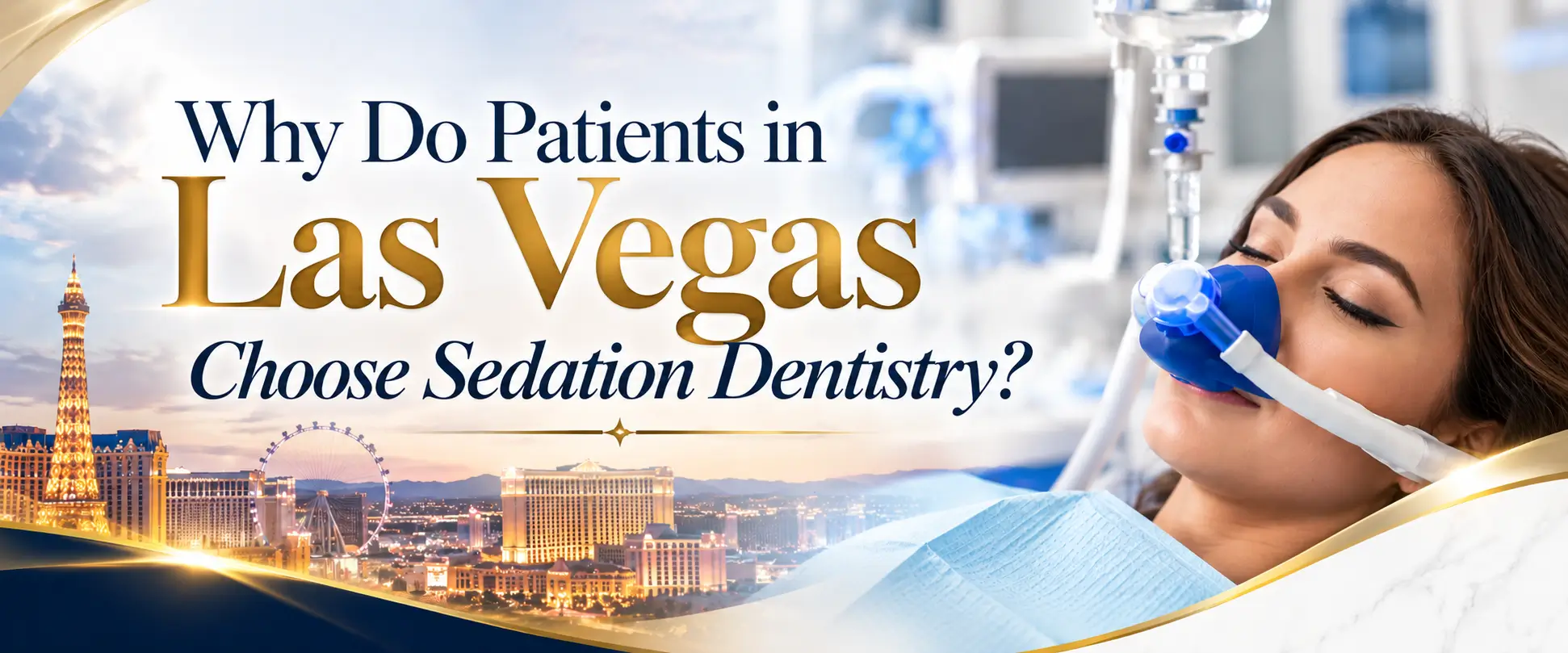
Does the thought of sitting in a dental chair make your heart race? Have you postponed treatment because you are afraid of pain, dental instruments, or an experience you would rather forget? Perhaps you know you need dental work but feel overwhelmed at the thought of getting started.
You are not alone, and you do not have to feel embarrassed about your concerns.
At Lasting Smiles Dental Care, we understand that dental anxiety can make even a routine appointment feel difficult. For some patients, it means avoiding the dentist for years. For others, it creates unnecessary stress before procedures such as tooth extractions, dental implants, or extensive restorative treatment.
Sedation dentistry in Las Vegas can help make dental care a more manageable, comfortable experience. Depending on your needs, medical history, and planned treatment, sedation may help you feel calmer and less aware of the sights, sounds, and sensations associated with dental procedures.
Our Las Vegas office at 4011 Meadows Ln, Suite 101, Las Vegas, NV 89107, serves patients seeking a more comfortable approach to dental care. Whether you experience dental fear, have a strong gag reflex, or need a longer procedure, our team can discuss your concerns and help you understand your options.
In this guide, we explain how dental sedation works, the differences between nitrous oxide, oral conscious sedation, and IV sedation, who may benefit, and what you can expect before and after treatment.
What Is Sedation Dentistry?
Sedation dentistry uses medication to help patients relax during dental treatment. It can range from mild relaxation to deeper levels of sedation, depending on the medication, the procedure, and the patient’s individual needs.
Sedation is sometimes called “sleep dentistry,” but that phrase can be misleading. With nitrous oxide and many oral sedation approaches, patients remain awake and able to respond to instructions. IV sedation can produce a deeper state of relaxation and may cause patients to remember little of the procedure. General anesthesia, when indicated, is different because it produces unconsciousness.
Sedation and local anesthesia also serve different purposes. Sedation primarily helps manage anxiety and awareness, while local anesthesia numbs the treatment area to control pain. Your dentist will determine which methods are appropriate for your care.
At Lasting Smiles, our Las Vegas location offers sedation dentistry options for patients who need additional support during dental treatment. The appropriate approach depends on your clinical assessment and the type of care you need.
How Can Sedation Dentistry Help?
Depending on the method selected, dental sedation may help you:
- Feel calmer before and during treatment.
- Manage dental fear associated with past negative experiences.
- Tolerate dental instruments and procedures more comfortably.
- Reduce distress caused by a sensitive gag reflex.
- Get through longer or more involved appointments.
- Receive necessary treatment that you may otherwise continue to postpone.
Sedation does not eliminate every sensation or guarantee that you will have no discomfort. Instead, it is one part of a personalized plan designed to make dental care easier to tolerate.
Why Do Patients in Las Vegas Choose Sedation Dentistry?
Dental anxiety can affect people of all ages and backgrounds. Some patients know exactly what triggers their fear, while others feel uneasy without being able to identify one specific reason.
Understanding your concerns is an important first step toward finding a solution.

1. Fear of Dental Pain
Fear of pain is one of the most common reasons people delay dental appointments. Even if a previous procedure was years ago, the memory of discomfort can make another visit feel intimidating.
Sedation may help patients feel calmer and more pain free during treatment. Your dentist can also use appropriate local anesthesia and other comfort measures to manage pain during the procedure.
2. Negative or Traumatic Dental Experiences
A difficult childhood dental visit, an uncomfortable extraction, or feeling that you had little control during treatment can affect how you approach dental care as an adult.
A patient-centered approach allows you to explain what happened, discuss your concerns, and agree on ways to make the next visit more manageable.
3. Embarrassment About Your Teeth
Some people avoid the dentist because they feel ashamed about missing teeth, visible decay, damaged restorations, or years of neglected dental care.
Please remember that you deserve care without judgment. Dental professionals can evaluate your current oral health and explain realistic treatment options without making you feel embarrassed about the past.
4. A Strong Gag Reflex or Sensory Sensitivity
The feeling of dental instruments in the mouth, certain sounds, strong tastes, or difficulty breathing comfortably through the nose can make treatment challenging.
Depending on the cause, sedation and other adjustments to the treatment process may help by making you extremely relaxed and easier to treat when a strong gag reflex or sensory sensitivity makes care difficult. Your dentist can discuss whether sedation is appropriate for your specific situation.
5. Anxiety About Extensive Dental Work
Many patients who need several fillings, extractions, dental implants, or full-mouth rehabilitation may feel overwhelmed by the amount of treatment involved.
Sedation may help eligible patients tolerate longer procedures. However, the number of treatments that can be completed in one appointment depends on the treatment plan, clinical considerations, and the sedation method selected.
If you have been putting off dental care because of any of these concerns, a consultation is a practical place to start.
Types of Sedation Dentistry Available in Las Vegas
Not every patient needs the same level of sedation. Some feel comfortable with a mild option, while others may require a deeper level of support for surgical or extensive treatment.
At Lasting Smiles, our practice’s sedation options include nitrous oxide, oral sedation, and IV sedation. Your dentist will explain which options are available and appropriate for your case.
1. Nitrous Oxide Sedation: Laughing Gas
Nitrous oxide, also known as laughing gas, is a sedative gas mixed with oxygen and inhaled through a small mask over the nose.
It is commonly used to help patients relax during certain dental procedures. The effects generally begin within minutes, and patients usually remain awake and responsive.
What Does Nitrous Oxide Feel Like?
Patients may experience:
- A relaxed or calm sensation.
- Mild lightheadedness or tingling.
- A feeling that time is passing more quickly.
- Less anxiety about the dental procedure.
Experiences vary from person to person. Nitrous oxide is not intended to put you fully to sleep.
Benefits of Nitrous Oxide
- Fast onset: The relaxing effects typically begin within minutes.
- Adjustable delivery: The dental team can adjust the amount administered as clinically appropriate.
- Relatively quick recovery: The effects usually wear off shortly after administration stops and oxygen is provided.
- Conscious relaxation: You can generally communicate with the dental team throughout treatment.
Nitrous oxide is a form of minimal sedation and may be appropriate for patients with mild to moderate dental anxiety or those who need help relaxing during selected procedures.
Whether you can drive afterward depends on your recovery and your dentist’s instructions. Follow the office’s guidance rather than assuming driving is always permitted.
2. Oral Conscious Sedation
Oral conscious sedation, often called oral sedation dentistry, involves taking a prescribed sedative medication before a dental appointment. Depending on the case, this plan may use an anti-anxiety pill, sometimes combined with nitrous oxide, to help reduce anxiety and create drowsiness while you remain responsive.
Unlike inhaled options alone, oral sedation is taken by mouth. The medication and dosage are selected according to your medical history, treatment needs, and the intended level of sedation.
What Does Oral Sedation Feel Like?
Depending on the medication and your individual response, most patients remain awake, become very relaxed, and may feel drowsy rather than being completely asleep:
- Significantly more relaxed.
- Drowsy or less concerned about the procedure.
- Less aware of the passage of time.
- Less likely to remember some parts of the appointment.
Oral sedation does not affect everyone in the same way. Some patients remain fully conversational, while others become much drowsier.
Who May Benefit From Oral Sedation?
Your dentist may consider oral sedation if you:
- Experience moderate dental anxiety and want a more relaxed dental experience.
- Feel nervous about injections or dental instruments.
- Need a longer restorative appointment.
- Have difficulty relaxing in the dental chair.
- Want additional support during selected procedures, or have special needs that can make routine visits difficult.
What Should You Know Before Oral Sedation?
Oral sedatives are usually taken as a pill before the appointment and can impair judgment, coordination, and alertness for several hours. Their effects may also be less predictable than those of some other methods, and the dose helps determine whether the effect is closer to minimal sedation or moderate sedation.
You will generally need a responsible adult to accompany you home. Do not drive, drink alcohol, operate machinery, or make important decisions until your dentist confirms it is safe to resume these activities.
Follow all instructions about eating, drinking, and medications before your appointment. Never take additional sedatives or change your prescribed dose without your dentist’s direction.
3. IV Sedation Dentistry
Intravenous (IV) sedation delivers medication through a vein, allowing the clinician to administer and adjust medication during treatment as appropriate for the patient’s response.
IV sedation can provide a deeper level of relaxation than nitrous oxide alone. Depending on the medications and level of sedation, patients may remain responsive but become very drowsy, and they may remember little of the procedure.
IV sedation requires appropriate training, patient assessment, monitoring, and emergency preparedness.
When Might IV Sedation Be Considered?
IV sedation may be considered for eligible patients who:
- Have significant dental anxiety or dental phobia.
- Need extensive restorative or surgical treatment.
- Are undergoing certain dental implant procedures.
- Require tooth extractions or other oral surgery.
- Have difficulty tolerating lengthy appointments.
The appropriate level of sedation depends on your health, the complexity of the procedure, and the qualifications and protocols of the treating team.
What Are the Benefits of IV Sedation?
For appropriately selected patients, IV sedation may provide:
- A deeper level of relaxation.
- Reduced awareness of the procedure.
- Less anxiety during extensive treatment.
- Limited memory of some or much of the appointment.
IV sedation is not the same as general anesthesia. Patients may remain responsive depending on the depth of sedation, and additional precautions are required as sedation becomes deeper.
Because IV sedation can affect alertness and coordination after treatment, you must arrange for an adult to drive you home and follow the team’s recovery instructions.
Nitrous Oxide vs. Oral Sedation vs. IV Sedation: Which Is Right for You?
The best sedation option depends on your anxiety level, medical history, procedure, and personal preferences. There is no single method that is ideal for every patient. Options can range from minimal sedation to more advanced approaches, and deep sedation is generally handled in a hospital or surgical center rather than a routine dental office.
Feature | Nitrous Oxide | Oral Sedation | IV Sedation |
|---|---|---|---|
How it is administered | Inhaled through a nasal mask | Prescribed medication taken by mouth | Medication delivered through an IV |
Typical effect | Mild relaxation | Relaxation and possible drowsiness | Moderate to deeper sedation, depending on the protocol |
Level of awareness | Usually awake and responsive | Usually awake but may be drowsy | May be responsive but deeply relaxed |
Onset | Usually within minutes | Depends on the medication | Often rapid |
Recovery | Usually relatively quick | Can last several hours | Requires monitored recovery |
Transportation | Follow your dentist’s instructions | A responsible adult is generally required | A responsible adult is required |
Common consideration | Mild to moderate anxiety | Anxiety requiring additional medication | Selected complex procedures or significant anxiety; the deepest levels may require care outside a standard office setting |
This comparison is general educational information, not a recommendation for an individual patient. Sedation depth and recovery vary, and the deepest levels may require a hospital setting rather than a standard dental office. Your dentist will explain the specific protocol, risks, and transportation requirements for your appointment.
Is Sedation Dentistry Right for You?
Sedation dentistry may be an option if anxiety, sensitivity, or difficulty tolerating treatment has prevented you from receiving the care you need.
During your consultation, your dentist will consider your symptoms, medical history, medications, planned procedure, and overall health before recommending a sedation approach.
You may be a candidate for sedation dentistry if you:
- Feel anxious or panicked before dental visits.
- Have avoided the dentist for an extended period.
- Have a strong gag reflex.
- Need multiple or complex procedures.
- Have difficulty sitting comfortably for long appointments.
- Have had a negative dental experience.
- Want to discuss additional comfort options for dental implant treatment.
Sedation is not appropriate for everyone. Certain medical conditions, pregnancy, sleep-related breathing disorders, medication interactions, and other health factors may affect your eligibility, require additional precautions, or mean sedation is not recommended without further medical clearance; for example, diabetes may affect eligibility and some patients with diabetes may be ineligible for sedation dentistry.
The best way to determine whether sedation is appropriate is to discuss your concerns honestly with the dental team.
Is Sedation Dentistry Safe?
Sedation dentistry can be completely safe when the patient is properly assessed and the medication, monitoring, personnel, and emergency precautions match the intended level of sedation. However, sedation is not risk-free.
The risks depend on the medication, the depth of sedation, your medical history, and the procedure being performed. When those precautions are followed, sedation is generally safe for most patients, though individual health conditions still matter.
How Is Patient Safety Addressed?
A responsible sedation plan includes several important steps:
- Medical history review: The dental team reviews relevant medical conditions, allergies, medications, and previous reactions to sedation or anesthesia.
- Individual assessment: The clinician determines whether sedation is appropriate and selects the intended level of sedation, with baseline checks such as blood pressure and oxygen saturation when clinically indicated.
- Pre-appointment instructions: You receive guidance about fasting, medication use, and transportation when required.
- Appropriate monitoring: Monitoring is selected according to the sedation level and applicable clinical standards.
- Recovery assessment: The team evaluates your condition before discharge and provides aftercare instructions.
Potential side effects can include drowsiness, nausea, dizziness, or temporary impairment of coordination. More serious complications are possible, particularly with deeper sedation or in patients with certain health conditions.
Be sure to disclose all prescription medications, over-the-counter products, supplements, alcohol use when relevant, and any history of breathing or heart problems. Even though most sedatives used in dental offices are chosen to match the patient and procedure, this information is still essential for evaluating risk.
Your comfort matters, but it should never come at the expense of appropriate safety precautions.
How to Prepare for a Sedation Dentistry Appointment
Preparation depends on the type of sedation you receive. Your dental team will give you instructions tailored to your treatment plan.
Before Your Appointment
- Share your complete medical history. Tell your dentist about medical conditions, allergies, previous anesthesia experiences, and all medications you take.
- Follow eating and drinking instructions. Fasting requirements vary by sedation method and clinical protocol. Do not assume the same instructions apply to every type.
- Arrange transportation when required. Oral and IV sedation commonly require a responsible adult to take you home.
- Ask about your regular medications. Do not stop, skip, or change medication unless instructed by your treating clinician.
- Discuss your concerns. Tell the team what makes you anxious and what would help you feel more comfortable.
- Plan time to recover. Depending on the medication, you may need to rest for the remainder of the day.
If you become ill or experience a change in your health before the appointment, contact the office for guidance.
What Happens During the Procedure?
Although each visit is different, a sedation appointment generally follows these steps:
Step 1: Review and assessment
The team confirms your medical history, planned treatment, and sedation plan.
Step 2: Sedation administration
The selected medication is administered using the method appropriate for your care.
Step 3: Monitoring and treatment
The dental team monitors your condition for the entire time according to the level of sedation while providing the planned dental treatment. Local anesthesia is used when necessary to control pain.
Step 4: Recovery
After treatment, the team assesses your recovery and explains when you can leave safely.
Step 5: Aftercare
You receive instructions about eating, drinking, activity, medications, and follow-up care.
What Should You Expect After Sedation?
Recovery varies by method, medication, dosage, and individual response.
- After nitrous oxide: The effects generally diminish quickly after administration stops and oxygen is provided.
- After oral sedation: Drowsiness and impaired coordination may persist for several hours.
- After IV sedation: You will need monitored recovery and discharge instructions. Drowsiness and impaired judgment may continue after leaving the office.
Follow your clinician’s instructions carefully. Do not drive or resume activities requiring full alertness until you have been cleared to do so.
Sedation Dentistry for Dental Implants and Extensive Dental Treatment
Dental implants can replace missing teeth and support a range of restorative treatment plans. However, some patients feel anxious about the surgical process, especially when treatment involves extractions, bone grafting, or full-arch restoration.
Sedation may help eligible patients manage anxiety during these procedures.
How Can Sedation Help During Dental Implant Treatment?
Depending on the treatment plan, sedation may help patients:
- Feel calmer during implant surgery.
- Tolerate longer appointments more comfortably.
- Manage anxiety about surgical instruments or sounds.
- Receive necessary treatment with additional comfort support.
Sedation does not determine whether dental implants are appropriate, guarantee a particular outcome, or eliminate the need for local anesthesia and post-operative care.
Your dentist must evaluate your oral health, bone support, gum condition, medical history, and treatment goals before recommending implants or sedation.
What About Full-Arch Dental Implants?
Full-arch implant treatment can involve several coordinated stages, from treatment planning and any necessary extractions to implant placement and restoration.
For patients who feel apprehensive about extensive treatment, discussing sedation early in the consultation process can help clarify the available options.
Your treatment plan will depend on your clinical needs. The dentist can explain the expected procedure, estimated appointment length, recovery considerations, and whether sedation is appropriate.
How Lasting Smiles Dental Care Helps Patients Feel More Comfortable
Choosing a dental office is about more than finding a convenient appointment. If you experience dental anxiety, you also need a team that takes your concerns seriously and explains your options clearly.
At Lasting Smiles Dental Care in Las Vegas, our approach emphasizes communication, patient education, and personalized treatment planning.
A Patient-First Approach
We encourage patients to discuss their fears and ask questions before treatment begins. Understanding what concerns you allows the team to discuss practical ways to make your visit more manageable.
Sedation Options for Different Needs
Sedation is not a one-size-fits-all solution. Your dentist can explain whether nitrous oxide, oral sedation, or IV sedation may create a more relaxed dental experience based on your treatment needs.
Support for Complex Dental Needs
For patients who require dental implants, extractions, restorative procedures, or more extensive care, discussing comfort options early can help you make informed decisions about treatment.
Convenient Las Vegas Location
Our office is located at: Lasting Smiles Dental Care
4011 Meadows Ln, Suite 101 Las Vegas, NV 89107 Phone: 702-259-5295
We welcome patients from the Meadows Lane area and communities throughout the greater Las Vegas valley who are looking for dental care with an emphasis on comfort and clear communication.
If fear has been keeping you away from the dentist, contact our office today to schedule a consultation about your concerns and available sedation options.
Frequently Asked Questions About Sedation Dentistry in Las Vegas
1. How much does sedation dentistry cost in Las Vegas?
The cost depends on the sedation method, the length and complexity of treatment, and your individual needs. Sedation may be billed separately from the dental procedure. Ask the office for a detailed estimate and whether any portion may be covered by your dental insurance.
2. Will I be asleep during sedation dentistry?
Not necessarily. Nitrous oxide generally helps you relax while remaining awake. Oral conscious sedation does not usually make you completely asleep; most patients stay awake, may doze, and remain deeply relaxed. IV sedation can produce deeper relaxation and limited memory of the procedure. General anesthesia is different because it produces unconsciousness and is used only when clinically appropriate.
3. Does sedation dentistry prevent pain?
Sedation helps manage anxiety and awareness, but it does not automatically eliminate pain. Your dentist may use local anesthesia to numb the treatment area. The goal is to combine appropriate pain control with a sedation plan suited to your needs.
4. Is sedation dentistry suitable for severe dental anxiety?
It may be. Patients with significant dental anxiety can benefit from an assessment to determine whether sedation is appropriate. The dentist will review your medical history, planned treatment, and the level of support needed before recommending an option.
5. How long does dental sedation last?
The duration depends on the method and medication. Nitrous oxide usually wears off relatively quickly, while oral and IV sedatives may affect alertness for several hours. Your dentist will explain the expected recovery period and any activity restrictions.
6. Can I drive myself home after sedation dentistry?
Do not assume that you can. Nitrous oxide often permits a quicker return to normal activity, but you should follow the office’s instructions. Oral and IV sedation generally require a responsible adult to drive you home. Driving while impaired by sedatives is unsafe.
7. Can I receive sedation for dental implants?
Sedation may be an option for eligible dental implant patients, including some people undergoing extensive procedures. The recommended method depends on the complexity of the surgery, your medical history, and the clinician’s assessment.
8. Is IV sedation better than nitrous oxide?
Neither is automatically better. Nitrous oxide may be sufficient for patients who need mild relaxation, while IV sedation may be appropriate for selected procedures or patients who need a deeper level of sedation. Your dentist can explain the benefits and risks of each option.
9. What if I have a medical condition or take prescription medication?
Tell your dentist about every relevant medical condition, prescription, over-the-counter medication, supplement, and previous reaction to sedation. Some conditions and drug interactions may affect which sedation methods are appropriate.
10. Can I eat before a sedation dentistry appointment?
Instructions vary according to the medication and intended sedation level. You may need to avoid food and drink for a specified period. Follow the instructions provided by your dental team rather than using a general fasting rule.
11. Does dental insurance cover sedation dentistry?
Coverage varies by plan, procedure, and whether the sedation is considered eligible under your benefits. Ask your insurance provider and dental office to verify your coverage before treatment. Do not assume that sedation or the associated dental procedure will be covered.
12. Where can I find sedation dentistry in Las Vegas?
Lasting Smiles Dental Care is located at 4011 Meadows Ln, Suite 101, Las Vegas, NV 89107. Call 702-259-5295 to discuss your dental concerns, ask about sedation options, and schedule a consultation.
Take the First Step Toward More Comfortable Dental Care
You do not have to let dental anxiety decide whether you receive the care you need.
Whether you have avoided routine dental visits for years, feel nervous about an upcoming procedure, or are exploring dental implants, learning about sedation can help you understand your options and take the next step with greater confidence.
At Lasting Smiles Dental Care, we want you to feel informed, respected, and comfortable asking questions about your treatment. Our team can review your concerns, explain available sedation methods, and help determine what may be appropriate for your individual needs.
Ready to explore sedation dentistry in Las Vegas?
Contact Lasting Smiles Dental Care today to schedule a consultation.
Lasting Smiles Dental Care
4011 Meadows Ln, Suite 101
Las Vegas, NV 89107
Call: 702-259-5295
A more comfortable dental experience can start with one conversation. Let us help you understand your options and take the next step toward a healthier smile.
Medical disclaimer: This article is intended for general educational purposes and does not replace a dental examination, medical evaluation, or individualized professional advice. Sedation has potential risks and is not suitable for every patient. Your treating clinician will determine the appropriate approach for your circumstances.
Share
Recent Articles
Use Dental Insurance Before End of Year: How to Maximize Your 2026 Dental Benefits for Dental Implants Before December 31
November 4, 2026
Discover how to maximize your unused dental insurance benefits and dental benefits before they expire on December 31. Learn how to combine insurance,...
Sedation Dentistry in Las Vegas: Comfortable, Anxiety-Reducing Dental Care at Lasting Smiles
October 28, 2026
Does the thought of sitting in a dental chair make your heart race? Have you postponed treatment because you are afraid of pain,...

Transform Your Smile with Composite Veneers in West Covina | Lasting Smiles
October 21, 2026
Considering composite veneers in West Covina? Discover everything you need to know about costs, same-day application procedures, pros and cons, and how composite...