

May 8, 2026
Introduction
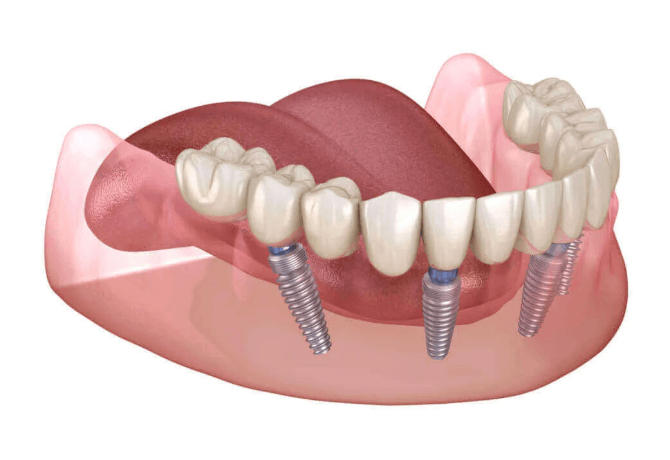
Dental implants for whole mouth represent a permanent solution for patients facing complete tooth loss, using strategically placed titanium implants to support a full arch of prosthetic teeth. This comprehensive tooth replacement approach addresses the needs of individuals with multiple missing teeth, failing teeth, or those struggling with conventional dentures who desire a stable, natural-looking smile.
This guide covers the full scope of full mouth dental implants, including treatment options like All-on-4 and All-on-6 systems, the complete dental implant procedure, cost considerations, and candidacy requirements. Single tooth implants and partial restoration fall outside this discussion, as our focus remains on complete oral rehabilitation for entire arches. The target audience includes patients experiencing extensive tooth loss, those with damaged teeth beyond repair, and denture wearers seeking improved oral function and quality of life.
Full mouth implants restore nearly 100% of your natural chewing ability, preserve jawbone health by preventing bone loss, and provide unmatched stability unlike traditional dentures. The practical importance extends beyond aesthetics—patients regain the ability to enjoy their normal diet, speak clearly, and maintain facial structure over time.
Direct answer: Dental implants for whole mouth typically use 4-8 titanium posts per arch, strategically positioned to support permanent prosthetic teeth that look, feel, and function like natural teeth. These titanium implants act as artificial tooth roots, fusing with the jawbone through osseointegration to create a stable foundation for your final restoration.
Key outcomes you will gain from this guide:
- Understanding of different full mouth implant options and their trade-offs
- Clear expectations for the mouth dental implant procedure and healing timeline
- Knowledge of cost factors and financing considerations
- Awareness of candidacy requirements including bone density needs
- Maintenance protocols for long-term implant success
Understanding Full Mouth Dental Implants
Full mouth dental implants provide a permanent tooth replacement solution by anchoring prosthetic teeth to titanium posts surgically placed in the jawbone. This approach offers complete oral rehabilitation for patients who have lost all or most natural teeth in one or both arches, delivering restored oral function and a natural appearance that traditional dentures cannot match.
How Full Mouth Implants Work
The foundation of full mouth implants begins with titanium posts that serve as artificial tooth roots. During implant surgery, these posts are inserted directly into the jawbone at strategic locations designed to maximize stability and distribute biting forces evenly, and patients often want a broader understanding of dental implant pain, risks, healing, and full‑mouth options.
Following dental implant placement, the osseointegration process begins—a biological phenomenon where bone cells gradually grow around and bond with the titanium surface. This integration typically requires a healing period of 3 to 6 months, during which the implants become permanently anchored within the bone structure. Once osseointegration completes, the implants provide a stable foundation capable of supporting prosthetic teeth that function like natural teeth.
Key Components of Full Mouth Systems
Every full mouth implant system consists of three essential components working together for complete restoration. The implant posts themselves form the base, acting as replacement natural tooth roots embedded within the jawbone. Abutments connect to the top of each implant, serving as intermediate pieces that link the buried posts to the visible prosthetic.
The prosthetic teeth—whether a fixed bridge or hybrid denture—attach to these abutments, completing the restoration with teeth that restore both function and aesthetics. Understanding these components helps patients appreciate how dental implants integrate with existing bone and gum tissue to create a comprehensive tooth replacement system.
With this foundation established, examining the different approaches to full mouth restoration reveals how treatment can be customized for individual needs.
Types of Full Mouth Dental Implant Solutions
Building on the fundamental principles of how full mouth implants work, several distinct treatment approaches exist to address varying patient needs, bone conditions, and preferences. Each implant option offers specific advantages depending on individual circumstances.
All-on-4 Implant System
The All-on-4 system uses four strategically positioned implants per arch to support a complete set of prosthetic teeth, making it a popular choice for full mouth restoration. Two implants are placed vertically in the front of the jaw, while two posterior implants are angled at 30-45 degrees to maximize contact with available bone and often eliminate the need to undergo bone grafting, which is why many patients explore All‑on‑4 dental implants as a popular full‑arch replacement.
This approach offers significant benefits: fewer implants needed means reduced surgical time, lower overall cost, and faster recovery. Most patients receive temporary teeth on the same day as implant surgery, minimizing time without functional teeth. The typical treatment timeline spans 3-4 months from initial consultation to final restoration, with 10-year implant survival rates exceeding 94% in clinical studies.
Ideal candidates for All-on-4 include patients with moderate bone loss who want a fixed, non-removable solution without extensive additional procedures.
All-on-6 Implant System
The All-on-6 system provides enhanced stability through six implants per arch, distributing biting forces across more anchor points. This additional support proves particularly valuable for patients with larger jaw spans or those who place heavy demands on their teeth through habits like grinding or clenching.
Compared to All-on-4, the six-implant approach offers built-in redundancy—if one implant experiences complications, the prosthetic remains supported. However, this comes with slightly increased complexity, potentially longer healing time, and 10-20% higher costs. When sufficient bone density exists, particularly in the upper jaw where bone tends to be less dense, All-on-6 often represents the recommended approach for maximum long-term durability, and many of the same considerations are discussed in All‑on‑4 dental implants FAQs for full‑arch replacement.
Individual Implant Replacement
Individual implants represent the most comprehensive approach, placing separate implant posts for each missing tooth—typically 8-12 implants per arch. Each implant supports its own crown, creating a restoration that most closely mimics natural teeth in both appearance and function.
This option delivers the most natural feel and allows individual crown replacement if damage occurs to a single tooth. However, individual implants require the highest investment in time, cost, and surgical complexity. Treatment often extends 6-12 months, frequently requires bone grafting, and costs significantly more than arch-supported systems, reflecting some of the key pros and cons of dental implants as a comprehensive solution. For patients with excellent bone structure and sufficient resources, this approach offers unparalleled results.
Understanding these distinct approaches prepares patients to discuss specific procedural details with their treatment team.
The Full Mouth Dental Implant Procedure
The full-arch dental implant restoration process is a multi-step procedure that replaces failing or missing teeth with a stable set of prosthetic teeth. With treatment options now understood, examining the step-by-step process helps set realistic expectations for what lies ahead.
Complete Treatment Process
The full-arch restoration journey typically takes between 3 to 12 months depending on individual healing, overall health, and treatment complexity, and understanding dental implant healing stages and what to expect can make this process feel more predictable. Here is what to expect at each stage:
- Initial consultation with 3D imaging and treatment planning: The full mouth dental implant procedure typically begins with a thorough consultation and evaluation of the patient’s oral health, including X-rays and 3D imaging to assess the jawbone and gum condition. Your treatment plan is developed based on bone density, remaining teeth condition, and overall oral health.
- Pre-surgical procedures including tooth extractions and bone grafting if needed: Any remaining decayed teeth or failing teeth are removed. If bone loss has occurred, bone grafting procedures may be required to ensure sufficient bone density for implant stability. This phase may add 3-4 months if grafting is extensive.
- Implant placement surgery with immediate temporary teeth when possible: During the implant placement surgery, dental implant posts are strategically inserted into the jawbone, acting as artificial tooth roots to support the prosthetic teeth. This procedure is typically performed under local anesthesia with sedation options available. Many patients receive temporary teeth the same day for immediate function.
- Healing period for osseointegration: After the implants are placed, a healing period of 3 to 6 months is typically required for the implants to integrate with the jawbone before the final prosthetic teeth are attached. During this healing phase, patients follow dietary restrictions and attend regular dental visits to monitor progress, and may wish to review dental implant downsides, longevity, pain, insurance, and timeline in more detail.
- Final prosthetic placement and bite adjustment: Once osseointegration confirms implant stability, the permanent prosthetic teeth are fabricated and attached. Final adjustments ensure proper bite alignment and natural appearance.
Treatment Option Comparison
When choosing between treatment approaches, several factors require consideration:
Factor | All-on-4 | All-on-6 | Individual Implants |
|---|---|---|---|
Number of Implants | 4 per arch | 6 per arch | 8-12 per arch |
Treatment Time | 3-4 months | 4-5 months | 6-12 months |
Bone Grafting Needs | Minimal | Sometimes | Often required |
Same-Day Teeth | Usually yes | Often yes | Rarely |
The average cost for full mouth dental implants in the US generally ranges between $15,000 and $40,000 per arch. For patients requiring implants for both the upper and lower arches, the total cost can range from $30,000 to $80,000. Factors that influence the cost of full mouth dental implants include the number of implants needed, the materials used, and any additional treatments required, such as bone grafting, as well as how insurance coverage for dental implants, costs, and financing options apply to your specific plan. | |||
The trade-off essentially balances investment against complexity: All-on-4 offers the most cost effective solution with fastest results, while individual implants provide maximum natural function at higher cost and longer treatment duration. Most patients find All-on-4 or All-on-6 delivers excellent outcomes with reasonable investment. |
With procedural expectations established, addressing common concerns helps patients approach treatment with confidence.
Common Challenges and Solutions
Many patients considering full mouth implants have legitimate concerns about treatment. Understanding that solutions exist for most challenges helps make informed decisions about pursuing this life changing solution.
Insufficient Bone Density
Full mouth dental implants require sufficient jawbone density for stability, potentially necessitating procedures like bone grafting. For patients with severe bone loss in the upper jaw, zygomatic implants offer an alternative by anchoring into the cheekbone rather than the jaw. Recent studies show 100% implant and prosthesis survival over 3+ years with this approach. Angled implant techniques used in All-on-4 systems also help many patients avoid bone grafting by utilizing existing bone more efficiently.
Treatment Cost Concerns
Dental implants are often considered a cosmetic procedure, and only a small portion of the procedure may be covered by dental insurance plans, which may cover up to 50% of major restoration procedures. However, most practices offer dental financing options, payment plans, and assistance coordinating insurance benefits. When considering that properly maintained dental implants can last a lifetime, compared to dentures which typically need replacement every 10-15 years, the long-term value often exceeds the upfront investment, particularly for patients pursuing a total smile makeover with All‑on‑4 dental implants.
Fear of Pain and Recovery
Modern implant dentistry employs advanced sedation options and minimally invasive techniques that significantly reduce discomfort. Most patients report minimal discomfort during the healing process, managed effectively with prescribed medications. Unlike traditional dentures that may cause ongoing irritation, full mouth implants provide permanent comfort once healed, especially in practices that combine dental implants, sedation, and cosmetic dentistry for full‑mouth restorations.
Long Treatment Timeline
For patients concerned about extended time without teeth, immediate loading protocols allow temporary teeth placement on the same day as surgery. These provisional restorations restore function and aesthetics while osseointegration occurs, minimizing social and professional disruption during the healing period.
With challenges addressed, patients can move forward with clear next steps.
Conclusion and Next Steps
Dental implants for whole mouth offer a permanent solution for complete tooth loss, with various approaches—All-on-4, All-on-6, and individual implants—designed to meet different needs, budgets, and bone conditions. Unlike traditional dentures, full mouth implants are fixed and offer unmatched stability, preventing slippage and discomfort while preserving facial structure through continued jawbone stimulation.
Patients often report significant improvements in their quality of life after receiving full mouth dental implants, including enhanced confidence and comfort. Full mouth dental implants help maintain bone health by stimulating the jawbone, thereby preserving facial features and overall appearance over time.
Immediate Actionable Steps
- Schedule a personalized consultation with an implant specialist for evaluation of your jawbone health and overall health status
- Gather dental records, X-rays, and insurance information before your appointment
- Discuss financing options and payment plans during your consultation
- Plan your treatment timeline considering work, social commitments, and healing time requirements
Candidacy Considerations
Candidacy for dental implants can be affected by systemic health conditions, oral health, and lifestyle choices such as smoking. Ideal candidates for full mouth dental implants must have sufficient jaw bone structure and gum tissue to support the implants, be in good health, and commit to proper care and oral hygiene during the treatment plan to enhance recovery.
Related Topics
For readers exploring comprehensive oral health, related topics include single tooth implants for isolated missing teeth, bone grafting procedures for those with insufficient bone, and implant maintenance protocols including daily brushing and regular dental visits to ensure long-term success.
Additional Resources
For ongoing implant care, focus on these essentials:
- Daily oral hygiene: Brush prosthetic teeth twice daily with soft-bristle brush; use water flossers or specialized interdental cleaners to clean beneath fixed bridges
- Professional maintenance: Schedule regular dental visits every 6 months for professional cleaning and implant assessment, following proven maintenance and care tips for long‑lasting dental implants
- Lifestyle considerations: Avoid tobacco use and manage systemic conditions like diabetes to optimize healing and long-term outcomes
With proper care and regular maintenance, your full mouth dental implants can provide a stable foundation for a natural smile that lasts a lifetime.
Share
Recent Articles
Dentures vs Dental Implants: Which Costs Less in the Long Run?
July 8, 2026
Dentures vs Dental Implants Cost | Lasting Smiles Analysis Traditional dentures are far more affordable upfront, but dental implants typically cost less over...
Same-Day Dental Implant: Restore Your Smile Faster | Lasting Smiles
June 29, 2026
Missing teeth can affect your confidence, your ability to eat comfortably, and your overall oral health. Many people assume they must wait several...
Signs Need for a Dental Implant: with a Lifetime Warranty – The Confidence You Deserve for a Smile That Lasts
June 16, 2026
Imagine never having to worry about your dental implants failing unexpectedly. For many Americans struggling with missing teeth, the decision to get dental...