

September 12, 2026

Don’t Wait Until It Hurts! A little delay can get costly. From preventive visits and gum care to repairing damaged teeth, early attention can help you plan ahead. Explore our guide and ask Lasting Smiles West Covina about the $99 New Patient Special for cleaning, Dental X-rays, and an exam.
It’s easy to assume that if your teeth don’t hurt, everything is fine. However, many dental issues can develop without obvious symptoms.
Cavities, gum disease, cracks, worn teeth, and other problems are often easier to treat when caught early. Waiting until pain intensifies can lead to more complex treatments, additional appointments, more time off work, and higher out-of-pocket expenses.
This doesn’t mean every dental problem will become costly or that preventive care guarantees avoiding major treatments. Rather, early dental care provides more chances to detect issues, explore options, and make informed decisions before situations become urgent.
For adults who have delayed dental visits due to a busy schedule, cost concerns, or dental anxiety, starting with a routine checkup is a practical first step.
A healthy, attractive smile boosts self-esteem and confidence. Research indicates that poor oral health can cause social withdrawal and lower life quality. When your smile looks and feels its best, you are more likely to engage confidently.
Preventive Care Benefits Your Overall Health
Preventive dental care impacts not only your smile but your whole body. Research links poor oral health to heart disease, diabetes complications, respiratory infections, and pregnancy risks like low birth weight. Regular dental visits help catch issues early, reducing the risk of extractions and emergency visits, which often lead to higher costs.
For example, a $100 cleaning can prevent a $500 filling. Early detection of gum disease can save thousands in periodontal surgery later. Preventing decay and infection helps avoid tooth loss.
Regular oral health appointments enable early detection of dental problems, significantly increasing chances of successful treatment and preventing minor issues from escalating.
Benefits of Regular Dental Check-Ups
Regular dental check-ups are fundamental to preventive care. They allow dentists to spot potential issues early, enabling less invasive and less costly treatments.
What Is Preventive Dental Care?
Preventive dental care involves ongoing attention to maintain optimal oral health and catch problems early. It typically includes:
- A dental examination
- Professional cleaning
- Dental X-rays when needed
- Evaluation for cavities and tooth damage
- Gum health assessment
- Oral cancer screening
- Review of brushing and flossing habits
- Personalized recommendations
Dentists in West Covina at Lasting Smiles might also suggest treatments like fluoride or sealants when appropriate.
Comprehensive preventive care removes hardened tartar that regular brushing misses and provides insight into your oral health status and how to protect your teeth over time.
Regular visits allow monitoring of changes in teeth, gums, and supporting bone. Good oral care reduces harmful bacteria that contribute to health issues, supporting gum health and overall wellness. This is especially important if you have existing dental problems or may need restorative treatment later.
Here are eight key questions to consider if you’ve been delaying dental care.
1. Do I Need a Dental Checkup If Nothing Hurts?
You notice a little sensitivity when you drink something cold. Your gums bleed when you floss. A chipped tooth feels rough, but it doesn’t hurt, so making a dental appointment slips down the list.
It is easy to think that if your teeth don’t hurt, everything must be fine. But many dental problems can develop before you notice obvious symptoms.
Cavities, gum disease, cracks, worn teeth, and other oral health problems may be easier to manage when they are found early. Waiting until pain becomes severe can sometimes mean more complicated treatment, more appointments, more time away from work, and higher out-of-pocket costs.
That does not mean every dental problem will become expensive or that preventive care guarantees you will avoid major treatment. It means that early dental care gives you more opportunities to identify problems, understand your options, and make decisions before a situation becomes urgent.
For adults who have delayed a dental visit because of a busy schedule, cost concerns, or dental anxiety, a routine checkup can be a practical first step.
A healthy, attractive smile can boost self-esteem and improve your self-confidence. Studies show that poor oral health can cause social withdrawal and lower quality of life. When your smile looks and feels good, you are more likely to engage confidently.
Preventive dental care affects your whole body, not just your smile. Poor oral health is linked to heart disease, diabetes, respiratory infections, and pregnancy risks like low birth weight. Regular dental visits catch problems early, helping you avoid extractions and costly emergency care.
For example, a $100 cleaning can prevent a $500 filling. Early gum disease detection can save thousands in surgery later. Preventing decay and infection helps avoid tooth loss.
Regular checkups help spot dental problems early, increasing the chance of successful treatment and stopping small issues from becoming big ones. When your smile looks and feels its best, you are more likely to say Preventive Care Benefits Your Overall Health Preventive dental care isn’t just about your smile — it affects your entire body.
Research shows that poor oral health is linked to: Heart disease Diabetes complications Respiratory infections Pregnancy risks such as low birth weight Regular dental visits help catch extractions.
Emergency Visits : Dental emergencies often result in higher costs due to urgent care and after-hours services. Health Complications : Poor oral health can contribute to serious conditions like heart disease and diabetes, leading to more medical expenses.
For example, Cavity prevention : A $100 cleaning can prevent a $500 filling. Identifying gum disease early can save thousands in periodontal surgery later. Avoiding tooth loss : Preventing decay and infection can eliminate can enter the bloodstream, potentially leading to heart disease, diabetes, and respiratory infections.
Regular oral health appointments enable early detection of dental problems. When caught and treated early, it greatly increases the chances of successful treatment and stops minor problems from affecting your overall health. Benefits of Regular Dental Check-Ups Regular dental check-ups are the cornerstone of preventive care.
A routine visit may help you:
- Catch a cavity early before it becomes larger and may later require dental crowns
- Detect early signs of gum disease
- Monitor existing dental conditions
- Evaluate damaged or worn teeth
- Identify areas that may need closer attention
- Discuss cosmetic or orthodontic goals
- Create a treatment plan before a problem becomes urgent
If it has been a long time since your last appointment, you do not need to wait for something to hurt.
Starting with an examination can simply give you a clearer picture of where your dental health stands.
2. Can a Small Cavity Get Better on Its Own?
It depends on what is happening to the tooth.
There is an important difference between early tooth decay and a fully developed cavity.
Before a physical hole forms in the tooth, early enamel changes may sometimes be stopped or reversed through fluoride exposure and improved daily oral hygiene.
Once enough tooth structure has broken down to form an actual cavity, however, the damaged tooth structure does not simply grow back.
A filling is a common treatment for a cavity, and a small filling often costs a few hundred dollars, depending on the case and office, while more advanced decay may require more extensive treatment. Treating problems early is one of the simplest ways of saving money. Untreated tooth decay can eventually contribute to infection and tooth loss.
Prevent gum disease from progressing to severe periodontitis, which can cause serious infections and bone loss leading to dental pain and discomfort.
- Improve Your Quality of Life Good oral health and a nice smile directly impact your overall well-being. Regular dental visits and timely treatment help you avoid unnecessary pain and discomfort, making daily life more comfortable and enjoyable.
For example, when you address the early signs of gum disease as soon as it is diagnosed, you can prevent gum disease from turning dental care also improves quality of life. Healthy teeth and gums allow people to eat comfortably, speak clearly, and smile confidently. Avoiding dental pain and infection reduces stress and helps maintain overall well-being.
The NIDCR explains that tooth decay develops when bacteria and acids damage the tooth over time, as plaque bacteria produce acids that wear down enamel over time.
The important takeaway
Do not try to determine the severity of a cavity based only on whether it hurts.
A tooth can have decay without causing significant pain.
Your dentist can determine whether an area should be:
- Monitored
- Treated with preventive care
- Restored with a filling
- Evaluated for more extensive treatment
The sooner you know what is happening, the more informed your decision can be.
3. How Can Delaying Dental Care Make Treatment More Expensive?

This is one of the biggest reasons early dental care matters.
A small dental problem may sometimes require a relatively straightforward treatment. If it progresses, the tooth may require a more extensive procedure.
For example, a tooth with significant structural damage may need a crown rather than a simple filling, and dental crowns are typically more costly than simple fillings. If decay reaches the inner portion of the tooth and causes inflammation or infection, root canal treatment may be necessary to try to save the tooth, and root canals and crowns can cost thousands of dollars.
That is why preventive care is linked to long term savings, with estimates that every dollar spent on preventive care can save $8 to $50 in restorative procedures.
The American Dental Association explains that crowns can be used to protect and restore damaged teeth, while the American Association of Endodontists explains how root canal treatment can be used to treat infected or inflamed tissue inside a tooth.
Delayed dental care can also cost you time
The cost of treatment is not the only consideration.
More advanced dental problems may mean:
- More appointments
- Additional procedures
- More time away from work
- Greater discomfort
- More complicated treatment planning, while regular visits can save thousands over a lifetime
- Higher out-of-pocket expenses
Early treatment cannot guarantee that you will avoid a crown, root canal, extraction, implant, or other procedure. However, finding problems sooner can give you more opportunities to discuss treatment before the situation becomes urgent and may help you avoid urgent care.
Ask for a treatment priority list
If you are concerned about the cost of dental treatment, ask your dentist to explain:
- What needs attention now?
- What can safely be monitored?
- What treatment is recommended?
- What could happen if treatment is delayed?
- What will each recommended treatment cost, and what is the expected out of pocket cost for each option?
- Are there different treatment options?
Having a written treatment plan can make it easier to prioritize your dental care and budget accordingly.
4. Which Dental Warning Signs Should I Stop Ignoring?
Some symptoms deserve attention even if they are not severe.
Contact your dental office if you experience ongoing:
- Tooth sensitivity
- Bleeding gums
- Swollen or tender gums
- Persistent bad breath
- Pain when chewing
- Tooth pain
- A chipped or cracked tooth
- Changes in how your teeth fit together
- A loose permanent tooth
These symptoms do not automatically tell you what the diagnosis is. They are reasons to have your mouth evaluated.
What about bleeding gums?
Occasional bleeding should not simply be dismissed as normal.
Gum disease affects the tissues that support your teeth. Early gum inflammation, known as gingivitis, can often be managed with professional care and improved oral hygiene. Regular visits and cleanings help keep gums healthy and support a healthier smile.
The National Institute of Dental and Craniofacial Research provides information on gum disease, its causes, symptoms, and treatment.
When is a dental problem an emergency?
Severe tooth pain, facial swelling, fever, or pus can be signs of a dental infection that requires urgent attention and, in severe cases, emergency dental care.
Difficulty breathing or swallowing, or significant swelling around the mouth or face, can require immediate emergency medical care. Emergency dental is often more expensive than routine care, and emergency visits can be more disruptive to daily life.
The NHS guidance on dental abscesses recommends urgent attention for serious symptoms associated with dental infections.
If you are unsure whether your symptoms are urgent, contact your dental office and explain what you are experiencing, when it started, and whether the symptoms are getting worse.
Do not wait for a dental emergency to become your first dental appointment.
5. Can a Root Canal or Crown Save My Tooth Instead of Removing It?
Sometimes, yes. When a tooth has been significantly damaged or infected, the goal may still be to preserve the natural tooth when it is restorable.
A root canal removes inflamed or infected tissue from inside the tooth. The space is then cleaned, shaped, and sealed. A crown may subsequently be recommended to help protect a weakened tooth, and delaying treatment can sometimes lead to root canals instead of simpler care, depending on the situation.
The American Association of Endodontists explains that root canal treatment is designed to save a natural tooth that would otherwise potentially need to be removed.
A crown can also help restore a tooth that has been weakened or substantially damaged. The American Dental Association provides additional information about dental crowns and their use.
What if the tooth cannot be saved?
If a tooth is not restorable, your dentist may discuss replacement options.
Depending on your situation, these can include:
- A dental implant
- A dental bridge
- A removable denture
The right option depends on factors such as your oral health, remaining teeth, bone support, overall health, preferences, and treatment goals.
The FDA provides information about dental implants.
An important point to remember is that having a cavity does not automatically mean you will need a dental implant.
The earlier a problem is evaluated, the more clearly your dentist can explain what options may be available.
6. Should I Get Invisalign or Veneers Before Fixing Other Dental Problems?
If you are interested in improving the appearance of your smile, start with an examination.
Before beginning cosmetic or orthodontic treatment, your dentist can evaluate the health of your teeth and gums and explain the appropriate order of care.
Invisalign and other clear aligners
Clear aligners, including Invisalign, are designed to gradually move teeth and can be used to address certain alignment and bite concerns.
The American Dental Association provides information about orthodontic treatment and how it can address certain alignment problems.
However, not everyone is a candidate for every orthodontic treatment.
What about veneers?
Veneers are thin coverings placed over the front surfaces of teeth to change their appearance.
If you have untreated tooth decay or gum disease, those problems should be addressed before cosmetic treatment.
The ADA notes that veneers do not make teeth immune to cavities and that some veneer treatment involves removing tooth enamel, which is not reversible. Learn more about veneers from the American Dental Association.
A better approach to cosmetic dentistry
Tell your dentist what you want to change about your smile.
You may be concerned about:
- Crooked teeth
- Gaps
- Tooth color
- Worn teeth
- Chipped teeth
- Missing teeth
- The overall appearance of your smile
Your dentist can then help determine whether your oral health needs to be addressed first and which treatment options may fit your goals.
7. Do Wisdom Teeth Need Attention If They Don’t Hurt?
They may still need to be evaluated.
The absence of pain does not automatically mean wisdom teeth are healthy or that they require removal.
During an examination, your dentist may evaluate the position of your wisdom teeth and look for concerns such as:
- Infection
- Decay
- Damage to nearby teeth
- Problems with eruption
- Other clinical concerns
However, an evaluation does not automatically mean wisdom tooth extraction is necessary.
The American Dental Association provides information about wisdom teeth and situations in which removal may be recommended.
If your dentist recommends monitoring instead of extraction, regular follow-up can help track any changes.
Ask why extraction is being recommended
If wisdom tooth removal is suggested, ask:
- What problem is the tooth causing?
- Is there an infection or decay?
- Is it damaging another tooth?
- What happens if I leave it in place?
- Is monitoring an option?
- Why is removal recommended now?
Understanding the reason behind a recommendation can make treatment decisions much less confusing.
8. What If Cost, Anxiety, or a Long Gap Between Visits Is Holding Me Back?
If you have avoided the dentist for months or years, you are not alone.
People delay dental care for many reasons:
- They are worried about cost.
- They have dental anxiety.
- Their schedule is busy.
- They are embarrassed about how long it has been.
- They are afraid they will need extensive treatment.
- They do not have dental insurance.
- They do not know where to start.
The first step does not have to be committing to major treatment.
Start by finding out where your dental health stands.
A dental examination can help you understand what needs attention and what can be monitored.
Ask about preventive dental care and available offers.
Many dental insurance plans cover preventive services such as examinations and cleanings, and most plans cover cleanings at little to no cost, although benefits vary by plan.
Dental insurance is designed to emphasize prevention to reduce overall costs.
If you do not have insurance, ask the dental office whether they offer new-patient specials, membership options, or other ways to make routine care more manageable and give you peace of mind by understanding what your benefits cover before treatment begins.
At Lasting Smiles, our $99 New Patient Special includes a cleaning, X-rays, and an exam. Offer eligibility and included services should be confirmed with the office when scheduling.
A routine cleaning and treatment for gum disease are not necessarily the same service. Some patients may need a deeper cleaning called scaling and root planing, depending on their diagnosis. Learn more about gum disease treatment from NIDCR.
Here’s how insurance can help: Coverage for Check-Ups : Most plans offer full or partial coverage for routine exams and cleanings. Cost Savings : Utilizing your insurance benefits for preventive care can reduce out-of-pocket expenses for more extensive treatments.
What if you have dental anxiety?
Tell the dental team before your appointment.
You can ask:
- What will happen during the first visit?
- How long will the appointment take?
- Will X-rays be needed?
- Can you explain each step before doing it?
- What options are available if I feel anxious?
Communicating your concerns can help your dental team understand how to make the visit more comfortable and predictable, and a supportive dedicated team with consistent care can make future visits feel more manageable.
Why Preventive Dental Care Is Worth It
The goal of preventive dentistry is not simply to keep you coming back for cleanings.
It is about staying informed about your oral health through comprehensive preventive care and addressing problems at an appropriate time to support optimal oral health. Establishing good dental habits early can prevent cavities and orthodontic issues.
Family Appointments : Scheduling regular family check-ups can be more convenient and encourage everyone to stay on track with their dental health
Regular dental care can help you:
- Detect problems earlier
- Maintain healthy gums
- Protect natural teeth
- Identify cavities before they become more extensive
- Monitor existing dental conditions
- Discuss treatment options before an emergency, with room for early intervention
- Create a realistic treatment budget
- Maintain better daily oral hygiene habits
Think of regular care as an investment in your future self.
There is no way to guarantee that preventive care will eliminate the need for major dental treatment. Some conditions can develop despite good oral hygiene and regular visits.
But avoiding the dentist because nothing hurts can leave you with fewer options if a problem has already developed.
What Should You Do If You Haven’t Seen a Dentist in a Long Time?
You do not need to know exactly what treatment you need before making an appointment.
Start with an examination and explain how long it has been since your last visit.
If you have symptoms, tell the dental team what you are experiencing and when they began.
If cost is your concern, ask about the cost of the initial visit and what preventive services are included.
If anxiety is the reason you have delayed care, mention it when scheduling.
And if you are worried that your teeth are already in poor condition, remember this:
You are going to the dentist to find out what can be done—not to be judged for waiting.
A professional examination can replace uncertainty with a clear plan.
General Dental Care in West Covina
Cameron Family Dental is now part of Lasting Smiles. Our Lasting Smiles West Covina office provides general and restorative dental services, including cleanings, gum care, root canal therapy, crowns and bridges, Invisalign, veneers, and other dental services. Wisdom tooth removal is also listed among the services provided by our oral surgeon.
You can start with general dental care and discuss your concerns during your visit.
Whether you have a small concern, have not had a dental checkup in years, or simply want to understand your current oral health, an examination can help you determine your next step.
Ready to stop waiting?
Call 626-962-4428 to ask about the $99 New Patient Special and schedule your visit at Lasting Smiles West Covina.
Lasting Smiles West Covina
1710 W Cameron Ave, Suite 100
West Covina, CA 91790
Frequently Asked Questions About Early Dental Care
How often should I get a dental checkup?
The appropriate schedule depends on your oral health, dental history, risk factors, and individual needs. Your dentist can recommend an examination and cleaning schedule based on your situation.
Can a cavity exist without pain?
Yes. Tooth decay can develop without noticeable pain, particularly during its early stages. That is one reason regular dental examinations can be important.
Is bleeding when I floss normal?
Bleeding gums can be a sign of gum inflammation and should not simply be ignored, particularly if it happens regularly. Talk with your dentist or dental hygienist about the cause.
Is a dental emergency more expensive than a regular visit?
Emergency treatment may involve more extensive care depending on the underlying problem. Seeking an evaluation when you first notice a concern may give you more opportunities to address it before it becomes urgent.
Can a dentist save a damaged tooth?
Sometimes. Depending on the extent of damage, treatments such as a filling, crown, or root canal may help preserve a natural tooth. Your dentist must evaluate whether the tooth is restorable.
What if I cannot afford dental treatment?
Start by asking for a clear treatment plan and prioritization of recommended care, since simple early treatment is often less expensive than later restorative procedures. You can also inquire about insurance benefits, new-patient offers, flexible payment options, membership plans, or other payment arrangements available through Lasting Smiles Dental Implant Center. Our team is dedicated to helping you understand your options and make dental care affordable and manageable, ensuring your path to long term wellness is clear and supported.
What if I am afraid of the dentist?
Tell your dental team about your anxiety before the appointment. Asking the team to explain the process and discuss comfort options can make the experience more manageable.
Should I see a dentist even if my teeth feel fine?
Yes. A lack of pain does not necessarily mean that there are no dental problems. Regular visits can help identify issues that may not yet be causing noticeable symptoms, before bone loss or tooth loss develop.
Final Takeaway: Don’t Wait Until It Hurts to Seek Dental Care
Your teeth do not always tell you when something is wrong.
A little sensitivity, bleeding gums, a chipped tooth, or simply a long gap between dental visits may be easy to dismiss when you are busy. But early dental care gives you an opportunity to understand what is happening before a small concern potentially becomes a larger one.
You do not have to know what treatment you need.
Start with a checkup. Get answers. Understand your options. Then make a plan.
If you are in West Covina and have been putting off dental care because of cost, anxiety, or uncertainty, ask about the $99 New Patient Special at Lasting Smiles, which includes a cleaning, X-rays, and an exam for eligible new patients.
Book your Dental Checkups in West Covina, Lasting Smiles Dental Care!
Call 626-962-4428 to schedule your visit.
Share
Recent Articles

Transform Your Smile with Composite Veneers in West Covina | Lasting Smiles
October 21, 2026
Considering composite veneers in West Covina? Discover everything you need to know about costs, same-day application procedures, pros and cons, and how composite...

The Ultimate Teeth Payment Plan Guide: Can Full-Mouth Implants Fit Under $300/Month?
October 14, 2026
Discover how flexible teeth payment plans, 0% APR financing, and low monthly payment options can make full-mouth dental implants fit comfortably into your...
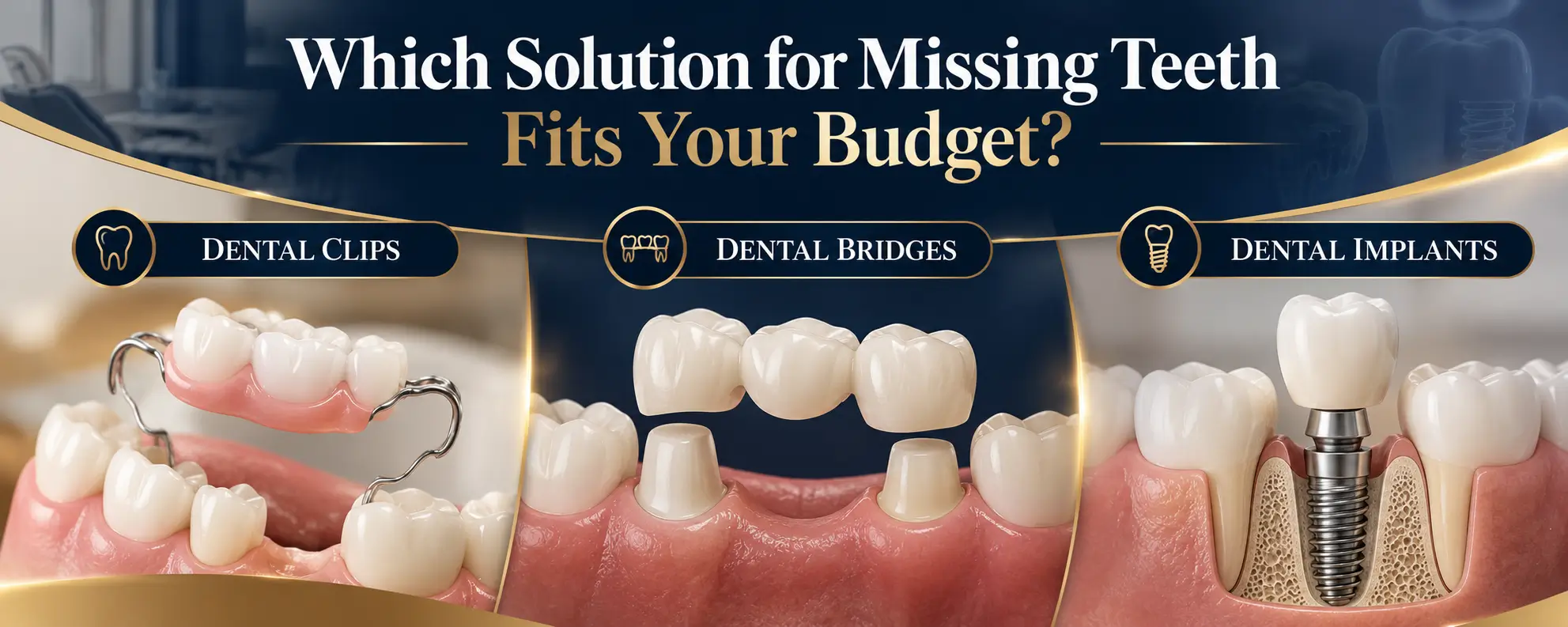
Dental Clips vs Dental Implant vs Dental Bridges: Which Solution for Missing Teeth Fits Your Budget?
October 6, 2026
Deciding between a dental clip, a bridge, or a dental implant? Discover how each option compares in upfront cost, lifespan, maintenance, and long-term...