

November 4, 2026
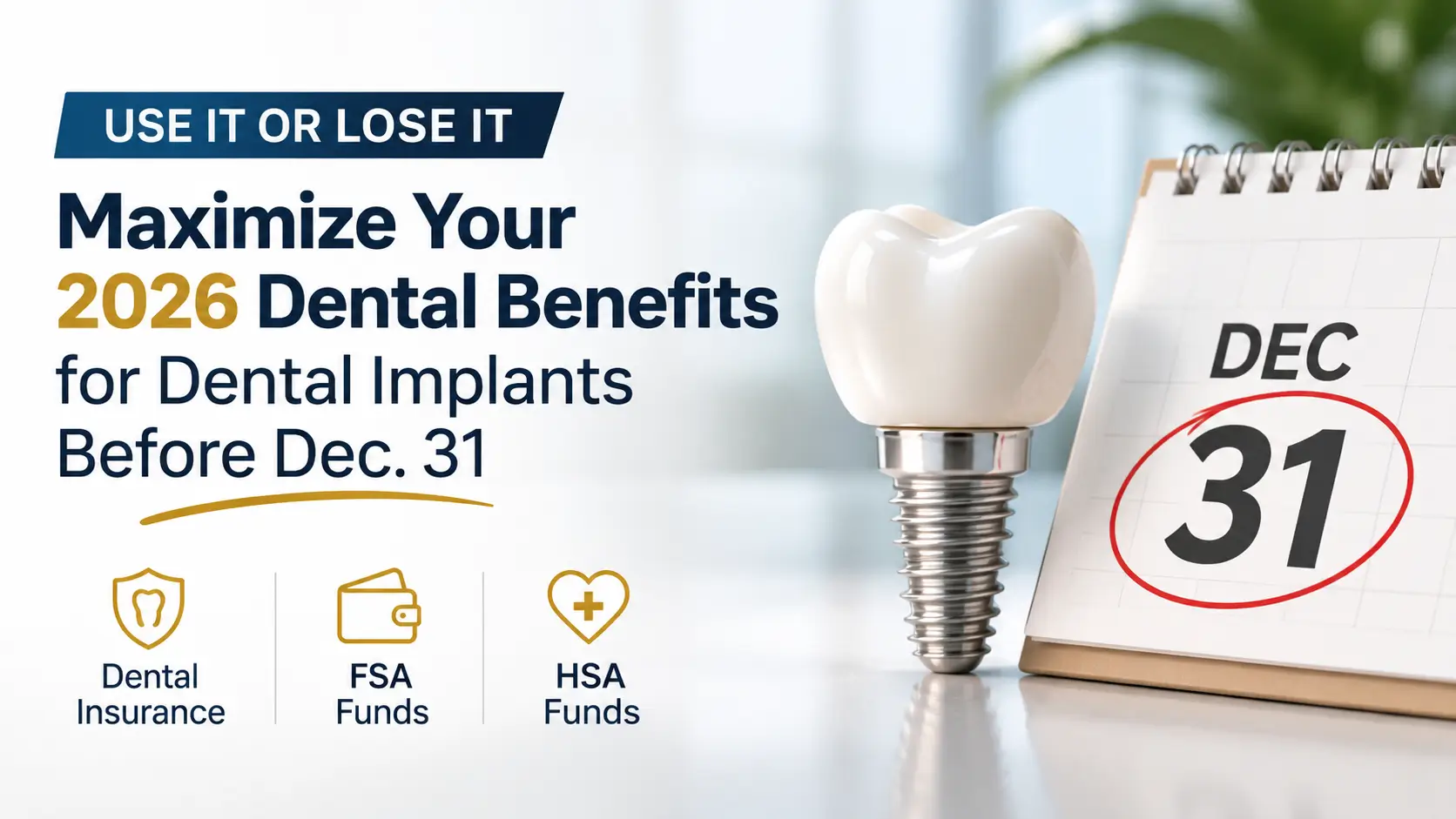
As the end of 2026 approaches, there’s one important financial opportunity many people overlook: their unused dental insurance benefits and Flexible Spending Account (FSA) funds.
If you’ve been considering dental implants, replacing missing teeth, or restoring your entire smile, November and December are good times to review your available benefits before your plan year ends.
You may already have money available to help pay for eligible dental treatment. However, depending on your insurance policy and employee benefits, some of those funds may not carry over into 2027.
For patients considering full-mouth dental implants, All-on-4, All-on-6, or other full-arch restoration options, understanding your benefits could help you plan your treatment and manage out-of-pocket expenses.
The key is knowing what expires, what carries over, and which expenses may qualify.
Do Dental Benefits Roll Over? Here’s What You Need to Know
Most dental insurance plans do not automatically roll over unused annual benefits to the following year.
Here’s a quick breakdown:
- Dental Insurance: Many plans have an annual maximum that resets at the beginning of the next benefit year, typically ranging from $1,000 to $2,000. Unused benefits generally do not accumulate, and benefits expire at the end of the plan year unless your plan includes rollover features.
- Health FSA: Generally follows a use-it-or-lose-it rule, although some employer plans offer a limited carryover or grace period.
- HSA: Unlike an FSA, HSA balances generally carry over from year to year. You do not need to spend your HSA funds before December 31.
- Dental Implant Coverage: Some insurance plans cover certain implant-related procedures, but coverage varies depending on the policy, exclusions, and treatment requirements.
Important: December 31 only applies if your benefit plan follows a calendar-year schedule. Some employers and insurance providers use different benefit-year dates.
If you haven’t reviewed your benefits yet, now is a good time to contact your insurance company or benefits administrator.
1. Use Your Dental Insurance Before the End of the Year
One of the most important things to check is your dental insurance annual maximum.
Your annual maximum is the highest amount your dental insurance plan will pay toward eligible dental procedures during a specific benefit year, and for many plans it often ranges from $1,000 to $2,000.
For example, if your plan has a $1,500 annual maximum and you’ve only used $400, you may still have up to $1,100 in potential benefits available, subject to your plan’s deductible, coinsurance, exclusions, and other limitations.
If your benefit year ends on December 31, unused benefits may reset when the new year begins.
If your treatment plan allows, you may be able to split care across two calendar years before and after benefits reset to maximize benefits and reduce out-of-pocket costs.
What Dental Procedures Can You Use Your Benefits For?
Depending on your insurance coverage, eligible procedures may include:
- Preventive services such as cleanings, exams, and X-rays
- Tooth extractions
- Periodontal treatment
- Bone grafting procedures
- Dental crowns
- Dentures
- Certain dental implant-related procedures
Preventive care is usually covered at or near 100%, and most plans provide two preventive visits per year, which may also include fluoride treatments.
Not every dental insurance policy covers these procedures equally.
Some plans exclude dental implants entirely, while others may provide partial coverage for specific components of treatment.
Does Dental Insurance Cover Full-Mouth Dental Implants?
This is one of the most common questions patients ask when considering full-mouth restoration. The answer depends on your insurance policy and the dental coverage it provides. Some dental insurance plans may provide benefits toward certain implant-related services, such as:
- Implant placement
- Implant-supported crowns
- Extractions
- Bone grafting
- Diagnostic examinations and imaging
However, other plans may exclude implants, impose a waiting period, apply missing-tooth limitations, or calculate reimbursement based on an alternative treatment. Depending on the dental plan, basic services may require about six months before benefits apply, while major services may have waits of up to twelve months.
Some insurers also waive the waiting period with proof of prior coverage.
For this reason, it’s important to request a pre-treatment estimate from your insurance provider before proceeding.
A pre-treatment estimate can help you understand your potential benefits, but it is not a guarantee of payment.
The American Dental Association explains that annual maximums, exclusions, and other plan limitations can significantly affect how much insurance actually pays.
2. Can You Use an FSA for Dental Implants?
Yes, certain dental implant expenses may qualify for reimbursement through a Health Flexible Spending Account (FSA).
An FSA allows eligible employees to set aside a portion of their income before taxes to pay for qualified medical and dental expenses.
The benefit is that eligible expenses can be paid using money that was contributed on a pre-tax basis.
What Dental Expenses May Qualify for FSA?
Depending on applicable IRS rules and your employer’s plan, eligible dental expenses may include:
- Dental examinations and X-rays
- Tooth extractions
- Dentures
- Qualifying dental services, including medically necessary restorations and fillings when allowed under the plan and IRS rules
- Certain medically necessary dental implant procedures
The IRS recognizes dental treatment that prevents or alleviates dental disease as a qualified medical expense. It also recognizes artificial teeth as an eligible expense.
However, dental implants are not automatically eligible in every circumstance. The medical purpose of the treatment, supporting documentation, and applicable plan requirements matter.
Purely cosmetic procedures, such as elective teeth whitening, generally do not qualify; qualifying care must serve a medical purpose, support oral health, or address overall health concerns tied to dental disease.
What Happens to Unused FSA Money After December 31?
Flexible spending accounts generally follow the use-it-or-lose-it rule, and Health FSAs work this way as well.
However, your employer may offer one of two options:
Option 1: FSA Carryover
Your employer may allow you to carry a limited amount of unused funds into the next plan year.
For 2026 plan years, the maximum permitted carryover is $680, provided your employer’s plan adopts this feature. Your actual permitted amount may be lower.
Option 2: FSA Grace Period
Some employers allow an additional grace period of up to 2½ months after the end of the plan year to incur eligible expenses.
A health FSA generally cannot offer both the carryover and the grace-period option.
If your employer offers neither, unused funds may be forfeited after the applicable deadline at year’s end.
Before December 31, check your remaining FSA balance, review any remaining benefits, and ask your benefits administrator about your plan’s specific rules before funds expire.
3. Can You Use HSA Funds for Full-Mouth Restoration?
Yes, HSA funds may be used for qualifying dental expenses associated with full-mouth restoration.
A Health Savings Account (HSA) is a tax-advantaged account that allows eligible individuals to pay qualified dental expenses with tax free funds when IRS rules are met.
Unlike an FSA, an HSA is not generally subject to a year-end spending deadline.
Your unused HSA balance normally stays in your account and carries over to the following year.
If you change jobs, the money stays with you.
This makes an HSA an important financial resource for people planning an expensive procedure.
Can HSA Funds Pay for Dental Implants?
The IRS allows HSA distributions to pay for qualified medical expenses, including eligible dental services such as preventive, basic, and restorative care when they meet IRS rules.
Dental implant procedures may qualify when they are intended to treat dental disease, restore function, or address a legitimate dental health condition rather than being performed solely for cosmetic improvement.
For example, qualifying expenses associated with restoring missing or damaged teeth may include:
- Dental implant treatment
- Implant-supported restorations
- Dentures
- Dental examinations and diagnostic services
- Other eligible restorative dental procedures
HSA reimbursement generally does not apply to dental insurance premiums, except for limited exceptions under tax rules.
However, the IRS does not automatically classify every dental implant treatment or every component of a full-mouth restoration as eligible.
You should verify the expense with your HSA administrator and retain itemized invoices and supporting treatment documentation, since if a service is not eligible or not covered, you may have to pay the full cost yourself.
Also remember that an HSA can only reimburse qualifying expenses that were incurred after the HSA was established and were not already reimbursed by insurance or another source.
HSA vs. FSA: What’s the Difference?
Understanding the difference can help you decide how to plan your dental treatment expenses.
Feature | HSA | Health FSA |
|---|---|---|
Who can participate? | Eligible individuals with qualifying HDHP coverage; eligibility depends on plan rules, and self-only plans and family coverage have different deductible thresholds | Employees whose employers offer an FSA |
Tax advantages | Tax-advantaged contributions and qualified distributions | Pre-tax contributions and qualified reimbursements |
Funds carry over? | Generally, yes | Depends on employer plan |
December 31 deadline? | No general year-end spending deadline | Often, subject to plan rules |
Dental implant expenses? | May qualify | May qualify |
Note: HSA contribution limits are set annually, and contribution limits can vary based on eligibility and coverage type. Dental-plan deductibles are separate from HSA or FSA rules, and individual dental deductibles are often around $50.
The biggest difference: HSA money generally stays available for future qualified expenses, while FSA funds may be subject to year-end forfeiture rules.
4. Why November Is a Good Time to Plan Your Dental Implant Treatment
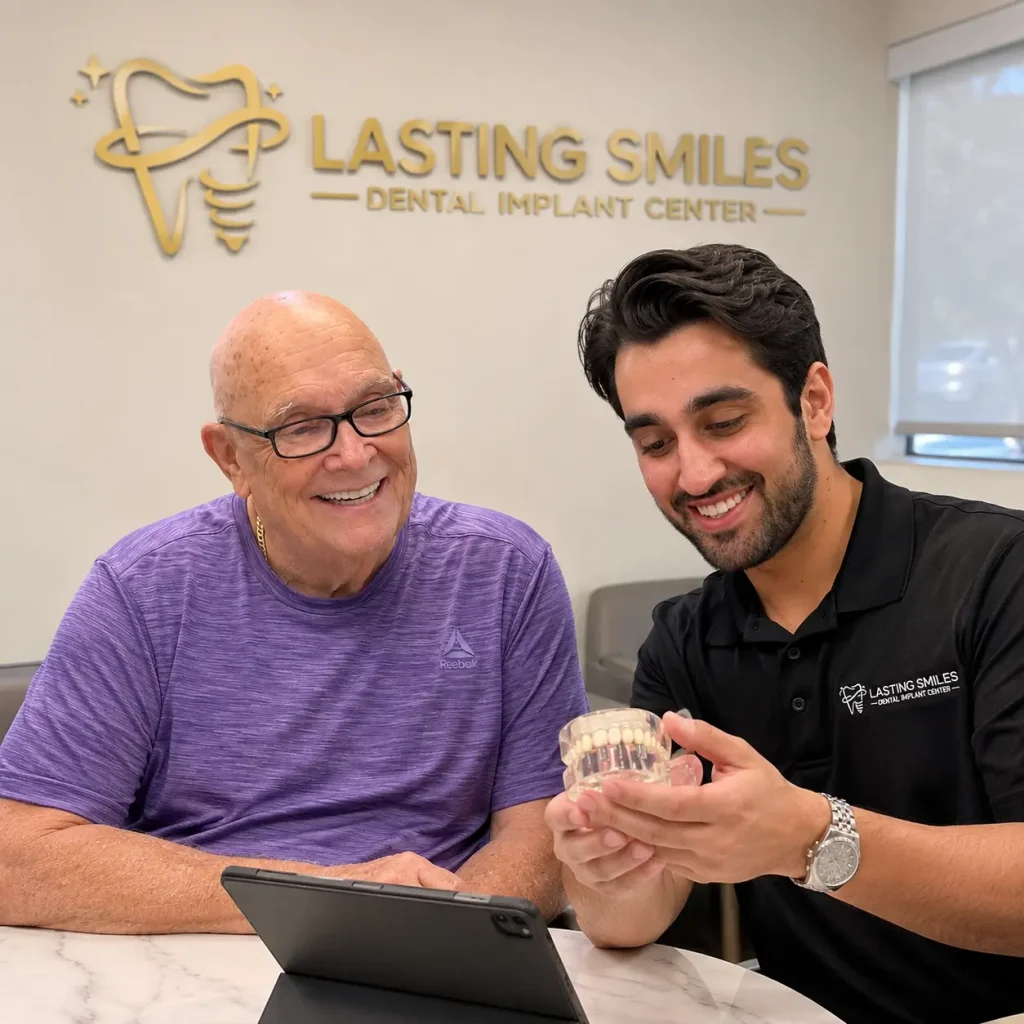
If you’ve been considering dental implants for months or even years, November is a practical time to start reviewing your options.
Waiting until the final weeks of December may leave you with limited time to address smaller dental issues before they worsen, lead to more extensive procedures, and cost considerably more. It can also be harder to get appointments, since many dental offices become busier near year-end, which limits time to:
- Schedule a comprehensive dental examination.
- Review your treatment options.
- Obtain diagnostic imaging.
- Verify your insurance benefits.
- Request a pre-treatment estimate.
- Understand financing and payment arrangements.
- Coordinate treatment dates with your benefit plan.
Full-mouth dental implant treatment is a significant decision. It requires an individualized evaluation, proper planning, and a clear understanding of the treatment process.
The goal isn’t to rush into treatment just to use an expiring benefit.
It’s to make an informed decision while taking advantage of any benefits that may be available to you.
5. Can Dental Insurance, FSA, and HSA Be Combined for Dental Implants?
In some situations, patients can coordinate dental insurance benefits with HSA or FSA funds to manage their remaining eligible expenses.
Here’s how it may work:
Step 1: Apply your dental insurance benefits.
Your insurance provider determines which procedures are covered and how much it will contribute toward eligible treatment.
Step 2: Calculate your remaining out-of-pocket expenses.
After insurance adjustments, identify the amount you are personally responsible for paying.
Step 3: Check your FSA or HSA eligibility.
Ask your account administrator whether the remaining dental expenses qualify for reimbursement.
Step 4: Coordinate your payment arrangements.
Use eligible account funds toward qualifying expenses, while ensuring the same expense is not reimbursed twice.
For example:
If your dental treatment costs $5,000 and your insurance pays $1,000, you may have a remaining balance of $4,000.
If that remaining amount qualifies under your FSA or HSA rules, you may be able to use those funds toward the expense.
Actual eligibility, reimbursement amounts, and timing depend on your insurance policy, account rules, and treatment documentation.
6. What Should You Ask Your Insurance Provider Before December 31?
Before scheduling treatment, take a few minutes to verify your benefits with your insurance company.
Here is a simple checklist:
Dental Insurance
- What is my annual maximum?
- How much of my annual maximum or remaining benefits do I still have left?
- Does my plan cover dental implants?
- Are bone grafting and implant-supported crowns covered?
- Is my recommended treatment classified as basic services or major services under my plan?
- Does preventive care have any waiting period, and do major services have a longer waiting period?
- Do I have any waiting periods or missing-tooth exclusions?
- Does my benefit year end on December 31?
FSA
- How much money do I have remaining?
- Are dental implants eligible under my plan?
- Does my FSA offer a carryover or grace period?
- What is my final eligible expense date?
- What is the deadline for submitting reimbursement claims?
HSA
- What is my available account balance?
- Does my planned dental treatment qualify as a medical expense?
- What documentation do I need?
- Can I use my HSA for the eligible out-of-pocket portion?
Getting these answers early can help you avoid unexpected expenses and make better financial decisions.
Book your risk-free consultation today!
7. Considering Full-Mouth Dental Implants? Explore Your Options Before the Year Ends
If you’ve been living with missing teeth, loose dentures, damaged teeth, or difficulty chewing, restoring your smile may be an important step toward improving your oral health, supporting overall health, and quality of life.
Modern full-arch dental implant treatments, including All-on-4 and All-on-6, can provide fixed replacement teeth supported by strategically placed dental implants.
Depending on your individual condition, your dentist may recommend:
- Full-arch implant restoration
- All-on-4 dental implants
- All-on-6 dental implants
- Implant-supported dentures
- Other restorative treatment options
Not every patient qualifies for the same procedure. Your bone structure, oral health, medical history, and treatment goals will help determine the most appropriate approach.
At Lasting Smiles Dental Implant Center, our team can help you explore your dental implant options, understand the treatment process, and discuss available payment arrangements.
If you’re considering full-mouth restoration, don’t wait until the final days of December to start asking questions.
A consultation now can give you more time to understand your options and determine whether any of your remaining benefits can be applied toward eligible treatment.
Frequently Asked Questions About Year-End Dental Benefits
1. Do dental benefits roll over to 2027?
Most traditional dental insurance plans do not automatically roll over unused annual maximums, and benefits typically reset at the start of the next calendar year. Some plans offer limited rollover benefits, but eligibility depends on the insurance provider and policy terms, so unused dental benefits may be lost if they are not used before the plan resets.
2. Can I use dental insurance before the end of the year?
Yes, if you have unused benefits and your treatment is covered under your plan. If your benefit year ends December 31, eligible services generally need to meet the plan’s requirements within that benefit period before the end of the year. In many plans, preventive care usually has no waiting period, so cleanings and exams are often covered right away, while other dental services may depend on plan rules.
3. Can I use my FSA for dental implants?
Potentially, yes. Dental implant expenses may qualify when they meet IRS requirements for eligible dental treatment. Check your employer’s FSA rules and administrator requirements before using the funds.
4. Does HSA coverage apply to full-mouth dental restoration?
HSA funds may be used for qualifying, unreimbursed dental expenses associated with full-mouth restoration. Eligibility depends on the nature of the treatment and applicable IRS rules. HSA balances generally carry over from year to year.
5. Can I use both dental insurance and HSA funds for dental implants?
You may be able to coordinate dental insurance and HSA funds. However, HSA distributions must only cover qualified expenses that have not already been reimbursed by insurance or another source.
6. What happens if I don’t use my FSA before December 31?
Depending on your employer’s plan, unused FSA funds may be forfeited, carried over up to the permitted limit, or remain available during an applicable grace period. Check your plan documents for the exact deadlines.
7. Does dental insurance cover All-on-4 or All-on-6?
Coverage varies. Some plans may cover certain components of implant treatment, while others exclude implants or impose specific limitations. Request a pre-treatment estimate to understand your potential benefits.
8. Is December 31 the deadline for all dental insurance plans?
No. Many plans follow a calendar-year schedule, and if yours does, benefits often expire on December 31 and reset for next year, but some employers and insurance providers use different benefit-year periods. Confirm your specific renewal date.
Don’t Let Your Dental Benefits Go Unused
The end of the year is an opportunity to review your dental insurance, check your remaining benefits and FSA balance before those benefits expire, and explore how eligible HSA funds may help with your dental treatment expenses; early preventive or recommended care may also lower future cost and out-of-pocket costs.
If you’ve been thinking about dental implants or full-mouth restoration, now is a good time to take the first step.
Your smile deserves a plan. Let’s explore your options before the year ends.
Schedule Your Dental Implant Consultation Today
Contact Lasting Smiles Dental Implant Center to discuss your dental implant needs, explore available treatment options, and learn more about financing and payment arrangements.
Our team can help you understand the next steps toward restoring your smile.
Book your consultation today and start planning for a healthier, more confident smile in 2027.
Disclaimer: This article provides general educational information and is not tax, legal, or insurance advice. FSA and HSA eligibility is subject to applicable IRS rules and individual plan requirements. Dental insurance coverage, annual maximums, exclusions, and deadlines vary by policy. Consult your insurance provider, benefits administrator, tax professional, and dental care provider before making financial or treatment decisions.
Share
Recent Articles
Use Dental Insurance Before End of Year: How to Maximize Your 2026 Dental Benefits for Dental Implants Before December 31
November 4, 2026
Discover how to maximize your unused dental insurance benefits and dental benefits before they expire on December 31. Learn how to combine insurance,...
Sedation Dentistry in Las Vegas: Comfortable, Anxiety-Reducing Dental Care at Lasting Smiles
October 28, 2026
Does the thought of sitting in a dental chair make your heart race? Have you postponed treatment because you are afraid of pain,...

Transform Your Smile with Composite Veneers in West Covina | Lasting Smiles
October 21, 2026
Considering composite veneers in West Covina? Discover everything you need to know about costs, same-day application procedures, pros and cons, and how composite...