

October 21, 2026

Composite veneers are thin layers of tooth colored resin bonded to the front surface of your teeth to correct chips, stains, minor gaps, and shape irregularities to help improve your smile, often in just one visit. At Lasting Smiles Dental Implant Center, our cosmetic dentists place composite resin veneers at our West Covina location, giving patients a fast, conservative cosmetic option to dramatically improve their smile without the higher investment of porcelain.
Composite veneers typically last 5 to 7 years on average, though many patients retain them for 5 to 10 years with proper care, good oral hygiene, and regular professional maintenance. They are among the most popular cosmetic dentistry services for adults who want noticeable results at a lower price point, with composite veneers cost ranging from $250 to $1,500 per tooth depending on complexity and technique.
This article covers everything you need to know before choosing composite veneers: what they’re made of, who is a good candidate, how the procedure works step by step, realistic 2026 costs in Southern California and Las Vegas, how composite compares to porcelain veneers and other cosmetic dentistry services, aftercare to maximize longevity, and how we personalize every case at Lasting Smiles.
What you’ll take away from this guide:
- Whether you’re a good candidate for composite veneers based on your teeth, bite, and goals
- What a composite veneer appointment actually looks like-from consultation to walking out with your improved smile
- Realistic cost ranges for 2026 and how to plan financially
- An honest comparison of composite vs porcelain veneers so you can make a confident choice
- How our in-house digital lab and sedation options create a comfortable, precise experience
Understanding Composite Veneers
Composite veneers are cosmetic shells made of dental composite resin that cover the visible front surface of your teeth-usually the upper six to ten teeth in your “smile zone.” Unlike full-coverage crowns, which encircle the entire tooth and require significant drilling, dental veneers address only the side you see when you smile. And unlike porcelain veneers, which are fabricated in a dental laboratory and bonded in a separate visit, many composite cases can be completed in one appointment with minimal prep work.
This option exists because not every smile concern requires the most extensive (or expensive) solution. For patients with minor cosmetic imperfections-small chips, mild discoloration, slightly crooked teeth, or minor gaps-composite veneers deliver a meaningful cosmetic upgrade while preserving more natural tooth structure. At Lasting Smiles, our cosmetic dentists place both composite and porcelain veneers and use digital photography and smile design software to plan results before any resin material touches your teeth.
What Composite Veneers Are Made Of
Dental composite resin is a blend of an acrylic (plastic) polymer matrix and fine glass, ceramic, or nano-glass filler particles. It’s essentially the same family of composite material used in modern tooth-colored fillings and bonding, but formulated and applied more extensively to reshape and resurface an entire tooth face.
During placement, the dentist applies the resin directly in thin layers, sculpting each one before hardening it with a high intensity light-often called a special light or curing light. This light-curing process polymerizes the resin, giving it the strength needed to withstand daily biting and chewing. Shades and translucencies are carefully selected and layered to match your existing enamel, creating natural depth, a lifelike translucent quality, and surface gloss that mimics the look of natural teeth.
Advances in composite technology through 2024–2026 have made a real difference. New composite material formulations-specifically nano-hybrid and nanofilled resins-pack more filler at the nano and micro scale, which improves polishability, wear resistance, and color stability compared to older generations. Studies confirm that nanohybrid composites produce smoother surfaces, better marginal sealing, and less microleakage, particularly at the gum line.
Types of Composite Veneers: Direct vs Indirect
Direct composite veneers are the most common type. The dentist sculpts composite resin directly onto the teeth in the chair, layering and shaping freehand, and curing each layer with a high-intensity light. Direct composite veneers are applied directly to teeth and can often be completed in one visit, making them ideal for patients who want same-day results.
Indirect composite veneers are custom-made outside the mouth-either in our in-house digital lab or through a CAD/CAM workflow-then bonded to your teeth in a second appointment. Because they’re fabricated under controlled conditions, indirect composite veneers resist fractures better than direct ones, and they allow more precise control over shape, shade layering, and edge strength. Research shows that indirect techniques using nanohybrid composite produce lower microleakage and better marginal adaptation than direct methods alone.
At Lasting Smiles, we typically recommend direct composite for 1–4 teeth or smaller cosmetic changes, and indirect composite for multiple teeth, complex color or shape corrections, or situations where extra durability matters. Understanding these basics helps you evaluate whether composite veneers can address your specific smile concerns-which is exactly what we assess during your consultation.
When Composite Veneers Make Sense
Composite veneers are a strong fit for certain cosmetic situations, but they aren’t the right answer for every bite or tooth condition. Before recommending them, we perform a thorough evaluation-photos, digital x-rays, and bite analysis-to confirm that composite is the best path to your goals.
Cosmetic Issues Composite Veneers Can Correct
Composite veneers provide a conservative treatment option for minor cosmetic imperfections across the smile zone. Common indications include:
- Discoloration that doesn’t respond to professional whitening (intrinsic staining, post–root canal darkening)
- Small chips and minor fractures on front teeth
- Minor gaps (diastemas) between two or more teeth
- Slightly uneven, short, or misshapen teeth that affect smile symmetry
- Mild rotation or shape discrepancies that don’t require orthodontic movement
Consider a few real-world scenarios: a patient with a noticeable midline gap can have two or three direct composite veneers placed in one visit to close the space and adjust tooth shape. Someone with worn, shortened front teeth can have composite layered to restore natural length and proportion. A single dark tooth-say, after a root canal-can be masked with composite to blend seamlessly with neighboring teeth.
It’s important to clarify that composite veneers focus on the visible front surface. They are not a treatment for major bite problems, severe crowding, or structural damage to back teeth.
Who Is a Good Candidate at Lasting Smiles
You’re likely a good candidate for composite veneers if you have:
- Healthy gums with no active decay or untreated periodontal disease
- A stable bite without significant malocclusion
- Reasonable enamel thickness on the teeth to be treated (enamel provides the bonding surface)
- Realistic expectations about what composite can achieve and how long it lasts
Patients with dental anxiety should know that our sedation options-including nitrous oxide, oral sedation, and IV sedation where appropriate-are available even for minimally invasive cosmetic work like veneers. You don’t have to white-knuckle your way through a smile transformation.
Smokers, heavy coffee or red wine drinkers, and patients who grind their teeth can still choose composite veneers. We’ll plan for protective measures-a custom nightguard for grinders, a stain-management protocol for heavy stainers-and discuss how these habits influence lifespan so there are no surprises.
When Composite Veneers Are Not the Best Choice
There are situations where we’d steer you toward a different solution:
- Heavy bruxism without willingness to wear a nightguard: the repeated force can chip or wear composite quickly
- Severe crowding or misalignment: orthodontics or clear aligners address the root cause more effectively
- Large structural damage: teeth with significant fractures or decay may need full crowns rather than a thin layer of composite on the surface
- Edge-to-edge bites or deep overbites: anterior forces in these configurations can shorten composite veneer life dramatically
- Severe discoloration (e.g., deep tetracycline banding): porcelain veneers provide better masking and long-term color stability
For patients with failing dentitions, we might recommend All-on-4 dental implants instead. For a single missing or broken tooth, a dental implant with a crown often makes more sense. And for patients prioritizing maximum longevity, porcelain veneers or a combination approach may be the stronger investment.
Once candidacy is clear, the next question most patients ask is how composite veneers compare with porcelain and other cosmetic options.
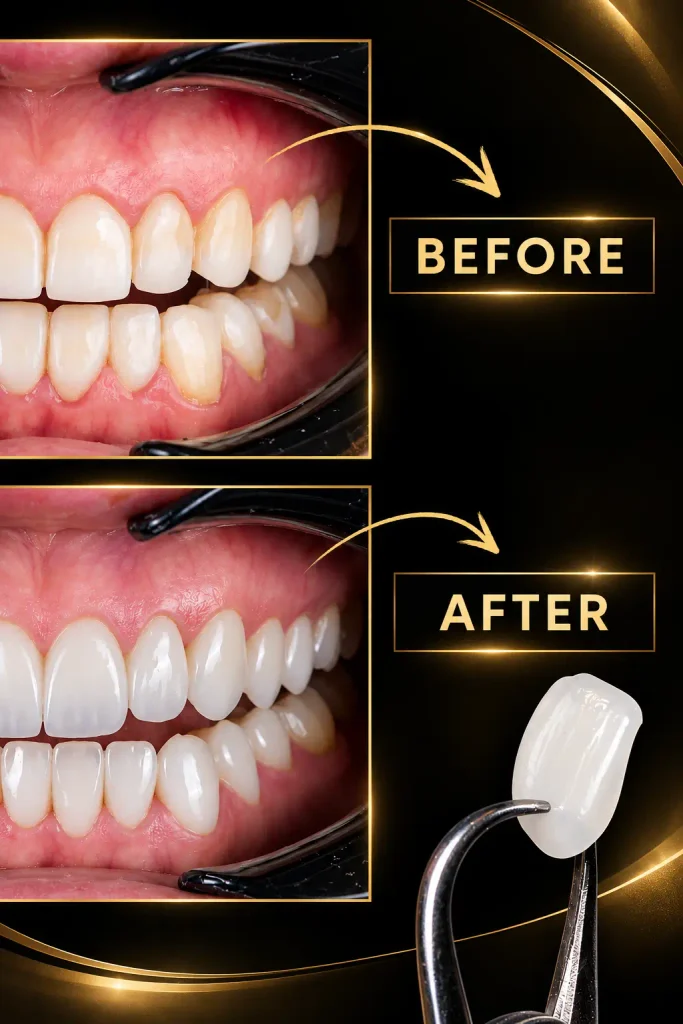
Composite Veneers vs Other Cosmetic Options
Choosing between composite and porcelain-or between veneers and other treatments-comes down to four practical factors: aesthetics, durability, cost, and treatment time. Here’s how the options stack up.
Composite Veneers vs Porcelain Veneers
The main difference between composite and porcelain veneers lies in materials, fabrication, and longevity.
Porcelain veneers are thin ceramic shells crafted in a dental lab, requiring more tooth preparation (typically 0.3–0.7 mm of enamel removal) and at least two visits with temporary veneers worn in between, which often means multiple appointments. Porcelain veneers can last 10 to 15 years-and sometimes beyond 20 years with excellent care. Their ceramic structure resists staining far better than resin and maintains a natural, glass-like translucent quality over time.
Unlike porcelain veneers, composite resin veneers require little to no enamel removal, can often be completed in one dental visit rather than multiple visits, and cost significantly less per tooth. Composite veneers last 5 to 7 years on average, with the appearance potentially declining over time due to wear and staining. However, composite is far easier and less expensive to repair: if a chip occurs, the dentist can add more resin directly and re-polish the surface, often in a single visit. Porcelain, if fractured, usually requires complete replacement.
For a deeper dive, see our guide on porcelain vs composite veneers.
Composite Veneers vs Teeth Whitening, Bonding, and Crowns
Whitening lightens existing enamel but cannot change the shape, length, or alignment of your teeth. If your concern is purely color, professional whitening may be all you need. But if you also want to correct chips, close gaps, or reshape imperfect teeth, composite veneers can address both color and form in one procedure.
Bonding typically targets a small, localized area-like a single chip or a rough edge. Composite veneers cover the entire front surface for uniform color and shape across the tooth, making them a more comprehensive cosmetic solution.
Crowns encircle the whole tooth and require more drilling and enamel removal. They’re appropriate for structural damage but involve more tooth reduction than is necessary for purely cosmetic concerns. Veneers are the more conservative cosmetic option when the underlying tooth is sound.
At Lasting Smiles, we often combine these options for a balanced, cost effective smile makeover-for example, whitening the surrounding teeth and placing 2–4 composite veneers on the teeth that need shape or alignment correction.
Side‑by‑Side Comparison Table
Criterion | Composite Veneers | Porcelain Veneers |
|---|---|---|
Average lifespan | 5–7 years (up to 10 with proper care) | 10–15+ years |
Stain resistance | Moderate; composite material is more porous and prone to staining than porcelain | High; glazed ceramic resists discoloration |
Number of visits | Often 1 (direct); 2 (indirect) | 2–3 visits |
Tooth reduction | Minimal to none | Moderate (0.3–0.7 mm typical) |
Reversibility | Largely reversible when minimal enamel removed | Generally irreversible |
Repairability | Easy chairside repair with new resin | Usually requires full replacement |
Ideal use cases | 1–4 teeth, minor corrections, budget-conscious, phased treatment | Full-arch makeovers, maximum longevity, severe discoloration |
If you’re budget-sensitive or time-sensitive, composite veneers often make the most practical sense-especially for addressing a few imperfect teeth quickly. If you’re investing in a full smile makeover and want maximum longevity and stain resistance, porcelain veneers provide the stronger long-term return. Many patients start with composite and upgrade to their porcelain counterpart later.
Now that you understand how composite compares, let’s walk through what the actual procedure feels like at Lasting Smiles.
Composite Veneers Procedure at Lasting Smiles
Most direct composite veneer cases are completed in a single visit lasting about 1.5–3 hours, depending on the number of teeth treated. Indirect cases typically involve two visits spaced about 1–2 weeks apart. We use digital photography, precise shade-matching protocols, and our in-house lab to fine-tune results and minimize turnaround time.
Step‑by‑Step: From Consultation to Final Smile
- Initial consultation and digital smile assessment – We examine your teeth, take digital photos and x-rays as needed, discuss your cosmetic goals, and review your budget. This is where we determine whether you’re a good candidate and which technique suits your case.
- Smile design and preview – When appropriate, we create a digital mock-up or temporary bonding demo so you can see a preview of your new smile before committing.
- Tooth preparation – The dentist lightly shapes and roughens the front surface of each tooth to receive the composite. This minimal prep work preserves the vast majority of your enamel. A bonding agent is applied to help the resin adhere. Local anesthesia or sedation is available if requested.
- Shade selection and layering – Using your facial features, skin tone, and neighboring teeth as guides, the dentist selects composite shades and begins applying resin directly in thin layers-building up color, translucency, and form.
- Sculpting and curing – The dentist sculpts each layer to create the desired shape, then hardens it with a special light. This layering-and-curing cycle is repeated until the veneer reaches full form and depth.
- Fine shaping, polishing, and bite adjustment – Once cured, the veneer is contoured and polished to a smooth, natural appearance. The bite is checked and adjusted to ensure comfort.
- Final review – Before-and-after photos are taken, and you receive detailed home care instructions. Most patients can resume normal activities immediately.
For anxious patients, sedation dentistry can be integrated at any point-even for cosmetic-only procedures. Nitrous oxide, oral sedation, or IV sedation are all options at Lasting Smiles.
Timeline: Single‑Visit vs Two‑Visit Composite Veneers
For 1–2 teeth, a direct composite appointment may take as little as 60–90 minutes. Treating 6–8 teeth in one appointment typically requires 2.5–3+ hours of chair time.
When we recommend an indirect composite approach-for multiple front teeth, complex color layering, or cases where enhanced edge strength matters-the process spans two visits. At the first visit, we prepare the teeth and capture digital scans. Our in-house digital lab fabricates the composite veneer shells, usually within 7–14 days. At the second visit, the pre-fabricated veneers are bonded, adjusted, and polished. Transitional restorations or temporary veneers can be provided between visits so you’re never walking around with unfinished teeth.
What Patients Typically Experience During and After Treatment
Comfort during composite veneer placement is generally high. There’s minimal vibration and no significant drilling. Local anesthesia keeps the area numb, and relaxation options are available for patients who feel uneasy in the dentist’s office.
After treatment, most patients report mild sensitivity to hot and cold for a few days-this is normal and typically resolves on its own. There may be a slight adjustment period for speaking or biting as you adapt to the new shape of your teeth. We schedule a short follow-up within 1–2 weeks if needed for minor polish or bite refinements.
Understanding these practical details helps set realistic expectations for living with composite veneers over the long term-which brings us to benefits, trade-offs, and how to protect your investment.
Benefits, Limitations, and Longevity
Composite veneers offer genuine cosmetic value, but they come with trade-offs that every patient should understand before committing. Here’s a balanced, realistic view.
Key Benefits of Composite Veneers
- Same-day results – Direct composite veneers can often be completed in one visit, so you walk out with your improved smile the same day
- Lower upfront cost – Composite veneers are generally more affordable than porcelain veneers, making cosmetic improvement accessible to more patients
- Minimal tooth removal – Composite veneers require little to no enamel removal, preserving more of your natural teeth
- Easy repairs – Composite veneers can be easily repaired if damaged by adding more resin and re-polishing, often in a single chairside appointment
- Highly customizable – Color, shape, length, and contour can be adjusted in real time as the dentist sculpts the resin
- Phased treatment friendly – Because they’re conservative, composite veneers fit well into phased plans. Many patients start with composite and later upgrade to porcelain if desired
The psychological benefit is real, too. Patients who have spent years hiding their smile often describe an immediate boost in confidence after composite veneer placement-even before they leave the office.
Limitations and Potential Risks
- Shorter lifespan – Composite veneers typically last 5 to 7 years, compared to 10–15+ years for porcelain. The appearance of composite veneers may decline over time due to wear and gradual loss of surface gloss.
- Staining susceptibility – Composite material is more porous and prone to staining than porcelain. Coffee, tea, red wine, and tobacco are the primary culprits. Composite veneers may stain from coffee or tea over time, especially at the margins.
- Chipping and wear – Chipping and wear are common issues with composite veneers compared to porcelain. Nail-biters, ice chewers, and patients who grind teeth without a nightguard are at highest risk.
- Not fully reversible – While composite usually requires less enamel removal than porcelain, some tooth preparation is often performed. If veneers are removed, the teeth may need another restoration afterward.
How to Make Composite Veneers Last Longer
With the right habits, composite veneers can last 5 to 10 years with proper care-well beyond the lower end of the typical range. Key strategies:
- Oral hygiene – Regular brushing with nonabrasive toothpaste twice daily, flossing, and using an alcohol-free mouthwash. Good oral hygiene is the single most important factor in veneer longevity.
- Limit staining exposure – Reduce consumption of coffee, tea, red wine, and tobacco. Coffee and tea can stain new veneers, so rinse with water or brush soon after consuming dark beverages.
- Protect against grinding – Wear a custom nightguard if you clench or grind. Avoid chewing hard objects like ice, pens, or fingernails.
- Professional maintenance – Visit the dentist every six months for maintenance. Professional polishing during cleanings refreshes surface luster and manages stain buildup. Our tips for maintaining cosmetic dental work cover this in detail.
- Prompt repairs – If you notice a chip or rough edge, schedule a repair quickly. Catching small damage early prevents it from spreading or staining.
Research also shows that surface sealants and silica nanocoatings applied to composite veneers can reduce water absorption and staining, potentially extending their esthetic lifespan further.
Costs, Financing, and Insurance for Composite Veneers
Cost is one of the first questions patients ask, and we believe in transparency. This section gives you realistic 2026 price ranges for Southern California and Las Vegas, though exact fees always depend on your individual treatment plan.
Typical Cost Ranges in 2026 based in West Covina market
Composite veneers cost between $250 to $1,500 per tooth, depending on whether the technique is direct or indirect, the number of teeth treated, and the materials used. In the West Covina market, pricing generally aligns with regional averages, with most quality dental practices charging approximately $350–$850 per tooth for direct composite veneers. Indirect or lab-fabricated composite veneers tend to be at the higher end of this range due to the additional laboratory work involved.
A “mini smile makeover” covering 4–6 upper front teeth with direct composite veneers typically costs around $1,500–$5,000 total in West Covina. For comparison, porcelain veneers in this area usually range from $900 to $2,200+ per tooth, with full smile makeovers costing $7,000–$18,000+. Composite veneers are favored by many adults seeking affordable cosmetic improvements because they provide a noticeable transformation at a fraction of the porcelain veneer price.
For a detailed overview of composite veneer costs by location, you can refer to the American Academy of Cosmetic Dentistry’s resources on veneer pricing: AACD Veneer Cost Guide..
Insurance Coverage and Out‑of‑Pocket Planning
Insurance often does not cover cosmetic veneer procedures. Most dental insurance plans in the U.S. classify veneers as elective cosmetic treatment, with rare exceptions when there is documented functional damage (such as a fracture that also requires restoration). In Nevada, as of March 2026, adult Medicaid coverage for porcelain indirect veneers was discontinued.
We encourage patients to bring their insurance information to the consultation so our team can verify any potential benefits. Health Savings Accounts (HSAs) and Flexible Spending Accounts (FSAs) may also be used for veneer treatment when allowed by your plan rules.
Financing and Special Offers at Lasting Smiles
Payment plans may be available for composite veneer costs. We work with third-party financing providers and offer in-house payment options when available, breaking the investment into manageable monthly payments so cost doesn’t stand between you and the smile you want.
Lasting Smiles frequently runs special promotions on cosmetic dentistry services, and composite veneers can be bundled with other discounted procedures-such as whitening-during smile makeover events. A consultation allows us to provide a written estimate before any treatment begins, so you know exactly what to expect financially.
Common Challenges and How We Address Them
Problems with composite veneers are uncommon when the case is well-planned and the patient follows aftercare recommendations. But some issues can arise over the years, and most are solved predictably.
Sensitivity After Placement
Mild sensitivity to hot and cold is common for a few days after composite veneer placement and is usually temporary. We recommend using a desensitizing toothpaste, avoiding extreme temperature foods and beverages for the first week, and contacting our office if sensitivity persists beyond 7–10 days.
Staining and Color Mismatch Over Time
Gradual staining-particularly along margins and incisal edges-is the most common cosmetic concern with composite veneers over the years. Professional polishing or light resurfacing can often refresh the overall appearance without replacing the veneer entirely. However, if you whiten your natural teeth later, the composite veneers won’t lighten along with them and may need to be replaced or color-adjusted to match the new shade.
Chipping, Cracking, or Debonding
Typical causes include trauma, biting on hard objects, grinding without a nightguard, or using teeth as tools (opening packages, tearing tape). The good news: composite is repairable. The dentist applies new composite material to the damaged area, sculpts it to match, and re-polishes the surface-often completed in one visit. Protective strategies include wearing a nightguard, bite adjustment when needed, and habit counseling.
Unrealistic Expectations About “Perfect” Teeth
Ultra-white “Hollywood” shades can look unnatural, especially when they don’t match your complexion, lips, or remaining natural teeth. At Lasting Smiles, we guide patients toward a shade that enhances their appearance authentically. Our digital previews and smile design process help align expectations with what composite veneers can realistically achieve, so there are no surprises on the day of treatment.
A well-planned case and good communication are the best safeguards against disappointment-which is why the consultation step matters so much.
Conclusion and Next Steps
Composite veneers are a conservative cosmetic option that can improve the appearance of stained, chipped, gapped, or misshapen teeth-often in just one visit and at a significantly lower cost than porcelain. The trade-offs are a shorter lifespan (typically 5–7 years), higher maintenance needs, and greater vulnerability to staining. For many patients, those trade-offs are well worth the immediate transformation and the flexibility to upgrade later.
Ready to find out if composite veneers are right for you? Here’s what to do next:
- Schedule a cosmetic consultation at our Las Vegas, Pasadena, or Irvine location
- Discuss whether composite, porcelain, or a combination best fits your goals, bite, and budget with one of our cosmetic dentists
- Review a personalized treatment plan and financing options before committing to any treatment
If your needs go beyond veneers, you may also want to explore our porcelain veneers, teeth whitening, dental implants, or full smile makeover options including All-on-4/All-on-X for more advanced cases.
Frequently Asked Questions About Composite Veneers
Quick, direct answers to the questions we hear most often from patients considering composite veneers.
How long do composite veneers really last?
Composite veneers last 5 to 7 years on average. With excellent oral health habits, limited staining exposure, and regular professional polishing, some patients keep them looking great for 8–10 years. Several factors influence lifespan: grinding habits, diet, hygiene, and the type of composite material used. Indirect composite veneers made with nanohybrid resin tend to last toward the longer end of the range.
Are composite veneers reversible?
Composite veneers require little to no enamel removal, which makes them largely reversible. However, some tooth preparation is usually performed-light shaping and surface roughening-so if veneers are removed, the teeth may need another restoration or bonding to look and feel normal. This is still far less enamel removal than porcelain veneers or crowns require.
Will my composite veneers look fake?
With modern nanohybrid materials and careful shade selection, composite veneers are designed to mimic the natural appearance of enamel-including surface texture and translucency. The key is the skill of the dentist. Our cosmetic dentists use digital smile design and incremental layering to create results that blend with your natural teeth rather than looking like a uniform plastic shell.
Can I get sedation for veneer treatment?
Yes. At Lasting Smiles, sedation options are available for anxious or phobic patients even for elective cosmetic work. We offer nitrous oxide (laughing gas), oral conscious sedation, and IV sedation where complexity or anxiety level justifies it. You don’t need to avoid cosmetic improvement because of dental fear.
What happens if I want porcelain veneers later?
Many patients start with composite and later upgrade. We can remove the existing composite, reassess your tooth structure, and plan porcelain veneers as a second-phase treatment. Because composite requires less enamel removal upfront, there’s typically enough remaining tooth structure to support porcelain down the road-making composite an excellent “bridge” option.
How do I book a composite veneer consultation in West Covina?
To schedule your composite veneer consultation at Lasting Smiles Dental Implant Center in West Covina, simply call our office directly or use our convenient online booking page. We offer flexible appointment times to fit your busy lifestyle. Be sure to bring any questions you have, photos of smiles you like, and your dental insurance information to your consultation so we can provide you with a personalized treatment plan and accurate cost estimate tailored specifically for our West Covina patients.
Share
Recent Articles
Transform Your Smile with Composite Veneers in West Covina | Lasting Smiles
October 21, 2026
Considering composite veneers in West Covina? Discover everything you need to know about costs, same-day application procedures, pros and cons, and how composite...

The Ultimate Teeth Payment Plan Guide: Can Full-Mouth Implants Fit Under $300/Month?
October 14, 2026
Discover how flexible teeth payment plans, 0% APR financing, and low monthly payment options can make full-mouth dental implants fit comfortably into your...
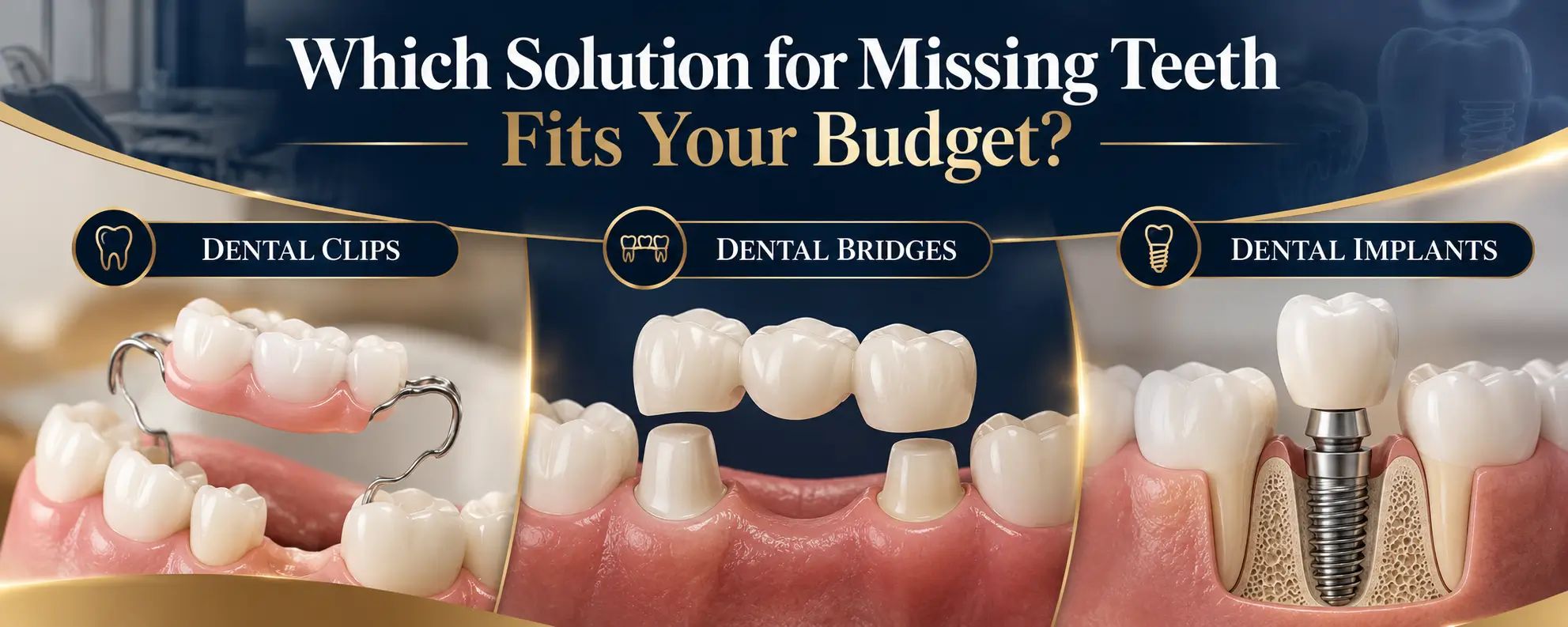
Dental Clips vs Dental Implant vs Dental Bridges: Which Solution for Missing Teeth Fits Your Budget?
October 6, 2026
Deciding between a dental clip, a bridge, or a dental implant? Discover how each option compares in upfront cost, lifespan, maintenance, and long-term...