

October 6, 2026
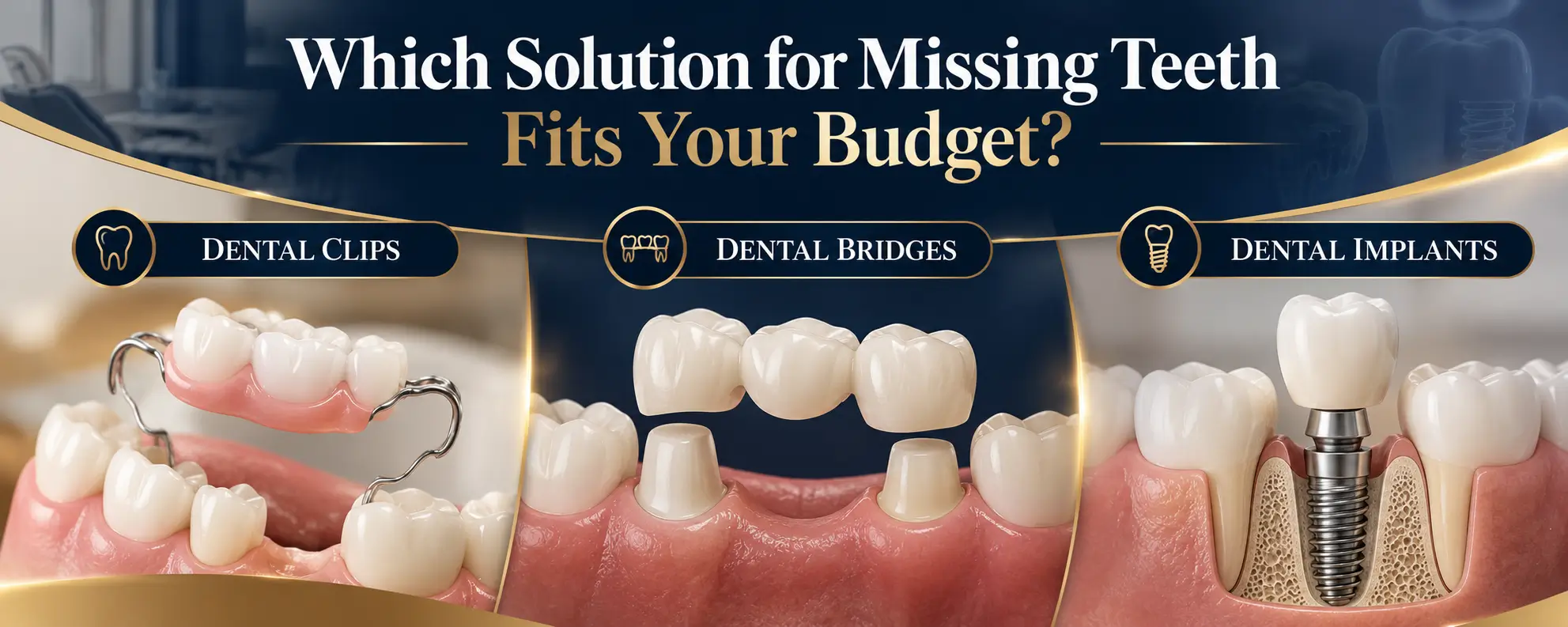
If you’re missing a tooth, the first question is often simple:
“How can I replace it without spending more than I can afford?”
You may have seen dental clips for missing teeth, acrylic flippers, removable partial dentures, dental bridges, and dental implants while researching your options.
They can all replace the visible space left by a missing tooth, but they are not designed to do the same job.
A temporary dental clip may be relatively inexpensive and quick. A bridge can provide a fixed replacement without implant surgery. A dental implant is a more comprehensive tooth-replacement option because it replaces the missing tooth root as well as the visible crown.
So which one makes sense for your situation?
At Lasting Smiles Dental Implant Center, we believe the answer should start with your oral health and long-term goals—not simply the lowest advertised price.
This guide compares dental clips vs. dental implants vs. bridges based on cost considerations, durability, appearance, maintenance, treatment time, and how each option interacts with your existing teeth and jawbone.
Quick Answer: Which Missing-Tooth Option Is Right for You?
There is no single replacement option that is best for every patient.
As a general guide:
- Dental clips or acrylic flippers: Often considered when you need a temporary, removable, lower-cost cosmetic solution.
- Removable partial dentures: May be appropriate when several teeth are missing and a removable restoration is preferred.
- Dental bridges: A fixed option that replaces a missing tooth by using neighboring teeth for support.
- Dental implants: A fixed replacement designed to replace the missing tooth root and support a crown or other restoration.
The important distinction is that price, function, and long-term treatment goals are connected.
A cheaper option today isn’t necessarily the least expensive option over many years.
Likewise, a more expensive treatment isn’t automatically the right choice.
Your dentist needs to evaluate the missing-tooth area, neighboring teeth, gums, bone, bite, and overall oral health before recommending a treatment.
Dental Clips vs. Implants vs. Bridges: Comparison Table
Factor | Dental Clips / Acrylic Flippers | Dental Bridges | Dental Implants |
|---|---|---|---|
Typical role | Temporary or removable tooth replacement | Fixed replacement | Long-term fixed tooth replacement |
Initial cost | Usually lower | Moderate | Usually higher |
Surgery required | No | Usually no implant surgery | Yes |
Removable? | Yes | No | No |
Replaces the tooth root? | No | No | Yes |
Uses neighboring teeth? | May depend on appliance design | Yes | Generally does not require neighboring teeth to support the implant |
Appearance | Can look natural when professionally made | Can provide natural-looking results | Can provide a natural-looking result |
Durability | Intended primarily as a temporary/removable option | Can provide long-term service with proper care | Designed as a long-term tooth-replacement option |
Bone stimulation at missing-tooth site | No | No | Implant functions as an artificial tooth root |
Maintenance | Remove and clean appliance and teeth | Brush, floss, and maintain bridge area | Brush, floss, and attend professional maintenance |
Treatment time | Often relatively quick | Varies | Usually involves multiple stages, although immediate temporary options may be possible in selected cases |
Best suited to | Patients needing a temporary/removable solution | Patients who are appropriate candidates for a fixed bridge | Patients seeking a fixed replacement and who are appropriate implant candidates |
Important: This table is a general comparison, not a treatment recommendation. Your actual options depend on your dental anatomy, oral health, medical history, and treatment goals.
What Are Dental Clips for Missing Teeth?
“Dental clips” is not a formal dental treatment category.
The term is commonly used online to describe removable appliances that replace the appearance of one or more missing teeth.
These may include:
- Acrylic flippers
- Temporary removable teeth
- Removable partial dentures
- Snap-on cosmetic teeth
- Mail-order temporary tooth products
- Other removable dental appliances
A professionally made acrylic flipper, for example, is different from a generic product purchased online.
A dentist can evaluate your mouth and have an appliance designed around your teeth, gums, available space, and bite.
The primary advantage is simplicity.
You can replace the visible gap without undergoing implant surgery.
The limitation is equally important:
A removable dental clip replaces the visible tooth but does not replace the missing tooth root.
That means it does not provide the same biological function as a dental implant.
How Much Do Dental Clips Cost?
For patients working with a limited budget, dental clips can be attractive because they generally have a lower upfront cost than implant treatment.
But there are several different products that fall under the general term “dental clip.”
A professionally fabricated temporary appliance and a cheap online cosmetic product should not be treated as equivalent.
Your cost may depend on:
- Whether the appliance is professionally designed
- How many teeth need to be replaced
- Whether impressions or digital scans are required
- The materials used
- Whether additional dental treatment is needed
- Whether it is being used as a temporary or longer-term removable restoration
The most important question isn’t simply:
“How much does the clip cost?”
It is:
“What am I getting for that cost, and how does it fit into my long-term treatment plan?”
What Is a Dental Bridge?
A dental bridge is a fixed replacement tooth option used to replace one or more missing teeth.
Instead of being removed by the patient, the bridge is attached to supporting teeth or other structures.
For a traditional bridge, the neighboring teeth may need to be prepared as abutment teeth, then reshaped to anchor the restoration.
Traditional bridges rely on adjacent teeth and surrounding teeth for support rather than replacing the root, which can affect healthy adjacent teeth, change the natural structure, and place added demands on other teeth.
Bridges usually take 2 to 4 weeks to complete across several appointments and often need replacement every 10 to 15 years.
This makes a bridge fundamentally different from a removable dental clip. https://www.gotoapro.org/
Potential advantages of a dental bridge include:
- Fixed rather than removable
- No implant surgery in many cases
- Can restore the appearance of a missing tooth
- Can restore chewing function
- Usually faster than a complete implant treatment sequence
However, a bridge also depends on the condition of the supporting teeth.
If the neighboring teeth have significant decay, fractures, bone loss, or other problems, a bridge may not be the ideal choice.
Your dentist needs to evaluate those teeth before recommending one.
What Is a Dental Implant?
A dental implant is one of the main options for replacing missing teeth, using titanium posts placed in the jawbone to serve as artificial tooth roots. https://www.ada.org/
Once the implant has integrated with the surrounding bone, it is designed to mimic natural tooth roots and create a strong foundation and stable foundation for a dental crown or another restoration.
This creates an important difference between an implant and a dental clip or conventional bridge.
Successful placement depends on sufficient jawbone density, and bone grafting may be recommended when there is not enough bone.
Dental implants can last 20 to 30 years or longer, although results depend on maintenance, overall health, and case factors.
An implant is designed to replace both the root and the visible portion of the missing tooth, with a custom made crown that functions as one of your new teeth and provides a natural appearance.
Potential dental implant benefits include:
- A fixed tooth replacement; implants provide a stable, often permanent solution for many patients
- No removable appliance to take in and out
- Does not normally require healthy adjacent teeth to serve as bridge supports, which helps preserve surrounding teeth and healthy natural teeth
- Helps support jawbone health and jawbone integrity by stimulating the jaw and helping maintain facial structure
- Can provide a natural-looking restoration
- Can restore chewing function when properly planned and maintained
- Dental implants offer numerous benefits, including a natural appearance and a more confident smile
With proper care, dental implants can last 20 to 30 years.
Implants are not appropriate for every patient at every point in time.
Bone volume, gum health, oral hygiene, medical conditions, medications, smoking, and other factors can influence candidacy.
Dental Clips vs. Bridges vs. Implants: What About Appearance?
All three options can potentially improve the appearance of a missing tooth.
The difference is how the restoration is designed and supported.
Dental Clips
A professionally fabricated temporary appliance can be made to resemble your natural teeth.
However, it remains removable.
Poorly fitted appliances can also move, feel bulky, or affect speech.
Bridges
A well-designed bridge can provide a natural-looking fixed tooth replacement.
The appearance depends on the materials, tooth position, surrounding gums, and skill of the dental and laboratory team.
Dental Implants
An implant-supported crown can be designed to emerge from the gum in a way that resembles a natural tooth.
The final appearance depends on many factors, including the position of the implant, bone and gum levels, neighboring teeth, restoration design, and the patient’s individual anatomy.
At Lasting Smiles Dental Implant Center, implant and restorative treatment can be planned together, with digital technology and an in-house dental laboratory supporting the process.
Which Option Lasts the Longest?
Durability depends on the treatment, materials, oral hygiene, bite, maintenance, and individual patient factors.
A dental clip is generally considered a removable or temporary solution rather than a replacement intended to function like a natural tooth indefinitely. Its average lifespan is typically shorter than fixed options.
A bridge can provide years of service when properly designed, maintained, and supported by healthy teeth, but traditional bridges typically last 10 to 15 years before replacement.
Dental implants are designed as a long-term tooth-replacement option, and the implant is separate from the visible restoration. Dental implants commonly last 20 to 30 years or longer, and an implant supported bridge can also last 20 to 30 years with proper care.
The implant may remain functional for many years, while the crown or other restoration may eventually need repair or replacement.
This is why regular dental maintenance matters regardless of which option you choose.
What About Maintenance?
Every tooth-replacement option requires maintenance.
Dental bridges require:
- Daily flossing around the bridge
- Special floss threaders or water flossers to clean underneath, since fixed bridges can be more high maintenance than some implant-supported options
- Routine dental checkups to monitor the supporting teeth
Dental implants require:
- Regular brushing and flossing just like natural teeth
- Professional cleanings and exams
- Monitoring gum health around the implant
Implant-supported bridges generally require less maintenance than traditional bridges, though all restorations still need good care.
Dental Clips
You need to:
- Remove and clean the appliance as instructed.
- Clean your natural teeth thoroughly.
- Keep the appliance clean and dry as recommended.
- Have the appliance evaluated if it becomes loose or uncomfortable.
Bridges
You need to:
- Brush normally.
- Clean underneath the bridge.
- Pay close attention to the supporting teeth.
- Attend regular dental examinations.
Dental Implants
You still need to:
- Brush twice daily.
- Clean around the implant and restoration.
- Maintain healthy gums.
- Attend regular dental visits.
- Follow your dentist’s recommended maintenance schedule.
An implant is not a replacement for oral hygiene.
The Bone Question: Why Does a Missing Tooth Matter?
One of the biggest differences between a temporary replacement and a dental implant involves the missing tooth root.
After a natural tooth is lost, the jawbone in that area may gradually change because the tooth root no longer provides the same stimulation.
A dental clip does not replace the root.
A conventional bridge also does not replace the root.
A dental implant is designed to function as an artificial tooth root and can provide stimulation to the surrounding bone.
This doesn’t mean that everyone with a missing tooth needs an implant.
It does mean that bone preservation should be part of the conversation when you’re deciding how to replace a missing tooth.
If an implant is being considered, your dentist may recommend 3D imaging such as a CBCT scan to evaluate the available bone and surrounding anatomy.
What If You Can’t Afford Dental Implants Right Now?
This is a common and completely reasonable concern. Dental treatment is a financial decision as well as a health decision.
If an implant isn’t financially realistic today, that doesn’t necessarily mean you should ignore the missing tooth.
A dentist may be able to discuss an interim solution such as:
- A professionally made temporary appliance
- An acrylic flipper
- A removable partial denture
- A bridge, when appropriate
- Other staged treatment options
The important thing is to understand how today’s treatment affects tomorrow’s options.
For example, if you ultimately want an implant, you may want to discuss bone preservation and the timing of implant treatment before choosing a temporary solution.
At Lasting Smiles, the goal is to help patients understand the available options rather than assuming every patient needs the same treatment.
Can You Get a Dental Implant Immediately?
Sometimes. But “same-day implant” does not mean every patient can have a permanent implant crown placed immediately after losing a tooth.
Immediate implant placement depends on factors such as:
- The condition of the extraction site
- Bone availability
- Infection
- Gum and tissue health
- Implant stability
- The location of the tooth
- Bite forces
- The type of restoration being planned
In selected cases, a temporary tooth may be provided while the implant heals.
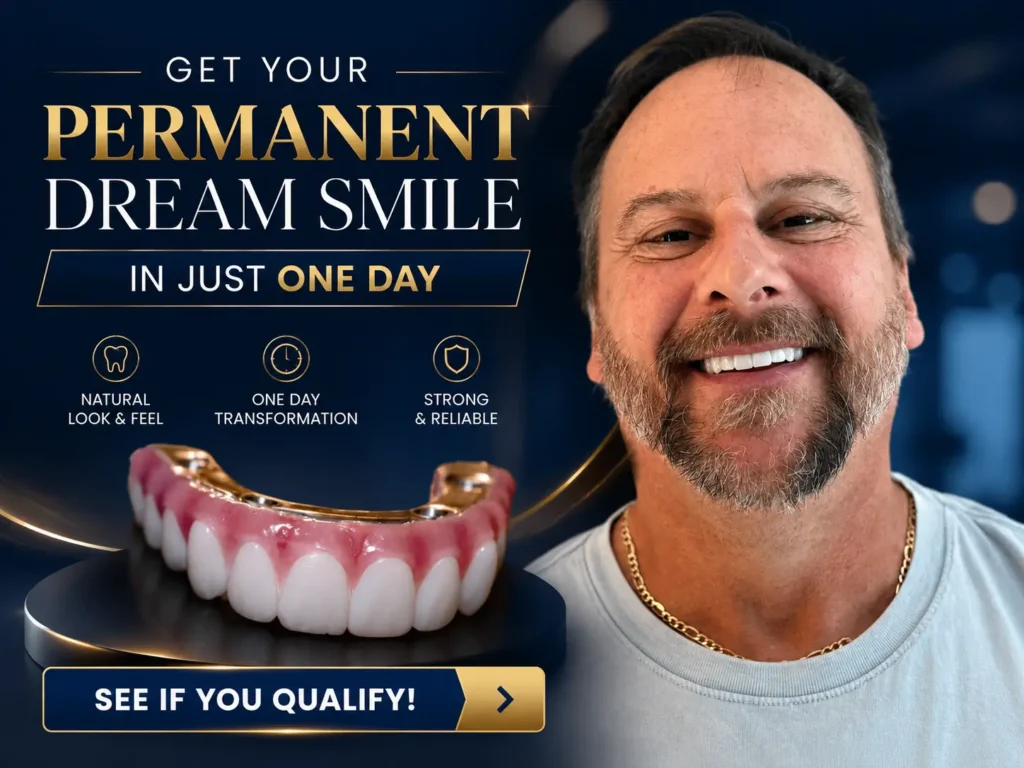
Lasting Smiles also offers advanced digital planning and same-day full-arch treatment for appropriately selected patients, but individual eligibility needs to be determined through a clinical evaluation.
How Lasting Smiles Approaches Missing Teeth
At Lasting Smiles Dental Implant Center, we don’t view tooth replacement as simply choosing between a cheap option and an expensive option.
The better question is:
What solution fits your mouth, your health, your goals, and your budget?
Lasting Smiles provides multiple tooth-replacement options, including dental implants, implant-supported bridges, bridges, dentures, snap-in dentures, and full-arch implant solutions.
That range matters because a patient missing one tooth may have completely different needs from someone missing most or all of their teeth.
Digital Treatment Planning
When implant treatment is being considered, 3D imaging can help the dental team evaluate bone and surrounding anatomy before treatment.
This information can be used to develop a more individualized treatment plan.
In-House Dental Laboratory
Lasting Smiles has an in-house digital dental laboratory where its technicians design and fabricate restorations such as crowns, bridges, dentures, and implant-supported teeth.
Having the clinical and laboratory teams working within the same organization can make communication and coordination easier throughout treatment.
Multiple Treatment Options
Lasting Smiles offers both implant and non-implant restorative options.
That means a consultation doesn’t have to begin with the assumption that you need an implant.
Instead, the dental team can evaluate the missing tooth and explain which options may be appropriate.
Sedation and Comfort Options
For patients who are nervous about dental treatment, Lasting Smiles also offers sedation options for appropriate cases.
The specific sedation approach depends on the treatment being performed and the patient’s medical history.
A Simple Way to Think About Your Options
If you’re overwhelmed by all the terminology, start with these four questions.
1. Do I need something temporary or permanent?
If you need a short-term cosmetic solution, a removable appliance may make sense.
If you’re looking for a long-term fixed replacement, discuss bridges and implants.
2. Do I want something removable?
If yes, a dental clip or removable partial may be worth discussing.
If no, ask about fixed bridges or implants.
3. Do I want to replace the missing root?
If preserving bone and replacing the tooth root are important goals, ask your dentist whether an implant is appropriate.
4. What can I realistically afford?
Don’t compare only the initial price.
Ask about the complete treatment cost, expected maintenance, future replacement needs, and whether financing or staged treatment is available.
Which Is the Most Budget-Friendly Option?
There is no universal answer. A removable temporary appliance generally has the lowest initial financial commitment.
A bridge typically costs more than a basic temporary appliance but can provide a fixed replacement.
An implant generally requires a larger initial investment and a longer treatment process, but it is designed to replace the tooth root as well as the visible tooth.
The right comparison is therefore not simply: Cheap vs. expensive.
It is: Short-term cost vs. long-term goals.
A lower initial price may be appropriate for someone who genuinely needs a temporary solution.
Another patient may decide that investing in a permanent implant makes more sense because they want a fixed restoration and want to address the missing tooth root.
Both decisions can be reasonable depending on the patient’s circumstances.
What Should You Ask Before Choosing a Missing-Tooth Replacement?
Before committing to any option, ask your dentist:
- What caused my tooth loss?
- Are my neighboring teeth healthy?
- How much bone do I have at the missing-tooth site?
- Do I need a CBCT scan?
- Am I a candidate for a dental implant?
- Would a bridge work in my situation?
- Can I use a temporary acrylic flipper while I decide?
- What will the complete treatment cost?
- What maintenance will I need?
- What happens if the restoration needs repair?
- How long should I expect the treatment to last?
- Are financing or staged treatment options available?
A good consultation should leave you understanding why a treatment is being recommended—not simply what it costs.
Frequently Asked Questions
Are dental clips for missing teeth safe?
A professionally designed and properly fitted temporary appliance can be a reasonable option for some patients.
However, poorly fitting or generic appliances can cause discomfort, gum irritation, difficulty cleaning, and other problems.
If a removable appliance causes persistent pain, bleeding, swelling, or sores, have it evaluated by a dentist.
Are dental clips cheaper than implants?
Generally, a removable temporary appliance has a lower upfront cost than dental implant treatment.
However, the two options serve different purposes.
A dental clip replaces the visible tooth temporarily or removably, while an implant is designed to replace the missing tooth root and support a fixed restoration.
Is a bridge cheaper than a dental implant?
The answer depends on the individual case.
A bridge may have a lower initial cost than an implant in some situations, but treatment fees vary according to the number of teeth involved, materials, preparation of supporting teeth, laboratory work, and other factors.
Ask for a complete treatment estimate rather than comparing advertised starting prices.
Can I get a temporary tooth while waiting for an implant?
Yes, a temporary tooth may be an option for some patients.
Depending on the situation, this could involve an acrylic flipper, bonded temporary, temporary crown, or another appliance.
Your dentist can determine which temporary option is appropriate.
Does a dental clip prevent bone loss?
No.
A removable cosmetic tooth does not replace the natural tooth root and does not provide the same type of stimulation to the jawbone as a natural tooth or dental implant.
Do dental implants last forever?
Dental implants are designed to be a long-term solution, but no dental treatment can be guaranteed to last forever.
The implant, surrounding gums and bone, and visible restoration all require appropriate care and maintenance.
Can I replace one missing tooth with an implant?
Yes.
A single missing tooth can often be replaced with an implant-supported crown when the patient is an appropriate candidate.
Your dentist will evaluate bone, gums, neighboring teeth, bite, and overall health before treatment.
What if I have several missing teeth?
Your options may include removable partial dentures, bridges, individual implants, implant-supported bridge, or other treatment configurations. Two implants typically support a bridge of three or four teeth.
The right approach depends on how many teeth are missing, where they are located, and the health of your remaining teeth and bone.
Does Lasting Smiles offer options besides dental implants?
Yes.
Lasting Smiles provides multiple restorative options, including dental implants, implant-supported bridges, bridges, dentures, and snap-in dentures.
The appropriate option depends on the patient’s individual dental condition and treatment goals.
The Bottom Line: Don’t Choose Your Tooth Replacement by Price Alone
If you’re searching for dental clips for missing teeth, you’re probably looking for something that is affordable, fast, and simple.
That’s a reasonable place to start.
But the right question is bigger than the price of the appliance.
You also need to consider:
How will it function?
How long will it last?
How will I maintain it?
Will it affect my neighboring teeth?
What happens to the bone where my tooth is missing?
What do I want my smile to look like five or ten years from now?
A dental clip, bridge, and implant can all have a place in modern dentistry. They simply solve different problems.
At Lasting Smiles Dental Implant Center, the goal is to help you understand those differences before you commit to treatment.
Whether you need a professionally made temporary appliance, a removable partial denture, a bridge, a single dental implant, or a more comprehensive restoration, the first step is understanding what your mouth actually needs.
Find the Right Missing-Tooth Solution for You
If you’re unsure whether you need a temporary dental clip, bridge, partial denture, or permanent implant, schedule an initial consultation with Lasting Smiles Dental Implant Center.
A professional evaluation can help you understand:
- Your available treatment options
- Your bone and gum health
- Whether you’re a suitable candidate for dental implants
- Whether a bridge or partial denture may be appropriate
- What your treatment timeline could look like
- Your expected treatment costs
- Available financing or payment options
Don’t buy a temporary solution before you understand your permanent options.
Talk with the Lasting Smiles team and find out which approach makes sense for your smile, your oral health, and your budget.
This article is for educational purposes only and does not replace a dental examination, diagnosis, or individualized treatment recommendation. Treatment costs, timelines, candidacy, and results vary by patient, and medical history—including uncontrolled diabetes—can affect healing and candidacy.
Share
Recent Articles
Dental Clips vs Dental Implant vs Dental Bridges: Which Solution for Missing Teeth Fits Your Budget?
October 6, 2026
Deciding between a dental clip, a bridge, or a dental implant? Discover how each option compares in upfront cost, lifespan, maintenance, and long-term...

Tooth Extraction: A Complete Guide to Safe, Comfortable Tooth Extraction and Replacement
September 30, 2026
What happens after a tooth extraction? Learn how simple and surgical extractions differ, how long recovery takes, and the essential aftercare steps that...

Dental Implants Near Me: How to Find the Right Specialist in Irvine, CA
September 23, 2026
Searching for dental implants near me in Irvine? Learn what to look for in an implant dentist, compare single-tooth and full-mouth options, and...