

July 8, 2026
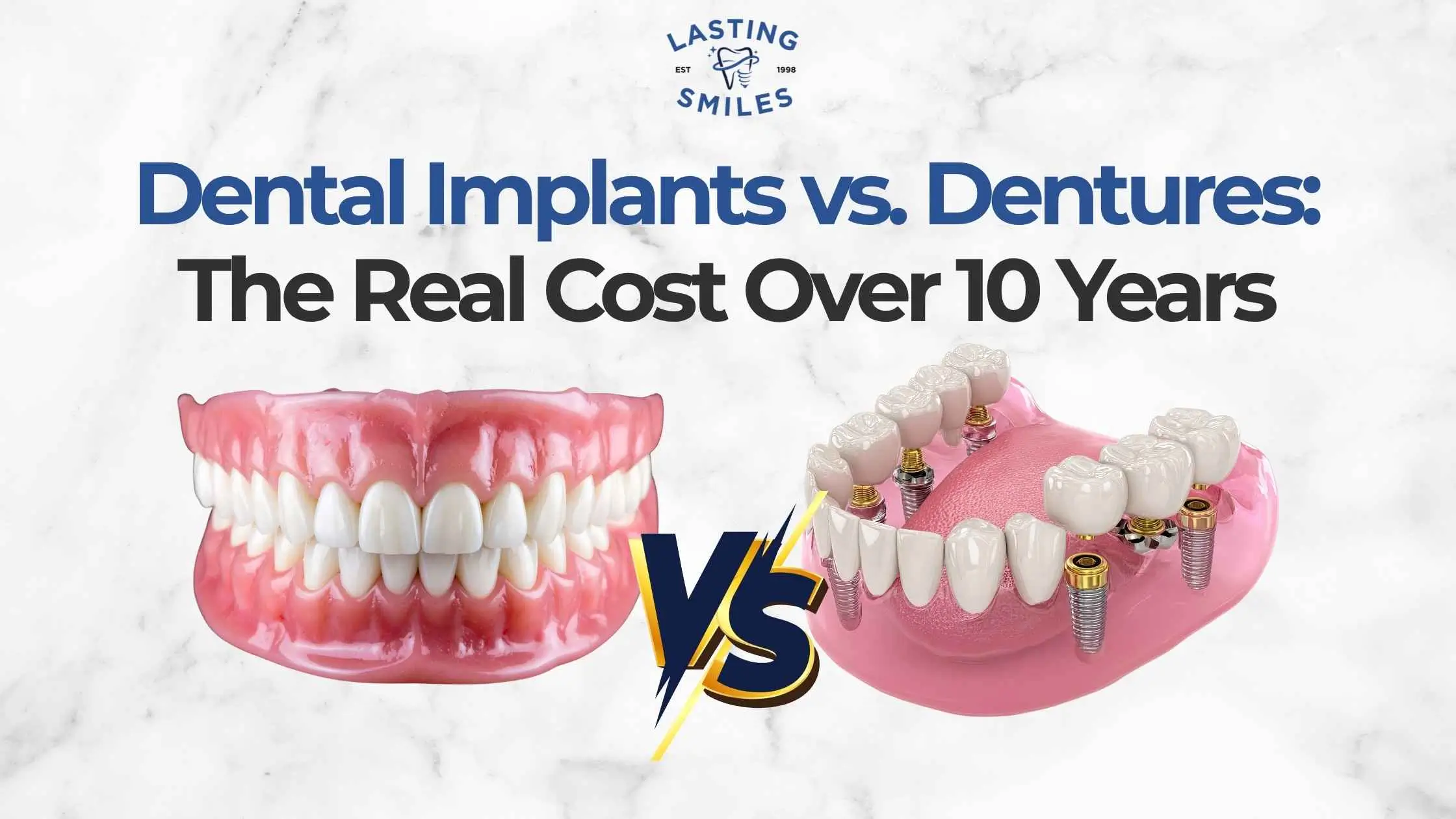
Dentures vs Dental Implants Cost | Lasting Smiles Analysis
Traditional dentures are far more affordable upfront, but dental implants typically cost less over a 15- to 20-year horizon once you factor in replacements, maintenance, hidden costs, and the financial consequences of bone loss. This is the reality that surprises most patients comparing dentures vs implants for the first time – the initial price tag tells only a fraction of the story.
This article provides a comprehensive 20-year cost analysis of both tooth replacement options, including recurring expenses that rarely appear in initial quotes, the progressive financial toll of bone deterioration, and quality-of-life factors that directly affect your budget. It’s written for adults weighing their options for missing teeth – whether you need to replace one tooth, several teeth, or an entire arch – and want to understand the true long-term financial commitment before choosing dental implants or traditional dentures.
The bottom line: Over 25 years, dentures can cost $60,000 to $85,000 when you include all replacements, relines, adhesives, and related care. Implants total around $55,000 to $67,500 over 25 years, including occasional prosthetic replacement and maintenance. The initial savings from dentures erode steadily over time.
Here’s what you’ll gain from this breakdown:
- A clear picture of upfront versus lifetime costs for both options
- The hidden denture expenses that accumulate year after year
- How bone loss creates irreversible financial consequences
- Why maintenance costs differ so dramatically between the two
- What “one and done” really means for your wallet and your future
Understanding the Two Tooth Replacement Options
Before comparing costs, it helps to understand exactly what each option involves – how traditional dentures and dental implants work, how long they last, and why their durability differences drive such different financial trajectories.
Traditional dentures are removable prosthetics – essentially artificial teeth set in an acrylic or metal framework – that rest on your gum tissue. They rely on suction, denture adhesive, or clips to stay in place. Dental implants, by contrast, are titanium posts surgically placed into the jawbone. Through a process called osseointegration, the bone fuses directly to the implant posts, creating a permanent foundation that functions like natural tooth roots. Prosthetic crowns, bridges, or full-arch restorations then attach to those posts, creating replacement teeth that look, feel, and function like real teeth.
How Dentures Work and Their Lifespan
Dentures come in several forms. Complete dentures replace all teeth in the upper and lower arches, while partial dentures fill gaps among existing teeth using a metal or acrylic framework. There are also implant-supported dentures – sometimes called snap-in dentures – which anchor a removable denture to implants for improved stability. Traditional complete dentures rely on suction (particularly for the upper arch) and denture adhesive, while partial dentures typically clip onto remaining natural teeth.
Dentures typically need replacement every 5 to 8 years. Between replacements, denture wearers face regular relines every 2 to 3 years as the jawbone and gum tissue change shape, plus occasional repairs for cracked bases or broken false teeth. Most dentures need replacement every 5 to 8 years because the materials wear down and the jaw ridge continues to resorb, making the fit progressively worse. Dentures require regular adjustments due to jawbone changes. This replacement cycle is the primary driver of long-term cost – and it never stops.
How Dental Implants Work and Their Durability
The implant procedure begins with surgical placement of titanium posts into the jawbone. Over several months, the bone grows around and fuses to the implant through osseointegration – the same biological process that makes dental implants act like natural tooth roots and prevent sunken facial appearance. If bone density is insufficient, bone grafting may be required before or during implant placement, adding cost and healing time.
Once healed, implants can last a lifetime with proper care and maintenance. Published research shows implant survival rates of approximately 96.8% at 10 years and 94% at 15 years. Implants often last over 25 years with proper maintenance. The crowns on implants usually need replacement every 10 to 15 years, depending on materials and wear – but the implant posts themselves remain stable in the bone indefinitely for most patients. Implants require regular dental checkups every 6 to 12 months, along with daily brushing and flossing, but they do not require removal for cleaning or sleeping. This permanence is what fundamentally changes the cost equation over time.
The Real Cost Comparison Over Time
The replacement cycles and maintenance patterns described above create starkly different cost trajectories. What starts as a major price gap in favor of dentures narrows steadily – and in many cases reverses entirely – as years pass.
Upfront Investment: Dentures vs Implants
The initial price difference between dentures and implants is significant:
Dentures initial costs:
- Complete dentures cost around $1,000 initially for a basic set (both arches)
- Premium dentures with custom cosmetic work: $4,000–$8,000+ per arch
- Partial dentures: $1,500–$3,500 depending on materials and design
Dental implants initial costs:
- Dental implants cost about $3,000 for a single tooth (post, abutment, and crown)
- Implant-supported bridges: $5,000–$15,000 depending on the number of teeth
- All-on-4 full-arch solutions: $15,000–$30,000 per arch
Insurance coverage differs substantially between the two. Dentures are typically classified as “major services” under dental plans with 15–50% coverage after deductibles, though lifetime caps apply. Implants often receive less insurance coverage – some plans exclude them entirely – leaving many patients to rely on financing options, HSA/FSA accounts, and payment plans.
Looking at the upfront cost alone, dentures appear to be the clear affordable solution. But this comparison is misleading without examining what happens in years 2 through 20.
Lifetime Cost of Dentures vs Implants: 10, 15, and 20-Year Projections
When you project total costs forward, including every replacement, adjustment, and recurring expense, the picture shifts dramatically. The following table illustrates approximate cumulative costs for full-arch restoration (both arches):
Time Period | Traditional Dentures (Cumulative) | Dental Implants (Cumulative) |
|---|---|---|
Year 1 (Upfront) | $2,000–$8,000 | $30,000–$60,000 |
10 Years | $8,000–$20,000 | $32,000–$63,000 |
15 Years | $18,000–$40,000 | $35,000–$67,000 |
20 Years | $30,000–$55,000 | $38,000–$70,000 |
25 Years | $60,000–$85,000 | $55,000–$67,500 |
Dentures requiring 3–4 full replacements over 20 years at $2,000–$8,000 each is the primary cost driver, compounded by annual maintenance expenses of $900 or more. Dentures need replacement every 5 to 7 years, making three to four replacement cycles inevitable over two decades. Meanwhile, implants cost remains relatively stable after the initial investment. Dental implants generally involve a high upfront cost but lower long-term maintenance costs, with only occasional one prosthetic replacement of the crown or bridge needed.
Dentures are often the least expensive option initially yet may incur higher long-term costs. The breakeven point where implants become the less expensive option typically falls between years 10 and 15 – and the gap only widens from there.
TO LEARN MORE ABOUT THE COSTS, CLICK HERE TO BOOK A CONSULTATION FOR FREE!
The Hidden Costs of Dentures That Nobody Talks About Up Front
Beyond replacement cycles, denture wearers face a steady stream of hidden costs that rarely appear in initial quotes:
Adhesives and cleaning products: Denture adhesive runs $10–$30 per month, and cleaning solution adds another $10–$20 monthly. Denture wearers must clean their dentures daily and soak them overnight, requiring specialized products. Annually, these supplies cost $350–$700. Over 20 years, that’s $7,000–$14,000 in products alone.
Relines and adjustments: Dentures require relining every 2 to 3 years as the jawbone resorbs and gum tissue changes shape. Hard relines cost $350–$600 per arch; soft relines run $250–$450 per arch. Rebasing – replacing the entire denture base while keeping the teeth – costs $400–$800 per arch. These frequent adjustments add $200–$600 every one to three years.
Emergency repairs: Cracked bases, broken teeth, and bent clasps on partial dentures cost $100–$400 per incident. These repairs are unpredictable and unbudgetable.
Lost time and productivity: Wearing dentures means more frequent dental visits for adjustments, relines, and refitting. Each appointment represents lost work time, transportation costs, and disruption. Many patients report needing 4–6 additional dental visits per year beyond standard checkups.
Dietary costs: Dentures typically restore only 20–30% of natural bite strength, severely limiting food choices. Denture wearers often shift toward softer, processed foods – which can be more expensive and less nutritious than a normal diet. This dietary restriction is a real but often overlooked financial burden.
These maintenance costs and hidden costs accumulate silently. Unlike the initial price tag, they don’t appear on a single bill – they drain your budget incrementally over years and decades.
Bone Loss: The Cost You Can’t Pay Your Way Out Of
Among all the financial consequences of choosing dentures over implants, bone loss stands alone as both the most expensive and the most irreversible. No amount of money can fully undo advanced jawbone deterioration – you can only try to compensate for it, at significant cost.
The Progressive Nature of Denture-Related Bone Loss
Bone loss occurs when there are no tooth roots or implants to stimulate the jawbone. Once natural teeth are extracted, the alveolar bone that once supported them begins resorbing immediately. Studies indicate up to 25% of vertical bone loss can occur in the first year alone, with continued – though slower – deterioration over subsequent decades.
Dentures do not provide bone stimulation, leading to jawbone shrinkage. Traditional dentures sit on the gum ridge, applying pressure to soft tissue without transmitting the type of force that maintains bone density. This creates a vicious cycle: as bone resorbs, the denture fits more poorly, requiring more frequent relines and replacements, which in turn apply more uneven pressure to the shrinking ridge.
Bone loss from dentures can change facial structure over time. The result is the characteristic “sunken face” appearance – collapsed lower face, thin lips, protruding chin – that many long-term denture wearers experience. These changes to facial structure are progressive and, without intervention, permanent.
Financial Impact of Bone Loss on Future Dental Care
The financial consequences of significant bone loss extend far beyond denture maintenance:
Bone grafting costs: If a denture wearer later decides to switch to implants – a common scenario after years of frustration with loose, uncomfortable false teeth – bone grafting is often required to rebuild sufficient bone support. Bone grafting procedures cost $1,500–$5,000 per site, and patients with significant bone loss may need multiple graft sites across the upper and lower arches. Sinus lifts add further expense.
More complex surgical procedures: Implant placement in a deteriorated jaw requires more advanced surgical techniques, longer treatment timelines, and sometimes specialized implant systems like zygomatic implants. All of this increases the total implants cost substantially compared to what it would have been with earlier intervention.
Higher failure risk: Compromised bone structure increases the chance of implant failure, potentially requiring additional oral surgery, more bone grafting, and repeated implant placement – each adding thousands of dollars.
The takeaway is clear: “upgrading” from dentures to implants becomes dramatically more expensive the longer you wait, because bone deterioration makes every step harder and costlier.
How Implants Preserve Bone and Save Money Long-Term
Dental implants stimulate jawbone, preventing bone loss – the same way natural tooth roots do. The implant posts transmit chewing forces directly into the bone, maintaining bone density, bone health, and ridge height over decades. This bone preservation delivers compounding financial benefits:
- Fewer adjustments and relines needed (the jaw doesn’t shrink around the restoration)
- No bone grafting required if additional implants are needed later
- Preservation of facial structure eliminates the need for cosmetic interventions
- Adjacent remaining natural teeth are protected from the shifting and stress that bone deterioration causes
- Implant-supported dentures provide better stability than traditional dentures, and the bone preservation they offer reduces downstream costs even for removable options
Implants restore up to 90% of natural bite strength, compared to only 20–30% with traditional dentures. This isn’t just a comfort advantage – it’s a financial one. Proper chewing function means a normal diet, better nutrition, fewer dietary supplements, and better overall health outcomes.
What “One and Done” Actually Means Financially
The phrase “one and done” gets used casually in implant marketing, but it carries genuine financial meaning that deserves careful examination. Dental implants can last a lifetime with proper care. That permanence changes your relationship with dental expenses fundamentally.
The Psychology and Reality of Ongoing Dental Expenses
Denture wearers experience what many patients report as a “nickel and diming” effect – a $35 tube of denture adhesive here, a $500 reline there, an unexpected $300 repair, a $5,000 replacement set. Each expense seems manageable in isolation, but the cumulative effect over years is substantial and unpredictable. Budgeting for denture care means budgeting for uncertainty.
Implants flip this dynamic. After the initial investment and healing period, implant patients face primarily routine dental hygiene appointments – the same visits anyone with natural teeth would schedule. Implants have lower ongoing costs compared to dentures once healed. Implants feel like natural teeth and do not shift, eliminating the cascade of adjustment-related expenses. For people on fixed incomes or planning for retirement, this predictability holds real financial value. You know what your dental care will cost next year, and the year after that.
Quality of Life Value That Impacts Your Budget
The financial comparison between dentures vs implants extends beyond direct dental bills into daily life costs that affect your budget:
Eating ability and food costs: Dentures can slip or click while eating or speaking, limiting food choices to softer options. Many patients report avoiding restaurants, social meals, and nutrient-dense foods like raw vegetables, nuts, and lean meats. This dietary restriction can increase grocery costs (pre-prepared soft foods tend to cost more) and may necessitate nutritional supplements.
Professional and social confidence: Dentures that slip, click, or cause gum irritation can undermine confidence in professional settings and social situations. While difficult to quantify, the impact on career opportunities and social engagement represents real economic value.
Daily time costs: Denture care involves removal, cleaning, overnight soaking, adhesive application, and careful reinsertion – a routine that consumes meaningful time daily. Implants are maintained like real teeth: brush with a soft brush, floss, and visit your dentist regularly. Implants do not require removal for cleaning or sleeping. That time savings compounds over thousands of days.
Financing Options That Make “One and Done” Accessible
The upfront cost of dental implants is the primary barrier for most patients, but multiple financing mechanisms make this permanent solution accessible:
- In-house financing: Many implant centers, including Lasting Smiles Dental Implant Center, offer payment plans that spread the cost over months or years, often with competitive interest rates
- HSA and FSA accounts: Dental implants may qualify as tax-advantaged expenses through health savings and flexible spending accounts, effectively reducing the net cost
- Warranties and guarantees: Some practices offer lifetime warranties on implant posts and extended warranties on prosthetics, adding financial protection to the investment
- Monthly cost comparison: When you divide the total long-term cost of implants by the months of service they provide, the monthly cost often falls below what denture wearers spend on replacements, relines, adhesives, and maintenance costs combined
Choosing dental implants isn’t just a dental decision – it’s a financial strategy. The question isn’t whether you can afford implants; it’s whether you can afford not to consider them when you look at the 20-year numbers.
Questions Worth Asking Before You Decide
The difference between a good decision and a great one often comes down to the questions you ask. Before committing to either tooth replacement option, bring these questions to your dental provider. They’ll reveal the true long-term costs that don’t appear in initial price quotes.
Financial Questions to Ask Any Dental Provider
- What will my total cost be over 20 years, including all maintenance, replacements, relines, adhesive, and prosthetic replacement?
- What is included in the upfront quote – are abutments, crowns, temporary prosthetics, lab fees, and follow-up visits all covered?
- What happens if complications arise (implant failure, denture fracture, peri-implantitis)? Who covers those costs, and what warranties apply?
- How much will bone grafting cost if I need it now – or if I need it later after years of wearing dentures?
- What does my insurance actually cover for each option, and what’s my true out-of-pocket expense?
- What financing options, payment plans, or HSA/FSA options are available?
Lifestyle Questions That Affect Long-Term Value
- How will this choice affect my diet and eating confidence – what foods will I need to avoid?
- What daily maintenance will be required, and how much time will it take each day?
- How will this decision impact my appearance, facial structure, and self-confidence over the next 10–20 years?
- How often will I need to visit the dentist for adjustments, relines, or replacements?
Health Questions About Long-Term Oral Health
- How will this choice affect my remaining natural teeth and existing teeth?
- What happens to my jawbone health and bone structure over time with each option?
- How does each option impact my risk of gum disease, tissue health, and further tooth loss?
- Can my current oral health, bone density, and overall health support implants – and if not now, what would need to change?
- If I start with dentures, what’s involved in upgrading to implant supported teeth later, and how much more expensive does bone deterioration make that transition?
These questions force any provider to move beyond the initial price tag and address the full financial picture. A practice confident in its work will welcome these conversations.
Making the Right Financial Decision for Your Future
CLICK HERE TO BOOK YOUR CONSULTATION IN OUR CLINIC!
Comparing dentures vs implants on upfront cost alone is like comparing a lease to a purchase while only looking at the first monthly payment. Dentures are affordable upfront – there’s no disputing that. But over 25 years, dentures can cost $60,000 to $85,000 while implants total around $55,000 to $67,500. The math consistently favors the permanent solution when you extend the timeline, account for hidden costs, and factor in bone preservation that eliminates expensive downstream procedures.
Dental implants are worth serious consideration for anyone evaluating long-term oral health and financial planning. They offer less maintenance, greater predictability, preserved jawbone health, and quality-of-life benefits that affect your budget in ways both direct and indirect. For many patients, choosing between removable and permanent options isn’t a question of affordability – it’s a question of time horizon.
Your next steps:
- Schedule a personalized consultation to get an accurate cost analysis based on your specific oral health, bone density, and restoration needs
- Ask your provider the financial, lifestyle, and health questions outlined above – and compare the 20-year projections side by side
- Explore financing to understand what monthly payments would look like for implants versus what you’d spend annually maintaining dentures
- Learn about specific solutions like All-on-4 dental implants, same-day teeth options, or implant-supported overdentures to find the right fit for your situation and budget
The best time to prevent bone loss and invest in a permanent solution is before deterioration makes the process more complex and costly. The second-best time is today.
CLICK HERE TO BOOK YOUR CONSULTATION IN OUR CLINIC!
Share
Recent Articles
Dentures vs Dental Implants: Which Costs Less in the Long Run?
July 8, 2026
Dentures vs Dental Implants Cost | Lasting Smiles Analysis Traditional dentures are far more affordable upfront, but dental implants typically cost less over...
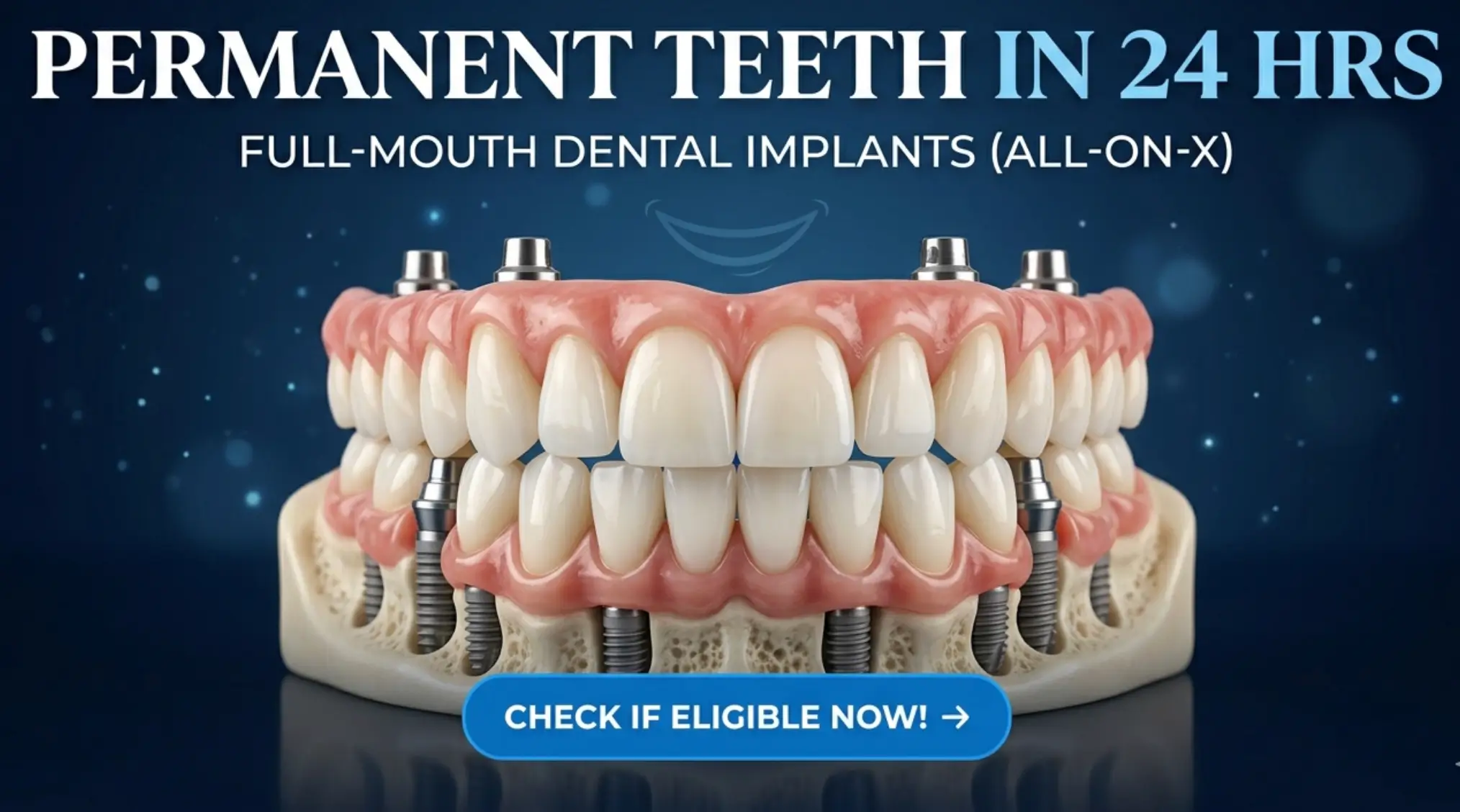
Same-Day Dental Implant: Restore Your Smile Faster | Lasting Smiles
June 29, 2026
Missing teeth can affect your confidence, your ability to eat comfortably, and your overall oral health. Many people assume they must wait several...
Signs Need for a Dental Implant: with a Lifetime Warranty – The Confidence You Deserve for a Smile That Lasts
June 16, 2026
Imagine never having to worry about your dental implants failing unexpectedly. For many Americans struggling with missing teeth, the decision to get dental...