

December 10, 2025

A Complete Guide for Patients in Irvine, Las Vegas & Pasadena
If you’re thinking about dental implants, you’re probably excited about finally fixing missing or failing teeth—but also a little nervous.
Patients at Lasting Smiles in Irvine, Las Vegas, and Pasadena ask us the same core questions over and over:
- Will I have to walk around with no teeth?
- How many implants do I need for a full mouth?
- Are there serious risks or downsides?
- How long will the pain last?
- How long do dental implants really last?
This comprehensive guide walks through each of those questions with honest, detailed answers, so you can make a confident decision about your smile.
Throughout the article, you’ll find helpful internal links to related pages on our website, such as:
- Dental Implants
- New Teeth in One Day
- All-on-4 Dental Implants in Irvine, Las Vegas & Pasadena
- 3-on-6 Dental Implants in Irvine
- Snap-On Dentures
- Does Insurance Cover Dental Implants?
- Dental Implant Healing Stages
- When Can You Eat Normally After Dental Implants?
- Sedation Dentistry in Irvine
- Sedation Dentistry Overview
- Financing & Payment Options
How Long Do You Go Without Teeth When Getting Implants?
One of the biggest fears patients have is:
“Will I have to walk around with no teeth for months?”
In most modern treatment plans, the answer is no. Our goal at Lasting Smiles is to ensure you never feel “toothless” in public, especially in the front of your smile.
Single Tooth or Small Gaps
If you’re getting one or a few implants, we can often:
- Place the implant and a temporary tooth in the same visit (when conditions allow), especially in the aesthetic zone.
- Use a temporary removable flipper or bonded temporary so there is no visible gap while the implant heals underneath.
You can learn more about the healing phases here:
Dental Implant Healing Stages: What to Expect
Full-Mouth or Full-Arch Implants
If you’re replacing most or all of your teeth, the experience is even more dramatic:
- With options such as All-on-4 or New Teeth in One Day, patients arrive with failing or missing teeth and leave the same day with a full set of fixed temporary teeth attached to their implants.
- These temporary bridges stay in place while your implants integrate with the bone, and later we design your final custom zirconia or hybrid prosthesis.
Explore full-arch options:
All-on-4 Dental Implants in Irvine, Las Vegas & Pasadena
New Teeth in One Day
Snap-On Dentures and Overdentures
For patients choosing implant-stabilized dentures:
- We place 2–4 implants per arch and you wear a denture that snaps onto them.
- You typically never go without teeth because we provide temporary or existing dentures modified to fit.
Bottom line: With current technology, it’s extremely rare for a patient at Lasting Smiles to spend any meaningful time without teeth showing.
How Many Implants Are Needed for a Full Mouth?
“How many implants do I need if I’m replacing all my teeth?”
The answer depends on your bone, bite, and which type of full-arch solution fits your needs and budget.
Common Full-Arch Solutions We Offer
| Treatment Option | Implants per Arch | Fixed or Removable? | Best For |
|---|---|---|---|
| All-on-4 | 4 | Fixed | Patients wanting a stable, non-removable new smile with fewer implants |
| All-on-6 / All-on-X | 6+ | Fixed | Extra support, heavy bite, or more complex cases |
| 3-on-6 Implants | 6 | Fixed | Patients who prefer three individual bridges for a more “natural teeth” feel |
| Snap-On Dentures | 2–4 | Removable but stabilized | Patients wanting an affordable upgrade from loose dentures |
Learn more about these systems:
Dental Implants Overview
3-on-6 Dental Implants in Irvine
Why Don’t We Use 1 Implant per Tooth?
You might think, “If I’m replacing 12–14 teeth in an arch, don’t I need 12–14 implants?”
Thankfully, no.
- A full-arch bridge distributes biting forces across 4–8 strategically placed implants, similar to how a table needs only four legs for stability.
- This design reduces cost, surgery time, and healing complexity while still delivering a strong, long-lasting result.
During your consultation, we’ll use 3D scans and a thorough exam to design a plan tailored to your jawbone, bite forces, and goals.
When Are Dental Implants Not a Good Idea?
Dental implants are considered the gold standard for tooth replacement—but they aren’t ideal for absolutely everyone at every moment.
Medical or Health Conditions That May Delay or Prevent Implants
Implants may not be immediately suitable if you have:
- Uncontrolled diabetes or systemic conditions affecting healing
- Active cancer therapy, especially head and neck radiation
- Severe immune suppression
- Active, untreated periodontal (gum) disease
- Certain bleeding disorders without medical clearance
Often, these issues don’t mean never, they just mean “not yet”. We may need to coordinate care with your physician and manage risk factors first.
Lifestyle and Oral Factors
Implants may not be the best choice (or may require extra precautions) if:
- You are a heavy smoker or nicotine user and unwilling to quit or reduce use
- You have severe bruxism (teeth grinding) and refuse to wear a protective nightguard
- You’re not committed to daily home care and regular check-ups
We also see patients with extreme bone loss, especially in the upper jaw. This doesn’t automatically rule out implants—advanced solutions like zygomatic implants or All-on-4 with angled implants may still be possible:
Zygomatic Dental Implants: Advanced Solution for Severe Bone Loss
In your consultation, we’ll review your medical history, medications, habits, and 3D imaging to determine whether implants are right for you now or if some steps are needed first to make them safe and predictable.
What Are the Negative Effects and Risks of Dental Implants?
No surgical procedure is completely risk-free. Dental implants have a very high success rate, but it’s important to understand possible complications and side effects.
Short-Term Side Effects (Normal and Expected)
After surgery, it’s normal to experience:
- Mild to moderate pain or soreness at the site
- Swelling of the gums and sometimes the face
- Minor bruising of the cheeks or lips
- Small amount of bleeding or oozing the first day
These typically peak within 48–72 hours and then improve steadily. Most patients manage comfortably with over-the-counter pain relievers and rest.
Learn more about early healing and what to expect:
Dental Implant Healing Stages: What to Expect
Potential Complications (Less Common)
While uncommon—especially in experienced hands—possible complications include:
- Infection around the implant
- Implant not integrating (failing to bond with the bone)
- Gum recession exposing parts of the implant
- Sinus issues when upper jaw implants are placed too close to sinus cavities
- Nerve irritation, causing temporary or rarely persistent numbness or tingling
At Lasting Smiles, we minimize these risks through:
- Detailed 3D imaging and planning
- Meticulous surgical technique
- Strong emphasis on post-op instructions and follow-ups
- Managing risk factors like smoking, uncontrolled diabetes, and gum disease
What Is the Downside of Dental Implants?
Beyond medical risks, patients often ask about the practical downsides of implants.
1. Cost
Dental implants are more expensive up-front than dentures or bridges—but when you consider:
- Their lifespan (often decades)
- Their ability to preserve bone
- Their natural function and aesthetics
they usually provide the best long-term value.
We offer flexible options to help make treatment affordable:
Financing & Payment Options
Does Insurance Cover Dental Implants?
2. Time Investment
Implant treatment is not an “in and out in one day and never think about it again” process.
Even with same-day teeth, the biological healing (osseointegration) still takes 3–6 months. During this time, we may:
- Adjust your bite
- Monitor healing
- Finalize your permanent prosthesis
That said, most of your “visible transformation” happens right away—the rest is behind-the-scenes fine-tuning.
3. Surgical Nature
Some patients are anxious about the idea of surgery. Fortunately, with advanced sedation, most describe the experience as far easier than they expected.
If you’re nervous, read more about our comfort options:
Sedation Dentistry in Irvine – Relaxed, Pain-Free Care
Sedation Dentistry Overview
How Many Times Can a Dental Implant Be Replaced?
When implants are properly planned and maintained, most patients never need to replace them. But life happens—trauma, uncontrolled conditions, or rare failures can occur.
If an implant fails or needs to be removed:
- We evaluate the bone quality and surrounding tissue.
- If there is adequate bone, a new implant can often be placed after healing.
- If bone has been lost, we may need bone grafting first to rebuild the foundation.
In many cases, an implant can be replaced once or even multiple times, as long as we have enough bone to work with. Each situation is unique, which is why long-term maintenance and regular visits matter so much.
How Long Do Implant Screws Last?
Patients often ask, “Will the titanium screw wear out?”
The implant post (screw) itself is designed to be permanent. With healthy bone and good oral hygiene:
- The implant can last 30+ years, and many last for life.
- The crown, bridge, or full-arch restoration attached to the implant may need replacement over time due to normal wear, staining, or cosmetic updates—often after 10–20 years, depending on material and habits.
Curious about materials?
Zirconia vs Titanium Dental Implants: Choosing the Right Option in Irvine
Just like a home’s foundation, once the implant integrates, it becomes part of the structure. As long as the surrounding bone and gums stay healthy, the implant itself is built to go the distance.
How Long Does the Pain Last After Dental Implants?
Pain is one of the biggest concerns—but also one of the most misunderstood.
Typical Pain Timeline
While everyone is different, most patients experience:
- Day 1–3: Soreness and swelling; discomfort is noticeable but very manageable with medication and ice.
- Day 4–7: Swelling begins to decrease; pain typically drops significantly. Many patients switch to only mild pain relievers or none at all.
- Week 2: Most people feel almost normal in daily activities.
- After Week 2: Occasional mild tenderness if pressing on the site, but no significant pain.
You’ll receive personalized post-op instructions and guidance on pain control, diet, and activity. For eating specifically, this guide helps:
When Can You Eat Normally After Your Dental Implant Surgery?
If pain seems to get worse instead of better, or returns after disappearing, that’s a sign to contact us so we can rule out infection or other complications.
How Painful Is Getting a Dental Implant?
Here’s the honest answer most patients are surprised by:
“The procedure itself doesn’t hurt. The soreness afterward was way less than I expected.”
During the Procedure
- We numb the area thoroughly with local anesthetic.
- Many patients choose oral sedation or IV sedation so they’re calm, relaxed, or even sleepy throughout.
- You don’t feel drilling or cutting—you may only feel pressure and vibration.
With sedation, most people say the appointment feels shorter than it really was, and they remember very little of it.
Explore our comfort options:
Sedation Dentistry in Irvine
After the Procedure
Most patients compare the soreness to:
- A tooth extraction
- Or deep dental work, but not something unbearable
Proper medication, cold compresses, soft foods, and rest make the first few days quite manageable.
Are Dental Implants Right for You?
Dental implants are:
- The most natural-feeling replacement for missing teeth
- The only option that helps preserve your jawbone
- A long-term investment in your smile, confidence, and health
But the best way to know if they’re right for you is a personalized consultation.
At Lasting Smiles in Irvine, Las Vegas, and Pasadena, we’ll:
- Review your medical and dental history
- Take digital 3D scans
- Discuss your goals, concerns, and budget
- Present clear options—from single implants to All-on-4, 3-on-6, or snap-on dentures
Start here:
Your dream smile doesn’t have to stay a “someday” goal. With the right plan and team, it can become your everyday reality.
Share
Recent Articles
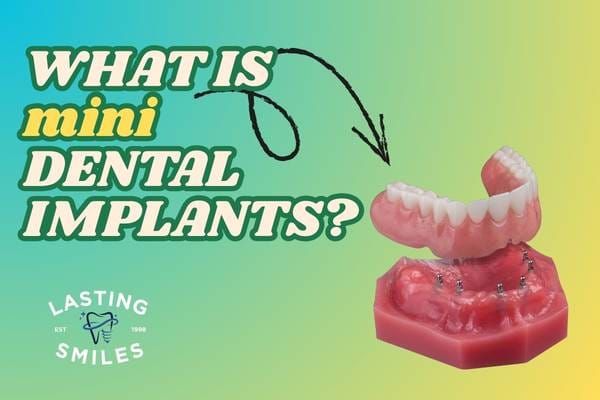
Mini Dental Implants in Irvine: A Complete Guide to Faster, Affordable, and Minimally Invasive Tooth Replacement
January 21, 2026
If you’re looking for a more affordable, less invasive alternative to traditional dental implants in Irvine, mini dental implants may be the perfect...
Do Veneers Damage Your Teeth? What You Need to Know Before Getting Veneers
January 7, 2026
If you’re considering veneers to improve your smile, one of the most common — and valid — questions patients ask is: Do veneers...
Different Types of Dentures in Irvine: Your Complete Guide to Choosing the Best Option for Your Smile
December 23, 2025
For thousands of patients, dentures remain one of the most reliable, life-changing solutions for restoring confidence, chewing ability, and overall oral function. At...